Best boiler temperature for a Nebraska winter

A local pro who services boilers gets in touch about the tune-up.

Find a boiler pro

What temperature should I set my boiler to in winter?

Nebraska winters push a boiler hard for months at a time, and most homeowners just leave the dial wherever it was set when the system was installed. That's not always the right number. Setting it too low makes rooms feel cold no matter how long the system runs, and setting it too high wastes gas and puts more wear on the boiler than the house actually needs.

Set the water temperature between 160 and 180 degrees

A boiler doesn't heat the air directly. It heats water that circulates through radiators or baseboard units, and that water needs to be hot enough to transfer heat into a cold room before it cools and cycles back. In a Nebraska winter, 160 to 180 degrees is usually the range that keeps a house comfortable without the boiler running nonstop. On the coldest days, closer to 180 makes sense. On milder days, you can drop toward 160 and still keep rooms warm. Since gas is what heats most homes here and power stays cheap, the cost difference between those settings is small, but the lower end still means less strain on the boiler over a long heating season.

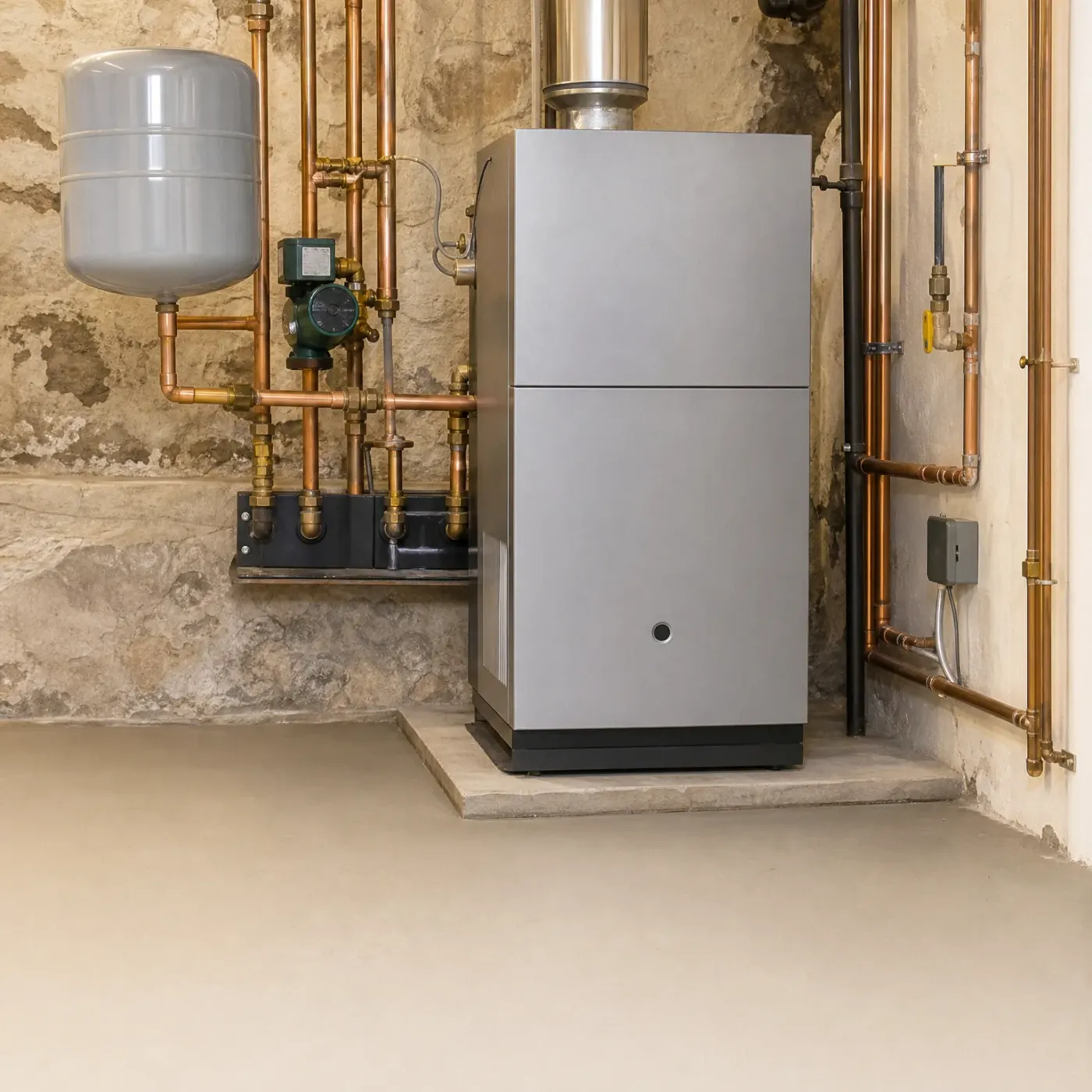
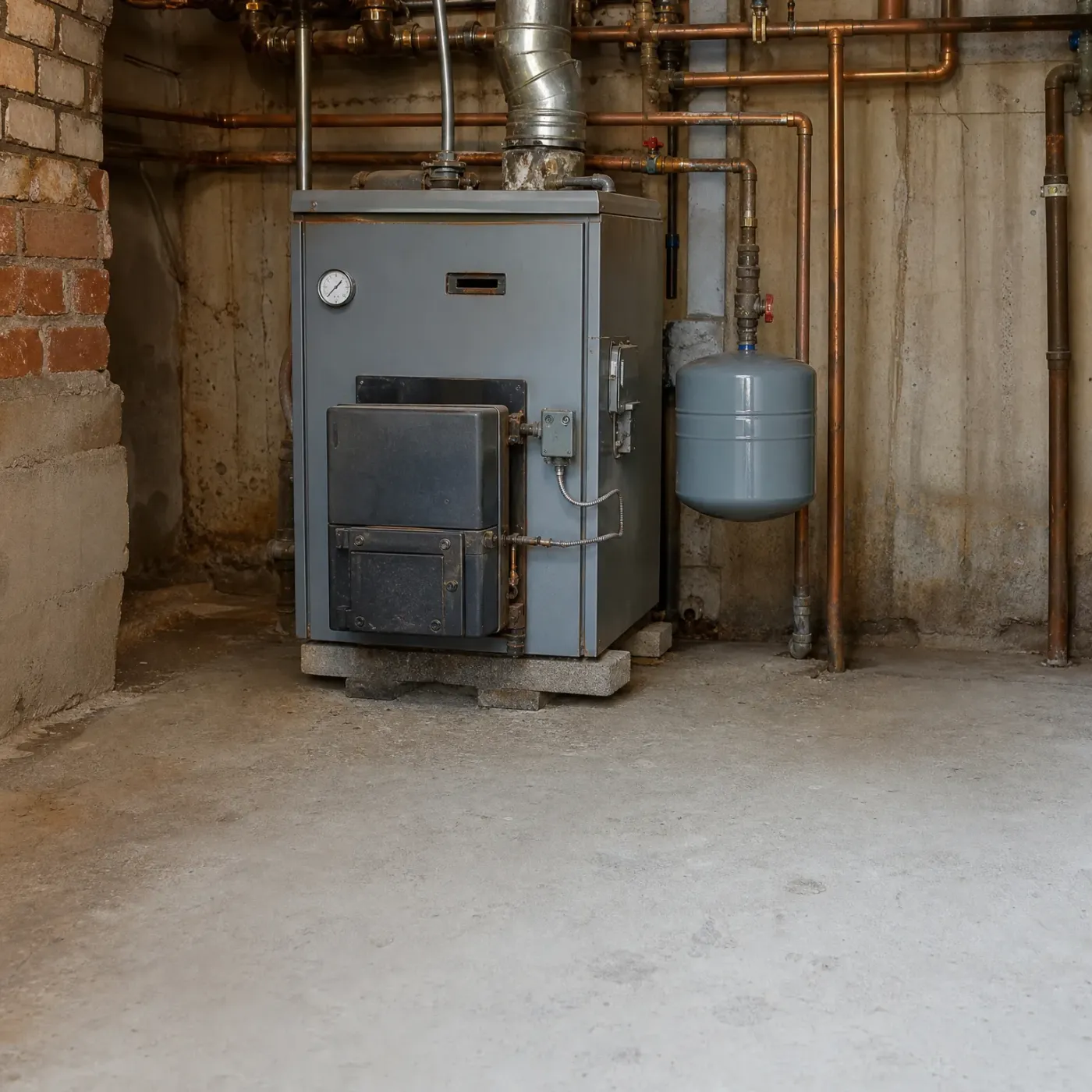
A gray boiler unit with a flue pipe stands on a concrete pad in a basement, surrounded by copper piping, a circulator pump, an expansion tank mounted on a stone wall, and an electrical outlet.

Running right

A boiler set correctly cycles steadily, holds pressure where it should sit on the gauge, and heats the house without strain. The pump moves water quietly through the pipes, and the expansion tank does its job absorbing pressure changes as the water heats and cools.

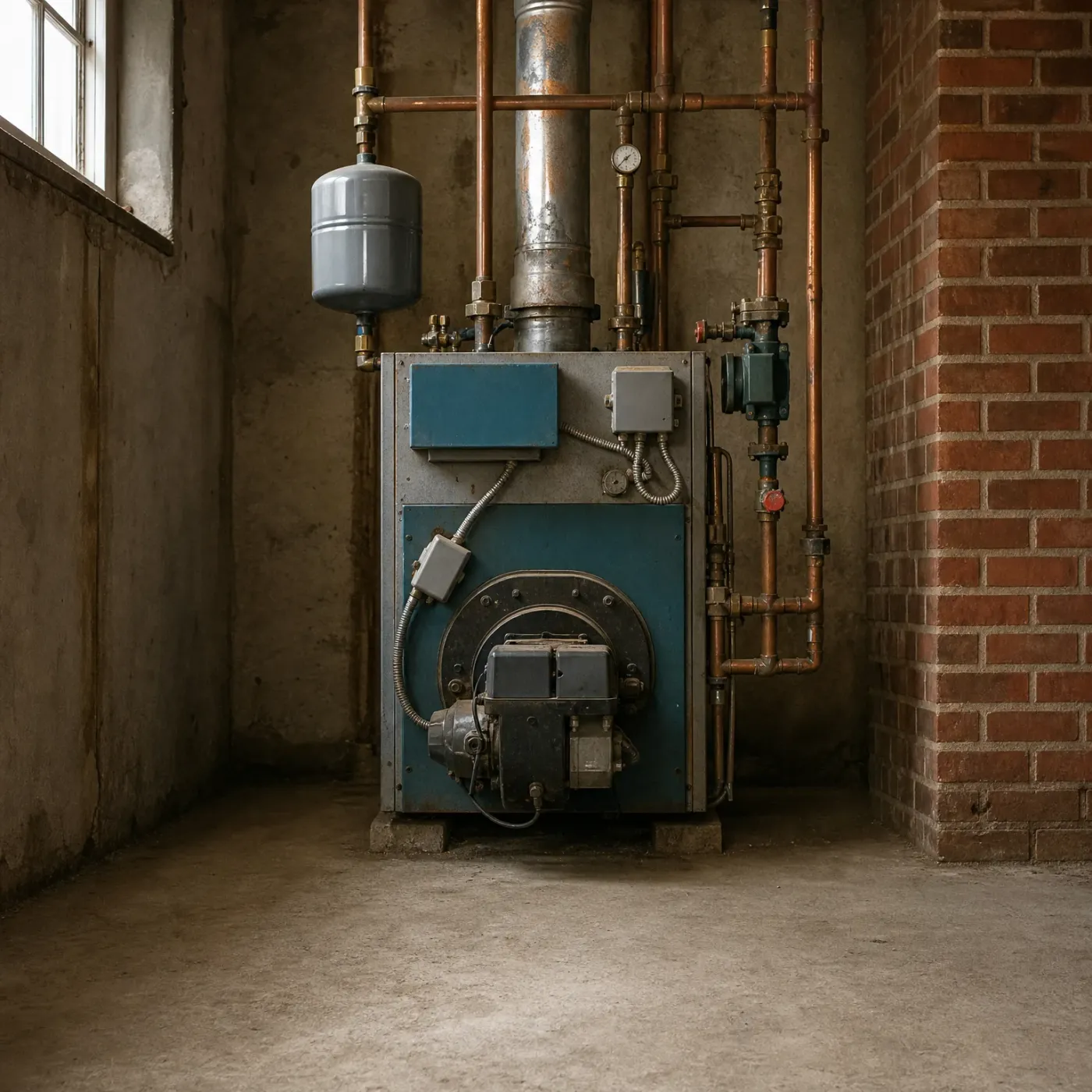
A blue cast-iron boiler with a burner unit, gauges and copper piping stands in a concrete-floored basement room beside a red brick pillar and a window.

Set wrong

Set too high, a boiler short cycles and wears its parts faster than it should. Pressure climbs, the relief valve may weep, and the flue works harder venting heat you didn't need. Set too low, the house never quite gets warm and the boiler runs longer to chase a temperature it can't reach.

A gray-haired bearded man in a dark coat and scarf dusted with snow stands smiling in a dimly lit entryway with a white front door, a side table with a lit lamp, an oval mirror, and a patterned rug.
An older bearded man in a dark snow-dusted coat and gray scarf stands just inside a dimly lit home entry, with a framed picture, lit table lamp, and an adjoining room with a fireplace behind him, and snow visible through the open door.
A gray-haired, bearded man in a dark snow-dusted coat stands smiling in a dimly lit entry hall with a staircase, a lit table lamp, a framed picture, and a living room visible through a doorway.
An older man with gray hair and a beard, wearing a dark jacket dusted with snow, stands smiling in a dimly lit hallway with lamps and a living room visible behind him.

How Your Boiler Actually Regulates Heat

  • The aquastat is the control that reads water temperature and tells the burner when to fire.
  • Most boilers run a water temperature between 160 and 180 degrees to heat a home properly in cold weather.
  • Outdoor reset controls adjust water temperature automatically as the outside temperature changes through the day.
  • Water kept too cool can cause flue gases to condense inside the heat exchanger and corrode it over time.
  • Short cycling happens when the water reaches target temperature too fast, which wears the burner and igniter sooner.
  • Cast iron boilers hold heat longer after shutoff than newer steel models, which changes how they respond to a thermostat.

The aquastat sits on the boiler and does one job: it checks the water temperature and tells the burner when to turn on and when to stop. You set the number, and the aquastat holds the system to it. In a Nebraska winter, that number usually needs to sit between 160 and 180 degrees for the radiators or baseboards to put out enough heat on the coldest days. Go lower than that and you're not just losing comfort. The flue gases leaving the burner can cool enough to condense inside the heat exchanger, and that condensation is acidic. Over a season or two it eats at the metal from the inside, which is a harder repair than anything a thermostat setting should cause.

Some systems don't rely on one fixed number at all. An outdoor reset control reads the temperature outside and raises or lowers the boiler water temperature to match, so the system runs cooler on a mild January afternoon and hotter during a hard freeze, without you touching the dial. Either way, the burner shouldn't be snapping on and off every few minutes. That's short cycling, and it happens when the water hits target temperature too fast for the burner and igniter to settle into a steady run. It adds wear that shows up as repairs sooner than they should.

Cast iron boilers hold onto that heat after the burner shuts off longer than steel ones do, so they respond to the thermostat more slowly and that's normal for the equipment, not a sign of trouble.

A woman wrapped in a thick beige fleece blanket sits on a sofa with an open book on her lap, beside a lit table lamp, with a frost-covered window behind her.
A smiling older woman with gray hair in a cream knit sweater stands in a dimly lit kitchen beside a window showing snow outside, with a round loaf of bread on the counter in the foreground.
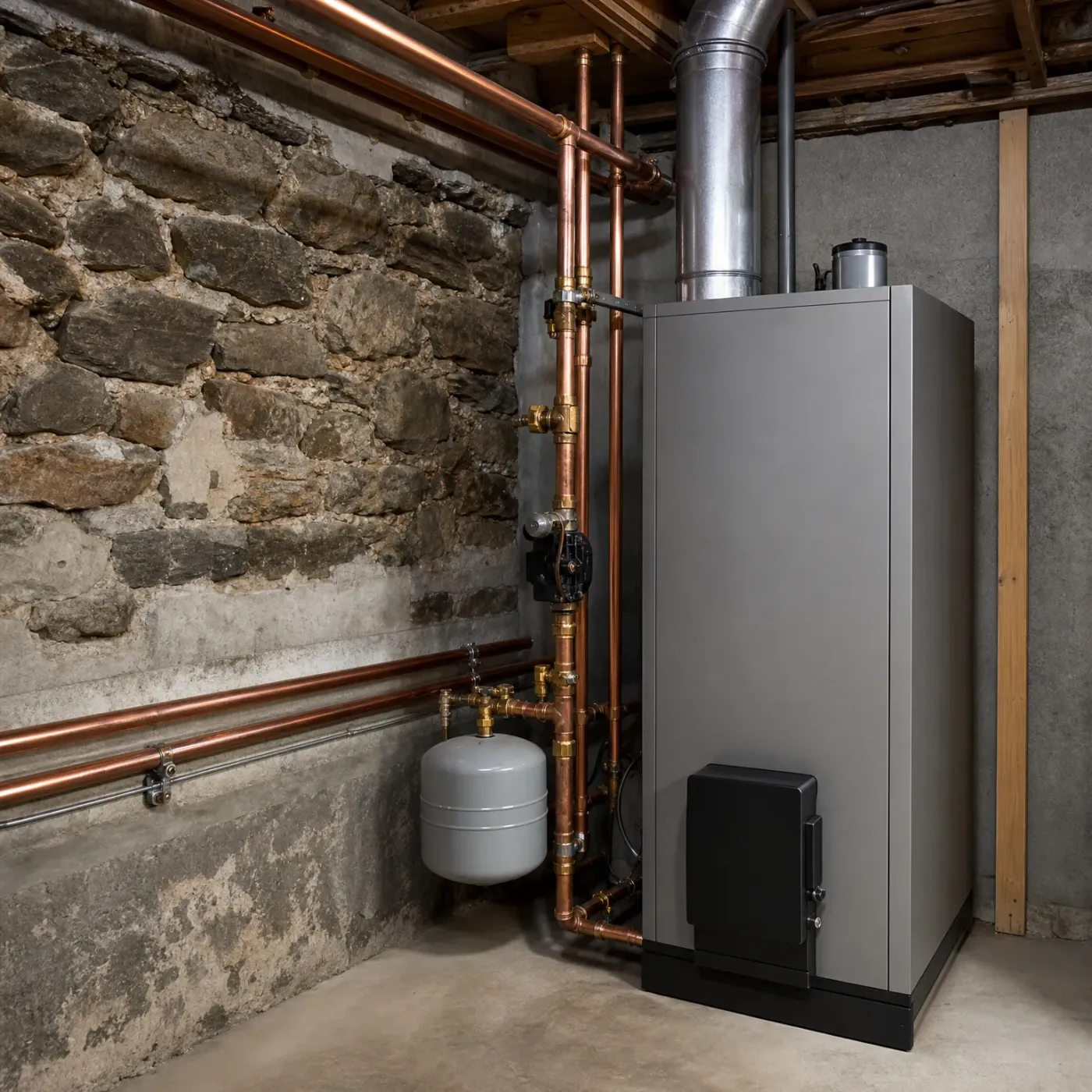
A gray boiler unit with a metal flue stands in a basement beside copper piping, valves and a small expansion tank, against a stone and concrete wall with wooden joists overhead.

Get your boiler to the right pro

A licensed local pro takes the request for your boiler tune-up.

A local pro who knows boilers gets your details and gets in touch.

Get one local pro

Asking costs nothing, and the choice to hire stays yours.

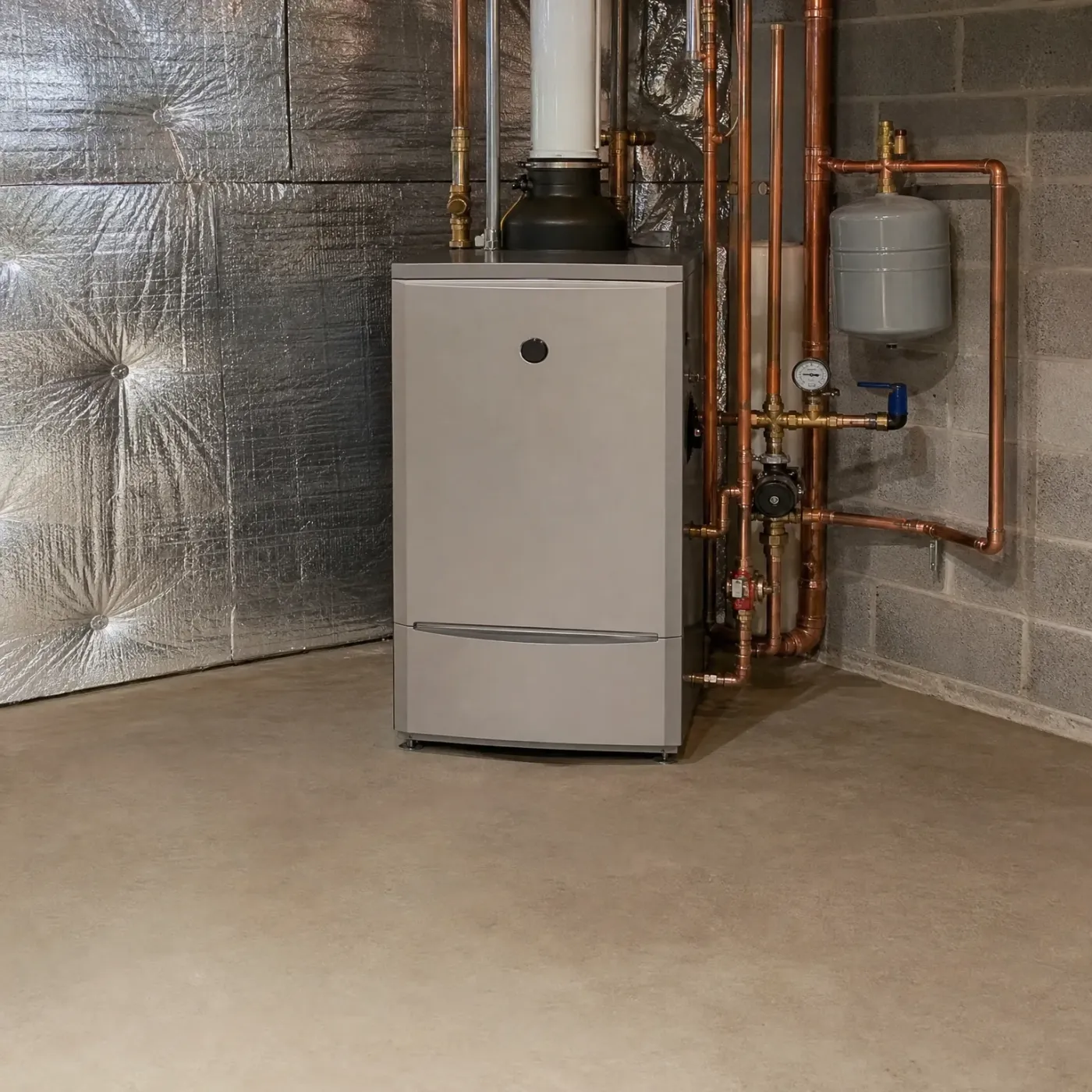
A gray residential boiler in a basement corner with copper piping, a circulator pump, pressure gauge, blue-handled valve and gray expansion tank against a concrete block wall, next to a foil-insulated wall.
A boiler set right keeps pressure steady on the gauge and the pipes and fittings run without a strain on any joint.
A gray boiler on a concrete block base in a basement, with copper piping, a metal flue, and a gray expansion tank mounted beside it against a concrete wall.
A boiler left too hot or neglected over years shows it in a worn steel jacket and valves asked to do too much.

Is your boiler running hotter than it should?

Check the pipes near the boiler. If they're almost too hot to touch, or you hear banging or ticking as the system heats up, the water temperature is set higher than the house needs. Look at the pressure gauge too. If it creeps above where it normally sits once the system has been running a while, the boiler is working harder than it should. A thermostat that overshoots, rooms that swing from too warm to too cold, or a furnace room that feels warmer than it used to are all signs of the same thing. Left alone through a Nebraska winter, that extra strain wears on the heat exchanger and the fittings year after year, and it shows up in a shorter life for the unit.

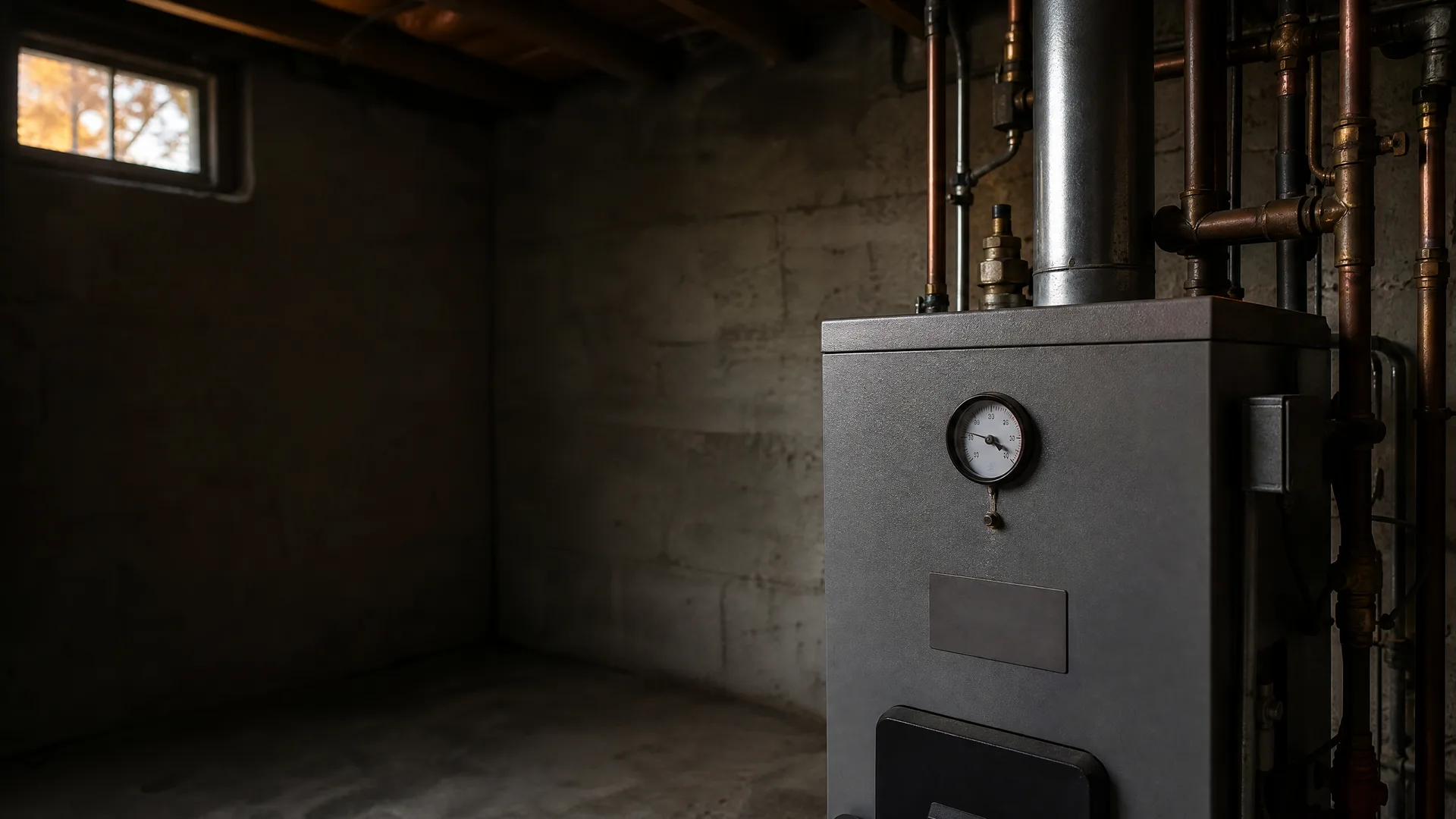
A gray boiler with a round pressure gauge and copper piping stands in a dim concrete basement lit by a small window showing yellow foliage.

You go down to check the thermostat you bumped up the night before, when the first hard frost hit the Panhandle and the furnace fan never seemed to stop. The basement is cool and a little damp, the way it gets once the leaves are down. The boiler sits against the wall, humming low. You crouch to look at the pressure gauge, and the needle is sitting under where it usually rests, closer to the bottom of the dial than you remember. You tap the glass once out of habit. It doesn't move. Upstairs the radiators are only warm, not hot, and the dial on the wall says it's still trying to catch up to where you set it.


A man in a dark blue shirt stands in an open front doorway of a stucco and wood-clad house, facing a blond woman seen from behind in the foreground on a stone walkway.

What a high setting costs you over a Nebraska winter

Gas is cheap here compared to a lot of the country, so most homeowners never feel the first few degrees of overshoot in the bill. What they feel is the boiler short cycling, the pump running more than it needs to, and the pressure relief valve weeping a little water onto the floor. Over a season that adds up to wear on parts that are expensive to replace even when gas itself isn't.

If your boiler has sat at the same setting since it was installed, nobody has checked whether that number still fits your house or your equipment as it ages. A local contractor who services boilers all winter in this area knows what the aquastat and the pressure relief valve on your specific setup tend to do after years at a certain temperature, and can look at your system instead of a general rule. Getting matched with one contractor near you, rather than a handful, means the person who comes out is someone who actually works on this equipment through a Nebraska winter.

Interior corner of a living room with a beige upholstered sofa and dark cushion in the foreground, a ceramic vase of leafy branches on a dark side table by a curtained window, a framed picture on the wall, and a wood-surround fireplace at right.

Winter nights average 17°F statewide

At 17°F on a typical winter night, your boiler is firing for hours at a stretch, not minutes. That's the range where the aquastat setting actually matters, since a few degrees too high just adds wear without adding warmth inside the house.

NOAA nClimDiv 1991-2020 county normals weighted by homes

The right number for most Nebraska homes sits between 160 and 180 degrees, set to match what the house actually needs on the coldest nights, not pushed higher out of habit. Get that number right and the boiler cycles the way it should, the pipes stay quiet, and the pressure gauge holds steady all winter. A boiler tech who works on these systems every cold season in your area has seen which aquastats drift, which pumps start running too long, and which jackets take the beating when a setting sits too high for years. That's the kind of thing a homeowner can't always spot from the basement stairs. When you request service through this page, you're matched with one licensed local contractor, not a handful of companies competing for your callback, and that contractor reaches out to you directly about your boiler.

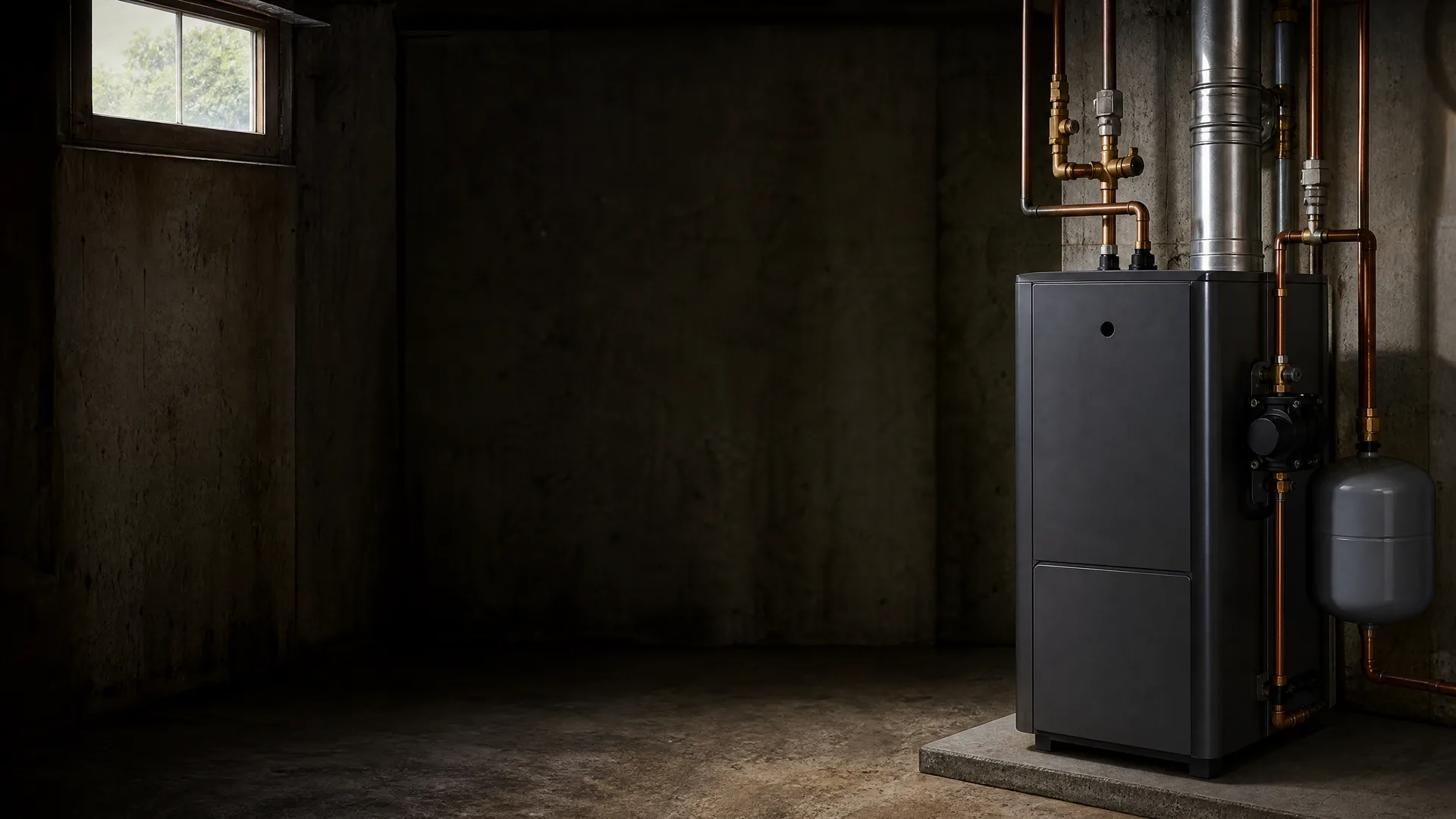
A dark grey boiler unit on a concrete pad in a dim basement, with copper pipes, a metal flue, and a grey expansion tank on the wall, and a small window with daylight on the left.

The right pro for this job

Only one pro gets your request, so you hear from one company.

Step 1 of 3: Equipment