
Boiler carbon monoxide signs in Nebraska
What are the signs of carbon monoxide from a boiler?
A boiler running all winter in a closed-up Nebraska house is exactly the setup where carbon monoxide gets dangerous. You want to know what to watch for before it becomes an emergency, not after. The signs aren't always obvious, and some of them get blamed on being tired or coming down with something when the real cause is sitting in the basement.
Soot near the boiler, a headache that fades when you leave the house, and a yellow instead of blue flame
A gas boiler burns fuel to make heat, and when that burn isn't complete, it gives off carbon monoxide instead of just heat and water vapor. Look for streaks of soot around the boiler or its vent, a flame that burns yellow or orange instead of steady blue, and excess moisture on nearby windows. On the people side, headaches, dizziness, or nausea that show up when you're home and ease off once you're outside are a real warning sign, especially if more than one person in the house notices it. With Nebraska winters keeping the boiler running for months and the house sealed up tight, any of these signs means the air inside has less chance to clear on its own.




Signs in you vs signs on the boiler
Signs on you
- A headache that shows up when the boiler's been running and eases once you're outside or in a different part of the house.
- Dizziness, nausea, or feeling unusually tired, especially if everyone in the house feels it around the same time.
- Confusion or trouble concentrating that doesn't match anything else going on that day.
- Symptoms that are worse in rooms closest to the boiler or near the vent pipe.
- Pets acting sluggish or sick for no clear reason, since they're often affected before people notice anything.
Signs on the boiler
- Soot or a dark stain around the draft hood or the boiler's vent connection.
- A yellow or flickering flame instead of the steady blue flame a gas boiler should burn.
- Rust or streaking on the vent pipe, or moisture collecting on windows near the boiler room.
- A smell like something's burning, or a stale, stuffy odor with no obvious source.
- The boiler's CO detector going off, which means leave the house and call for help before anything else.
Why a boiler produces it at all
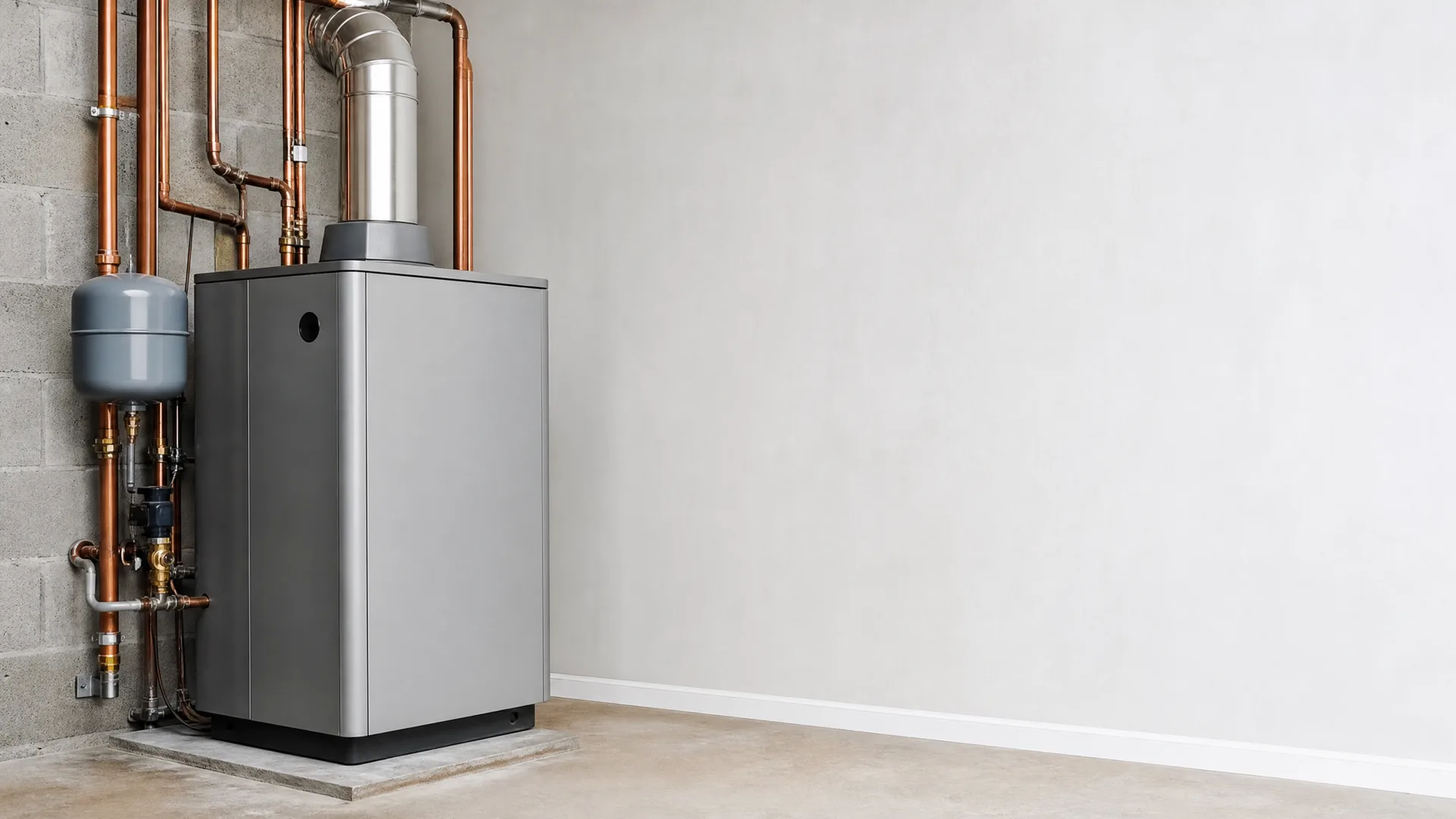
A boiler burns gas to make heat, and that flame needs a steady supply of air to burn clean. When it gets enough air, the byproduct is mostly water vapor and a small amount of carbon dioxide, vented harmlessly outside. When the flame is starved for air, or the vent pipe can't carry exhaust away the way it should, that same flame starts producing carbon monoxide instead. The gas has no smell of its own, so nothing about the flame looks different to the eye.
What the soot on the wall means
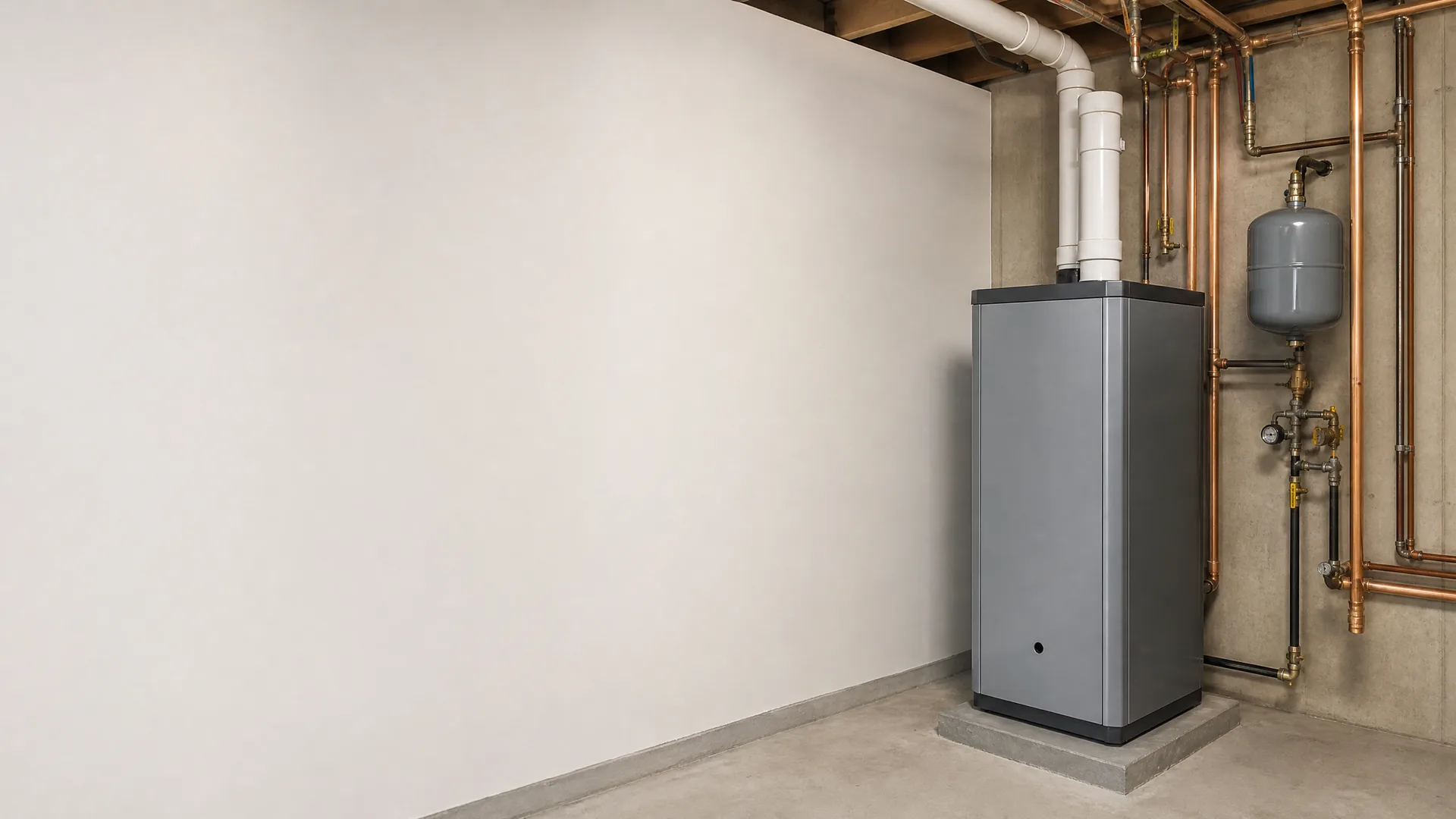
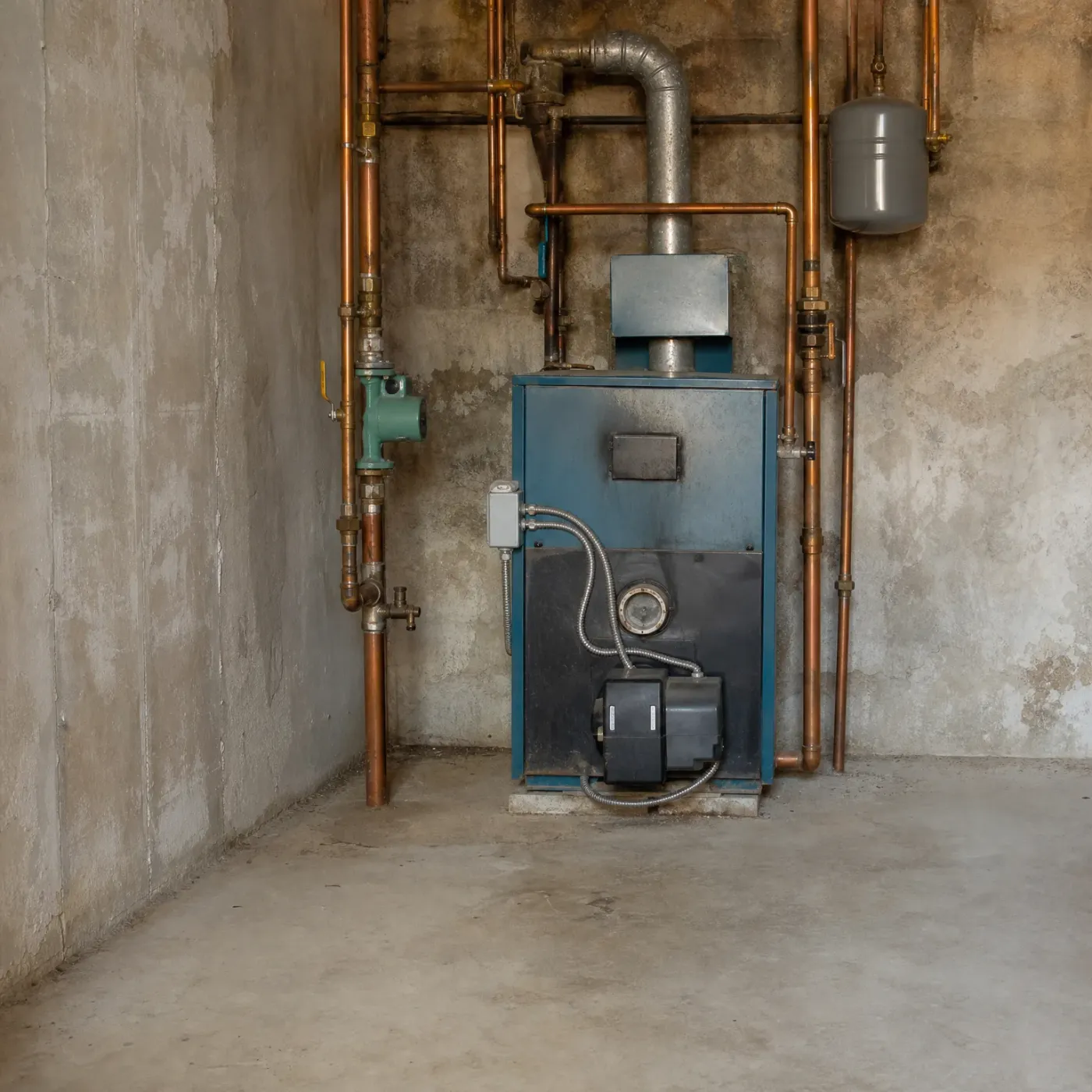
Yellow or brown staining around the boiler's draft hood, or on the wall and ceiling nearby, is soot from incomplete combustion finding its way into the room instead of up the vent. The same staining sometimes shows up around a chimney connector or at the top of a water heater sharing that flue. A pilot light burning yellow or orange instead of blue points to the same problem at the flame itself. None of this fades on its own, and it tends to get worse as the weather turns cold and the boiler runs longer each day.
Winter nights average 17°F statewide
At 17°F on a January night, your boiler is running long stretches to keep up, which means more hours of combustion and more chances for a venting problem to show up as carbon monoxide instead of just heat. Cold snaps like that are when a cracked heat exchanger or a blocked flue gets dangerous fastest.
NOAA nClimDiv 1991-2020 county normals weighted by homes
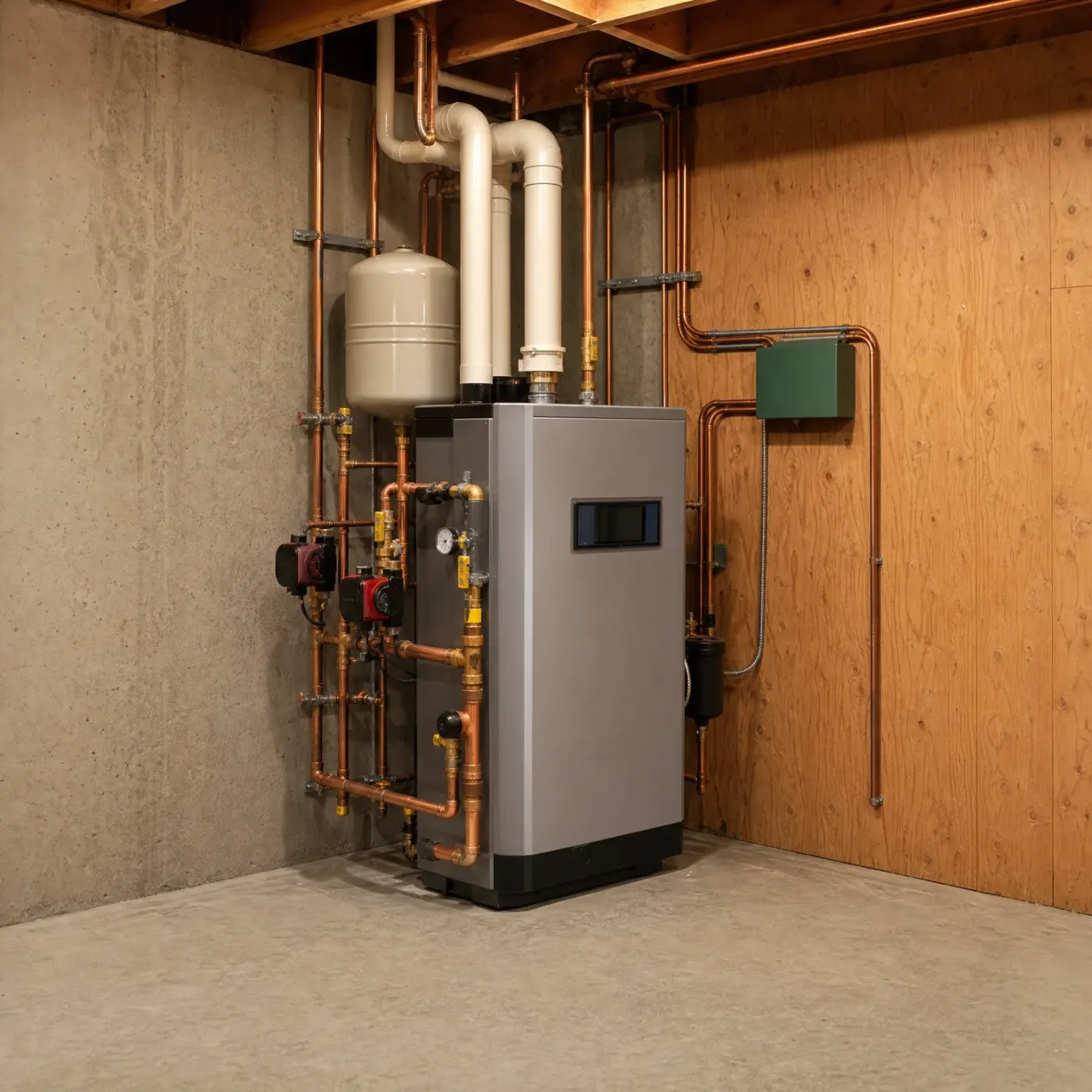
Gas burns inside the heat exchanger to warm the water.
Exhaust gas carries carbon monoxide into the flue.
The flue vents it outside through a sealed pipe or chimney.
A crack or blockage lets that exhaust leak into your house instead.
Get your boiler to the right pro
A boiler with a cracked heat exchanger or a blocked flue doesn't announce itself. It keeps heating the house while it leaks, and the only clues are a headache that lifts when you step outside or an alarm that chirps once and goes quiet. You're not a combustion tech, and you shouldn't have to parse a wiring diagram to know if what's happening in your basement is dangerous. A contractor who works on boilers all winter can tell in minutes whether the flue is sealed right and the exchanger is sound, and fix it if it's not. Nebraska winters mean this boiler runs for months straight, so a small leak now has a long season to get worse. Send the request and that part becomes someone else's job to sort out, not yours to keep worrying over every time the furnace kicks on at 2 a.m.
What Your Boiler Is Telling You
- A headache or drowsiness that eases when you leave the house points at the boiler, not the flu.
- A carbon monoxide alarm with a working battery is the only check that doesn't depend on how you feel.
- Soot near the boiler or a yellow flame instead of blue means it isn't burning clean.
- Cold snaps push the boiler to run longer, which gives a cracked heat exchanger more hours to leak.
- A cracked heat exchanger or a blocked flue keeps heating the house while it leaks, with no warning beyond the symptoms above.
- Once you send the signs you noticed to a licensed contractor, checking the boiler stops being something you have to figure out alone.
Carbon monoxide from a boiler almost never shows up as one obvious thing. It shows up as a headache that lifts when you step outside, or everyone in the house feeling tired and foggy around the same time, and it's easy to blame on being run down instead of on the boiler running in the next room. The alarm matters because it's the one check that doesn't rely on how anyone feels that day. A battery that's dead or a unit that's years past its own replacement date isn't protecting anyone, no matter how many times it's chirped fine before. Soot around the boiler or a flame that's burning yellow instead of blue is the kind of thing you can actually look at and judge for yourself, and neither one is normal. Nebraska winters push boilers into long runs on the coldest nights, and that's exactly when a crack in the heat exchanger or a blocked flue gets the most hours to leak before anyone notices. None of this means the boiler is broken in a way you caused or could have prevented by doing anything differently. It means the house needs eyes on the equipment, the kind that can tell a cracked heat exchanger from a dirty burner and fix whichever one it is. Once you've noticed the signs, the next step isn't figuring out what's wrong yourself.


The right pro for this job
A boiler with a cracked heat exchanger can leak carbon monoxide for weeks before anyone connects the headaches to the furnace room. A working alarm catches what your body might miss. Once you know the signs are real, the next step is getting someone qualified to check the heat exchanger and flue before another cold snap puts the boiler into long overnight runs. Send the form and a contractor who handles boiler repair in Nebraska will reach out to look at it. You stop chasing symptoms and hand the problem to someone who can actually find the crack.
After this form, you can stop searching for a boiler pro.
You only hire the pro if you want to.