Tell us about the job
Takes about a minute. No obligation.

Sizing a boiler for Butler County means accounting for a burner and heat exchanger that cycle through most of the calendar without a long summer rest to mask early wear. Homes in Butler County, NE run heat about eight months a year, from October through May. The ignition system, the burner assembly, and the heat exchanger each accumulate stress across that stretch, and a unit that is undersized or installed with shortcuts on flue sizing and combustion air will degrade visibly sooner than one a contractor matched to the actual load. A licensed installer works out that load before committing to equipment, because a guess in either direction costs more over time than the calculation does upfront.
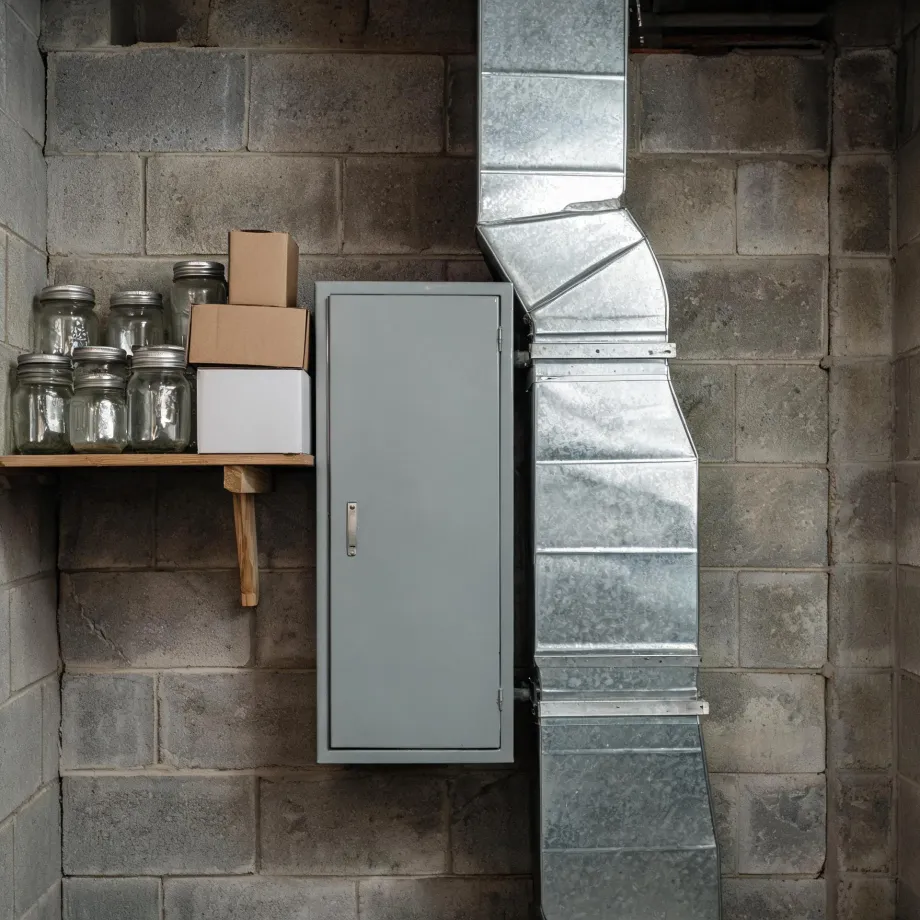
Existing ductwork and pipe runs are what a boiler installation turns on in a county with a housing stock this old. Half the homes in Butler County, Nebraska were built in 1968 or earlier (2020-2024 ACS 5-year). The buildings that make up the bulk of that stock were designed around heating systems that have since been replaced once or more, and each replacement left behind whatever the previous contractor adapted rather than rebuilt. A contractor sizing a new boiler has to establish whether what is already in the walls and floors will carry the new system, because when it does not, the installation scope changes considerably before the unit is ever ordered.
What Gets Installed With a New Boiler
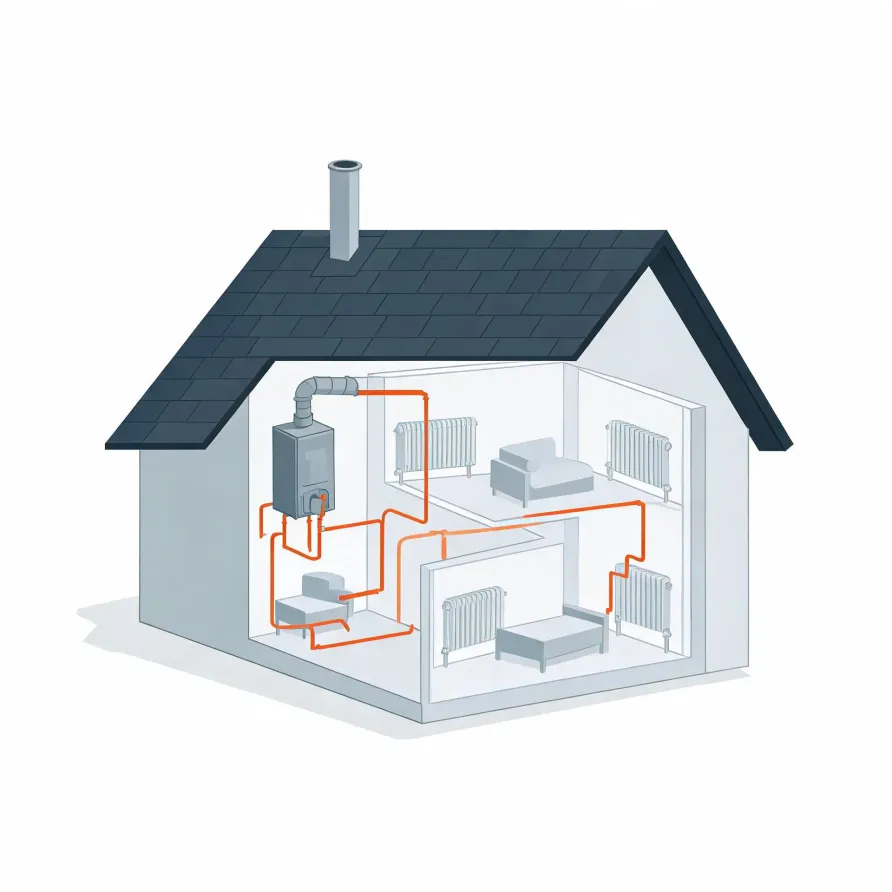
The boiler itself sits in a mechanical room, basement, or utility closet and is the heat source for the whole system. A contractor mounts it to the floor or wall depending on the unit type, connects it to a gas or oil supply line, and ties it into the home's existing plumbing. That unit is what a homeowner is buying at the center of the job.
From the boiler, supply pipes run through the house to radiators, baseboard heaters, or radiant floor loops, each of which releases heat into a room. A circulator pump, mounted close to the boiler, moves the heated water through those pipes and back again. An expansion tank and pressure relief valve sit on the same assembly, and a thermostat on a living-space wall ties the whole installation to the homeowner's controls.
The drawing shows a typical layout, and a licensed contractor determines exactly which components apply to your house.
Find a contractor in Butler CountyButler County, Nebraska, by the numbers
89 severe weather events were recorded in Butler County, Nebraska between 2015 and 2024.
NOAA National Centers for Environmental Information, Storm Events Database, bulk CSV export, events 2015-01-01 through 2024-12-31.Half the homes in Butler County, Nebraska were built in 1968 or earlier (2020-2024 ACS 5-year).
U.S. Census Bureau, 2020-2024 American Community Survey 5-Year EstimatesButler County, Nebraska holds 4,039 housing units (2020-2024 ACS 5-year).
U.S. Census Bureau, 2020-2024 American Community Survey 5-Year EstimatesOwners occupy 79.9% of the occupied homes in Butler County, Nebraska (2020-2024 ACS 5-year).
U.S. Census Bureau, 2020-2024 American Community Survey 5-Year EstimatesCodes & Standards Governing Boiler Installation in Butler County, Nebraska1 sourced rules and standards
Licensing and Legal Requirements for HVAC Work in Butler County, Nebraska
Nebraska requires registration rather than a licence: a contractor must be registered with the Department of Labor before performing any construction work, though anyone earning less than five thousand dollars a year from construction services is not a contractor under the Act at all.
Severe Weather Events in Butler County
Weather puts direct load on heating equipment, and Butler County's climate is not the same as the state average. A boiler sized and installed for local conditions handles that load without running harder than it should.
89 severe weather events, 2015–2024. Source: NOAA National Centers for Environmental Information, Storm Events Database.