Tell us about the job
Takes about a minute. No obligation.
Sizing a boiler correctly for this county starts with knowing how little downtime the burner and heat exchanger actually get. Homes in Lancaster County, NE run heat about eight months a year, from October through May. A system that is undersized or loosely commissioned does not get the idle months to hide the gap. The ignition system cycles, the heat exchanger expands and contracts, and a contractor quoting a replacement here has to account for that accumulated mechanical load when selecting capacity and specifying the install.
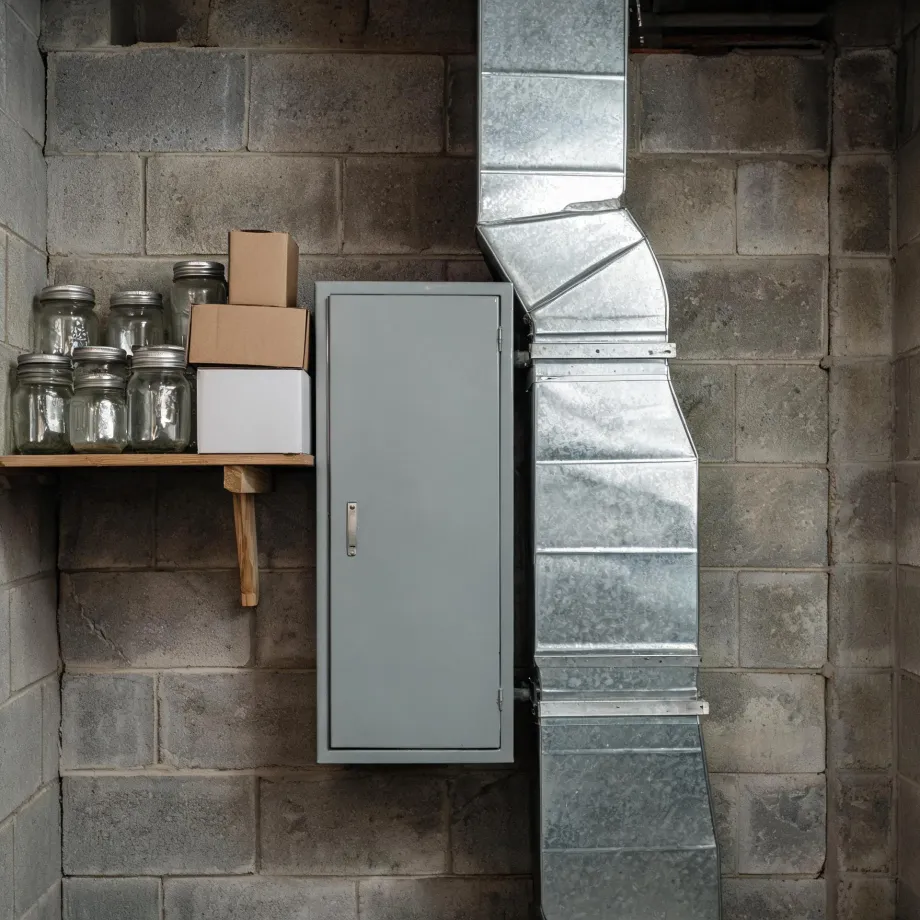
Existing piping and zone layouts in a house tell a contractor more about how a boiler installation will go than the unit being quoted. Half the homes in Lancaster County, Nebraska were built in 1983 or earlier (2020-2024 ACS 5-year). Housing built around that era was designed for a specific kind of system, and the distribution infrastructure it carries reflects that. When a contractor prices a boiler replacement here, what they are actually pricing is whether the pipes, the zone valves, and the radiators or baseboards already in place will work with a new unit's output, or whether that infrastructure needs to change before the new equipment can do its job.
What Gets Installed With a New Boiler
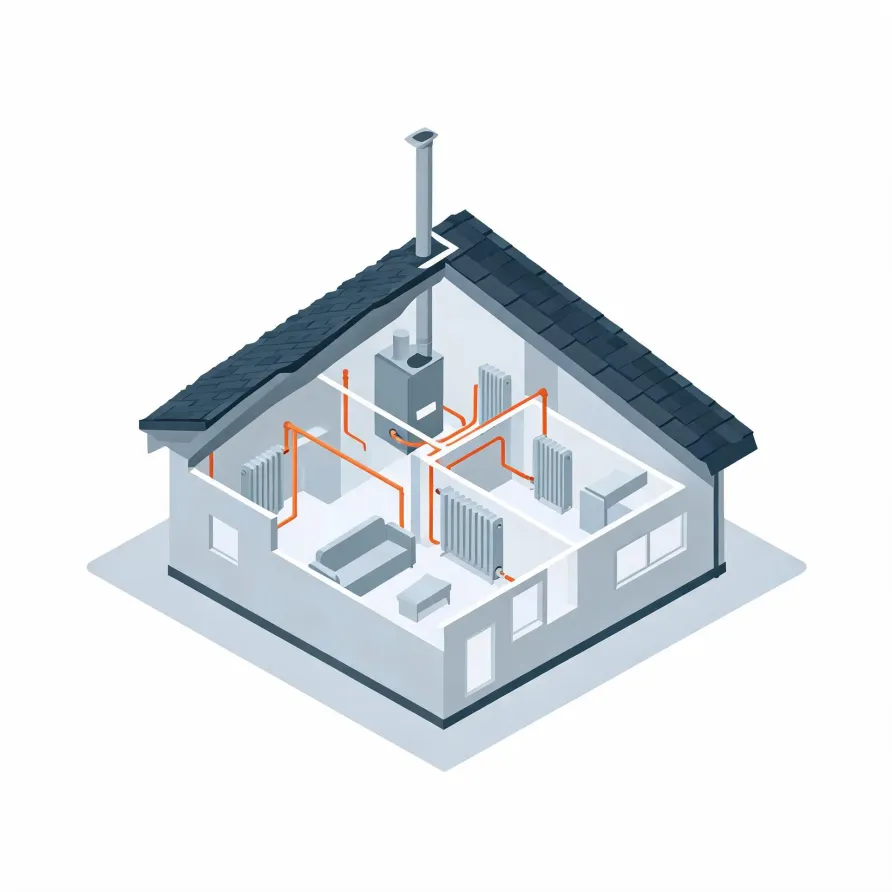
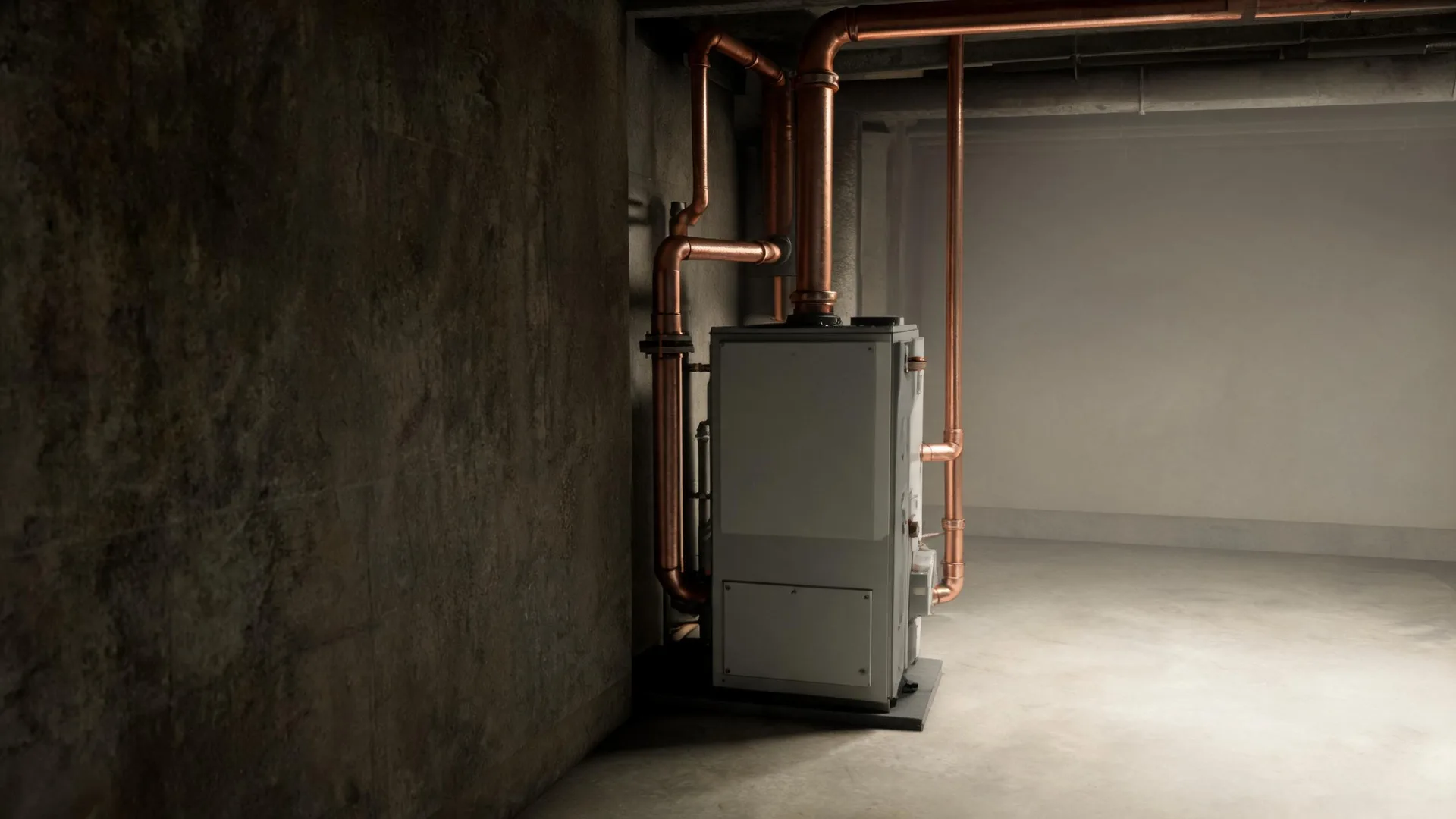
The boiler itself sits in the basement or mechanical room and is the unit that heats water and sends it out through the system. A contractor mounts it against a wall with clearance for access, then connects it to the gas or oil supply line and to the flue that carries exhaust gases out of the house.
From the boiler, a contractor runs supply and return pipes to radiators or radiant floor loops placed in each room or zone that needs heat. An expansion tank, typically hung near the boiler, absorbs pressure changes as water heats and cools, and a circulator pump keeps the heated water moving through the loop.
The drawing shows the general layout of a boiler system, and a licensed contractor determines exactly what applies to this house.
Find a contractor in Lancaster CountyLancaster County, by the numbers
316 severe weather events were recorded in Lancaster County, Nebraska between 2015 and 2024.
NOAA National Centers for Environmental Information, Storm Events Database, bulk CSV export, events 2015-01-01 through 2024-12-31.Half the homes in Lancaster County, Nebraska were built in 1983 or earlier (2020-2024 ACS 5-year).
U.S. Census Bureau, 2020-2024 American Community Survey 5-Year EstimatesLancaster County, Nebraska holds 140,324 housing units (2020-2024 ACS 5-year).
U.S. Census Bureau, 2020-2024 American Community Survey 5-Year EstimatesOwners occupy 58.9% of the occupied homes in Lancaster County, Nebraska (2020-2024 ACS 5-year).
U.S. Census Bureau, 2020-2024 American Community Survey 5-Year EstimatesBoiler Installation Rules and Codes for Lancaster County, Nebraska1 sourced standards and statutes
Licensing and Legal Requirements in Lancaster County, Nebraska
Nebraska requires registration rather than a licence: a contractor must be registered with the Department of Labor before performing any construction work, though anyone earning less than five thousand dollars a year from construction services is not a contractor under the Act at all.
Severe Weather Events in Lancaster County
Weather in Lancaster County puts real demands on heating equipment, cycling systems hard through cold stretches and pressure spikes that accumulate over years. A boiler sized and installed for local conditions handles that load differently than one specced from a national average.
316 severe weather events, 2015–2024. Source: NOAA National Centers for Environmental Information, Storm Events Database.