Tell us about the job
Takes about a minute. No obligation.

On a boiler repair call in Gage County, a contractor checks the ignition system and heat exchanger first, because those are the components that have been cycling the longest and failing them costs a homeowner the most. Homes in Gage County, NE run heat about eight months a year, from October through May. The burner and ignition assembly accumulate wear at a rate the rest of the system does not, and a heat exchanger that has been expanding and contracting through that kind of season shows stress at the seams and welds before the controls or the circulator give out. A contractor quoting a repair here prices those parts early.
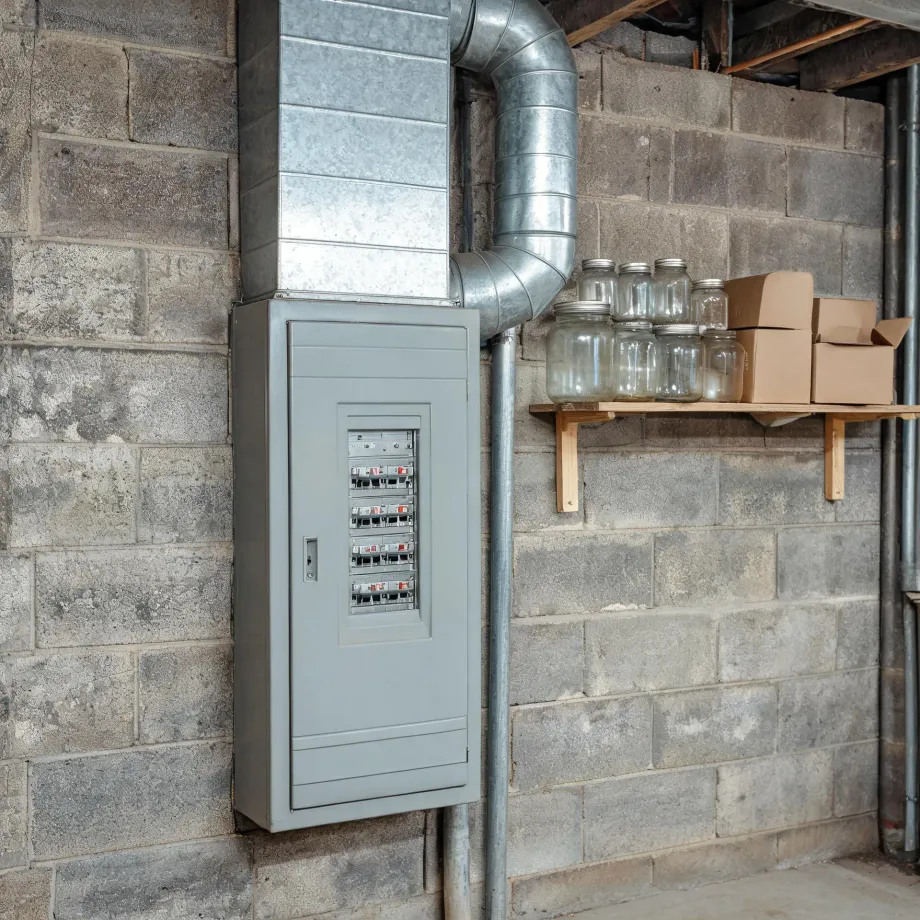
Piping runs, expansion tanks, and zone controls in houses this old were sized and laid out for systems that look different from what a contractor opens today. Half the homes in Gage County, Nebraska were built in 1961 or earlier (2020-2024 ACS 5-year). When a boiler in that stock needs repair, what the opened unit reveals tends to pull the job outward into the surrounding distribution system: a corroded section of pipe, a relief valve that has never been swapped, a circulator that has been compensating for something upstream. Parts for the boiler itself may still be available, but what the house feeds into that boiler determines whether the repair holds.
The Parts of a Boiler a Contractor Checks First
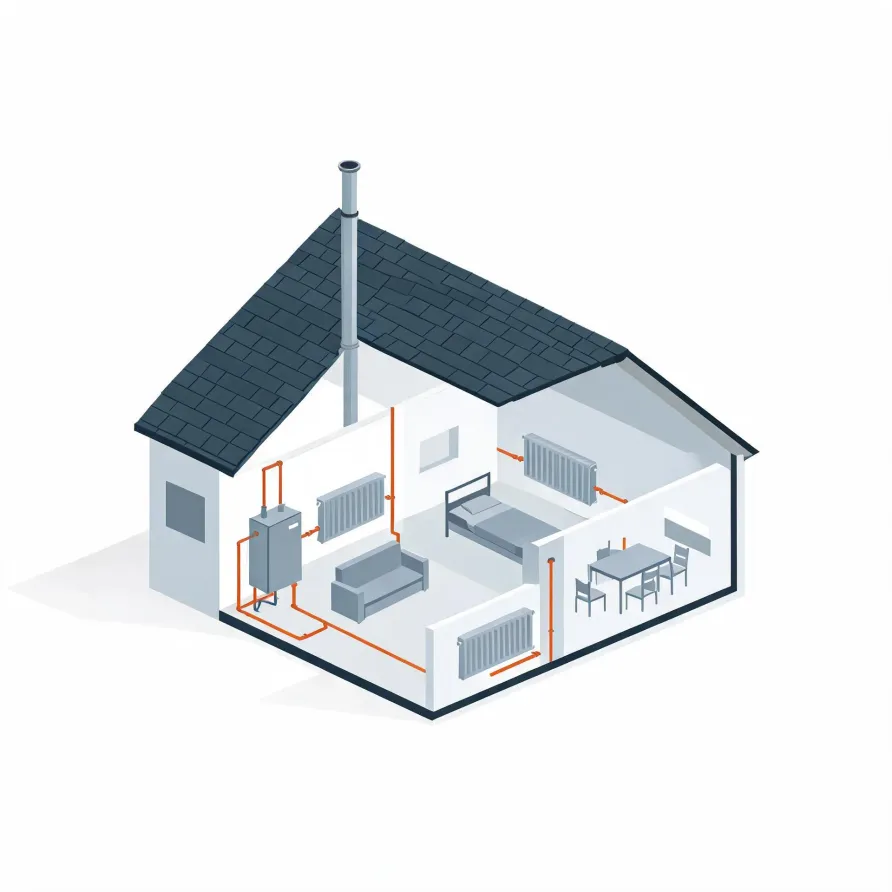
The boiler itself sits in the basement or a utility room and is the piece a contractor goes to first. Inside it, the heat exchanger is where combustion heat transfers to water, and a crack or buildup there explains a lot of repair calls. The burner assembly, also inside the unit, is the next thing a contractor pulls apart when the boiler fires poorly or not at all.
Circulator pumps move heated water out through the supply pipes and back through the return lines, and a failed pump is one of the more common reasons a zone goes cold. The expansion tank, usually mounted nearby on the piping, absorbs pressure swings in the system, and a waterlogged one shows up as pressure spikes or relief valve trips. Thermostats and zone valves sit at the edges of the system and are often where a contractor looks when only one room has a problem.
The drawing shows a typical boiler layout, and a licensed contractor determines which components and configurations apply to your specific home.
Find a contractor in Gage CountyGage County by the numbers
148 severe weather events were recorded in Gage County, Nebraska between 2015 and 2024.
NOAA National Centers for Environmental Information, Storm Events Database, bulk CSV export, events 2015-01-01 through 2024-12-31.Half the homes in Gage County, Nebraska were built in 1961 or earlier (2020-2024 ACS 5-year).
U.S. Census Bureau, 2020-2024 American Community Survey 5-Year EstimatesGage County, Nebraska holds 10,399 housing units (2020-2024 ACS 5-year).
U.S. Census Bureau, 2020-2024 American Community Survey 5-Year EstimatesOwners occupy 73.5% of the occupied homes in Gage County, Nebraska (2020-2024 ACS 5-year).
U.S. Census Bureau, 2020-2024 American Community Survey 5-Year EstimatesBoiler & HVAC Repair Rules on Record for Gage County, Nebraska1 sourced standards and codes
Licensing and Legal Requirements for HVAC Repair in Gage County, Nebraska
Nebraska requires registration rather than a licence: a contractor must be registered with the Department of Labor before performing any construction work, though anyone earning less than five thousand dollars a year from construction services is not a contractor under the Act at all.
Severe Weather Events in Gage County
Gage County's climate puts real demands on boiler systems, and weather stress is a direct driver of repair needs. Knowing what this area has seen year over year helps put local service demand in context.
148 severe weather events, 2015–2024. Source: NOAA National Centers for Environmental Information, Storm Events Database.