Tell us about the job
Takes about a minute. No obligation.

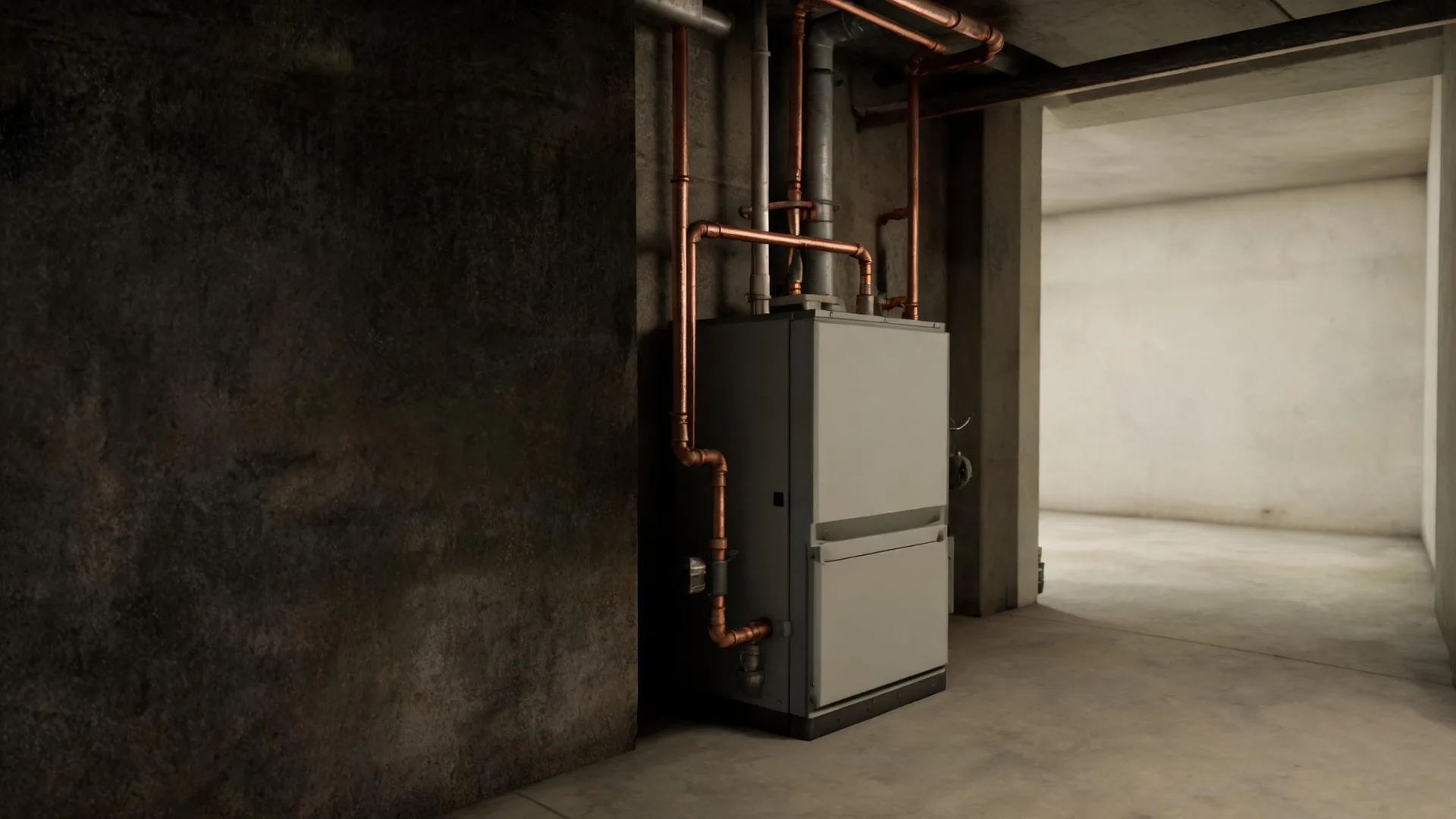
A boiler in Valley County runs its burner and ignition system hard through a long stretch of the calendar. Homes in Valley County, NE run heat about eight months a year, from October through May. By the time a homeowner calls for a repair, the ignition assembly and heat exchanger have already been through a full load of thermal cycling, and a contractor diagnosing the fault starts there. Wear on those parts is cumulative and uneven, so a crack in the heat exchanger or a degraded igniter is a more likely finding here than a refrigerant or electrical fault that sits idle all season.
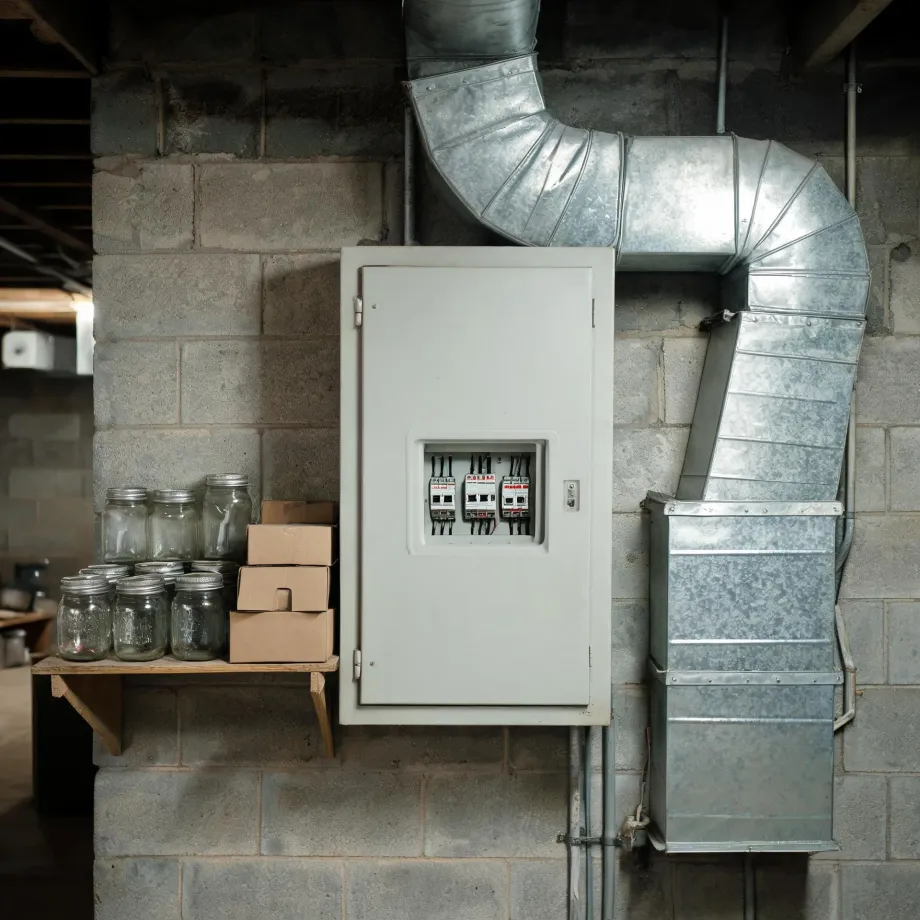
Boilers in this county get opened and the real diagnosis starts there. Half the homes in Valley County, Nebraska were built in 1961 or earlier (2020-2024 ACS 5-year). A system installed into a house of that vintage is running inside piping, valves, and radiator connections that were put in for a different boiler, sometimes more than one generation back, and corrosion inside those joints does not show until a contractor pulls the access panel or disconnects a fitting. What they find decides whether the repair is a part swap or a larger scope of work on the distribution side. Parts for residential boilers are still widely available, so availability rarely blocks the job. The piping condition is what does.
The Parts of a Boiler a Contractor Checks First
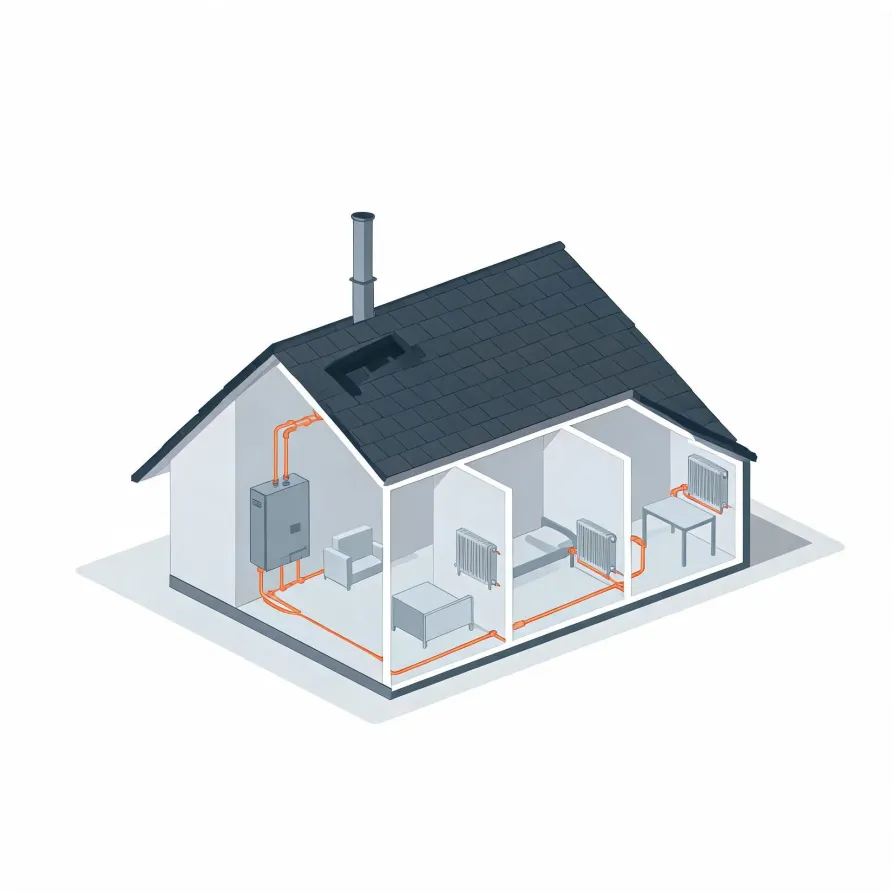
The boiler itself sits in a mechanical room, basement, or utility closet and is where water gets heated before it moves through the house. A contractor working on a repair will look at the burner assembly and heat exchanger early, since those are where combustion problems, cracked sections, and pressure irregularities tend to show up.
From the boiler, pipes carry hot water to radiators or radiant floor loops throughout the house, and a circulator pump keeps that water moving. The expansion tank, pressure relief valve, and aquastat all sit close to the boiler body, and each one is a point a contractor examines when the system is losing pressure, short-cycling, or failing to heat evenly.
The drawing shows a typical boiler system layout, and a licensed contractor determines which components apply and what condition they are in for your specific home.
Find a contractor in Valley CountyValley County, Nebraska, by the numbers
148 severe weather events were recorded in Valley County, Nebraska between 2015 and 2024.
NOAA National Centers for Environmental Information, Storm Events Database, bulk CSV export, events 2015-01-01 through 2024-12-31.Half the homes in Valley County, Nebraska were built in 1961 or earlier (2020-2024 ACS 5-year).
U.S. Census Bureau, 2020-2024 American Community Survey 5-Year EstimatesValley County, Nebraska holds 2,108 housing units (2020-2024 ACS 5-year).
U.S. Census Bureau, 2020-2024 American Community Survey 5-Year EstimatesOwners occupy 73.8% of the occupied homes in Valley County, Nebraska (2020-2024 ACS 5-year).
U.S. Census Bureau, 2020-2024 American Community Survey 5-Year EstimatesBoiler Repair Rules on the Books for Valley County, Nebraska1 codes, standards, and statutes
Licensing and Legal Requirements in Valley County, Nebraska
Nebraska requires registration rather than a licence: a contractor must be registered with the Department of Labor before performing any construction work, though anyone earning less than five thousand dollars a year from construction services is not a contractor under the Act at all.
Severe Weather Events in Valley County
Extreme weather puts stress on heating systems, and boilers that cycle hard through temperature swings accumulate wear faster than those running in mild conditions. How often that kind of stress hits Valley County shapes what local boilers need and how soon they need it.
148 severe weather events, 2015–2024. Source: NOAA National Centers for Environmental Information, Storm Events Database.