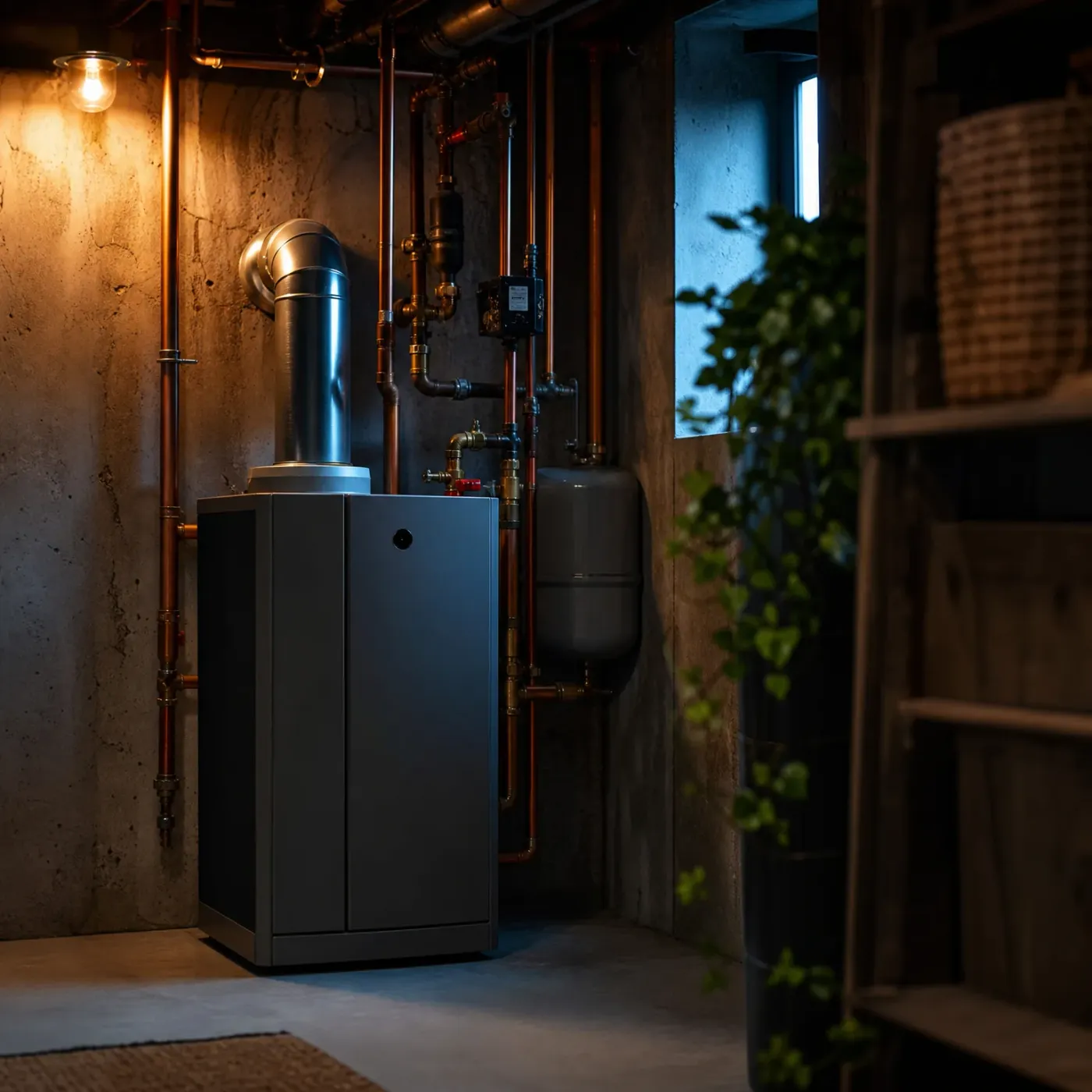
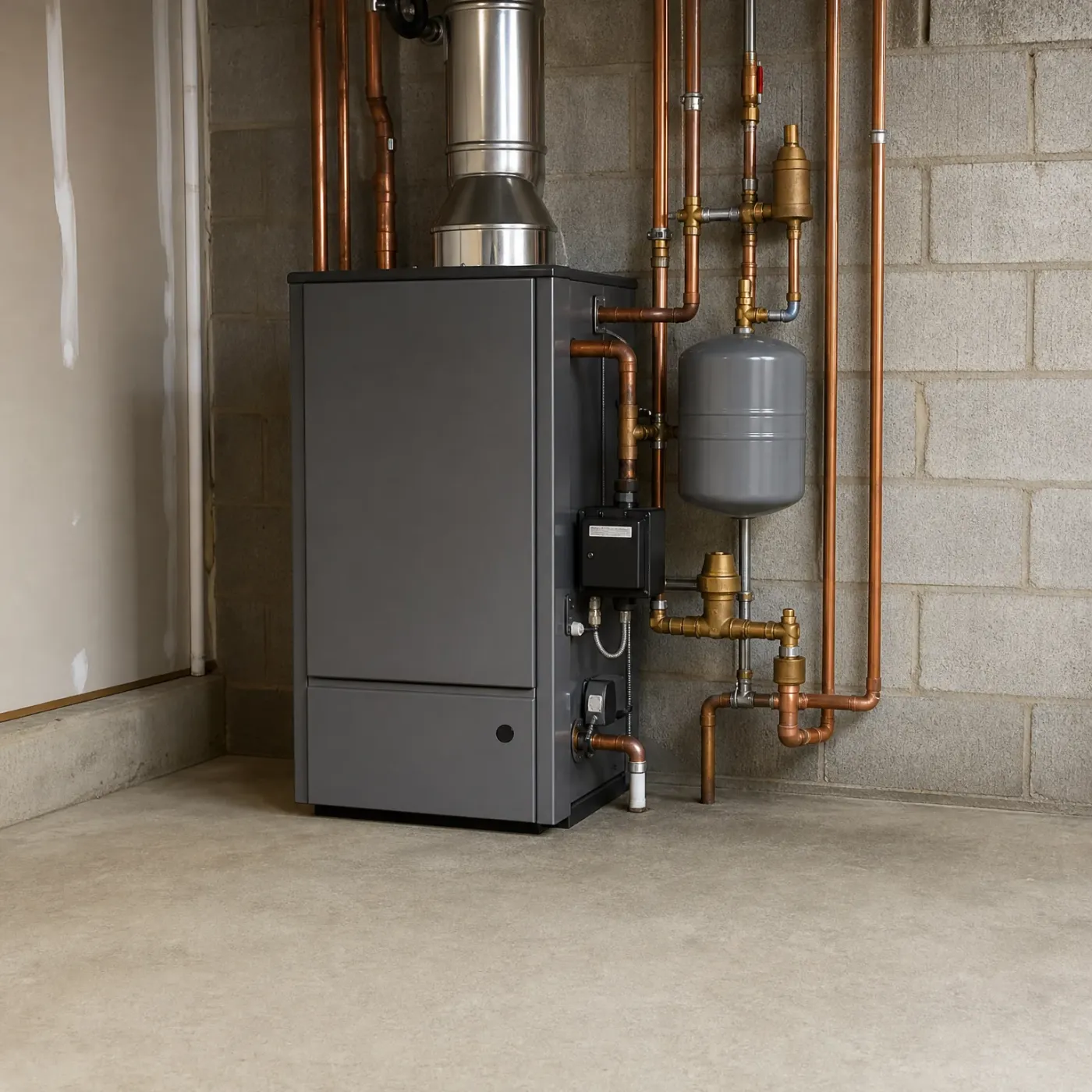
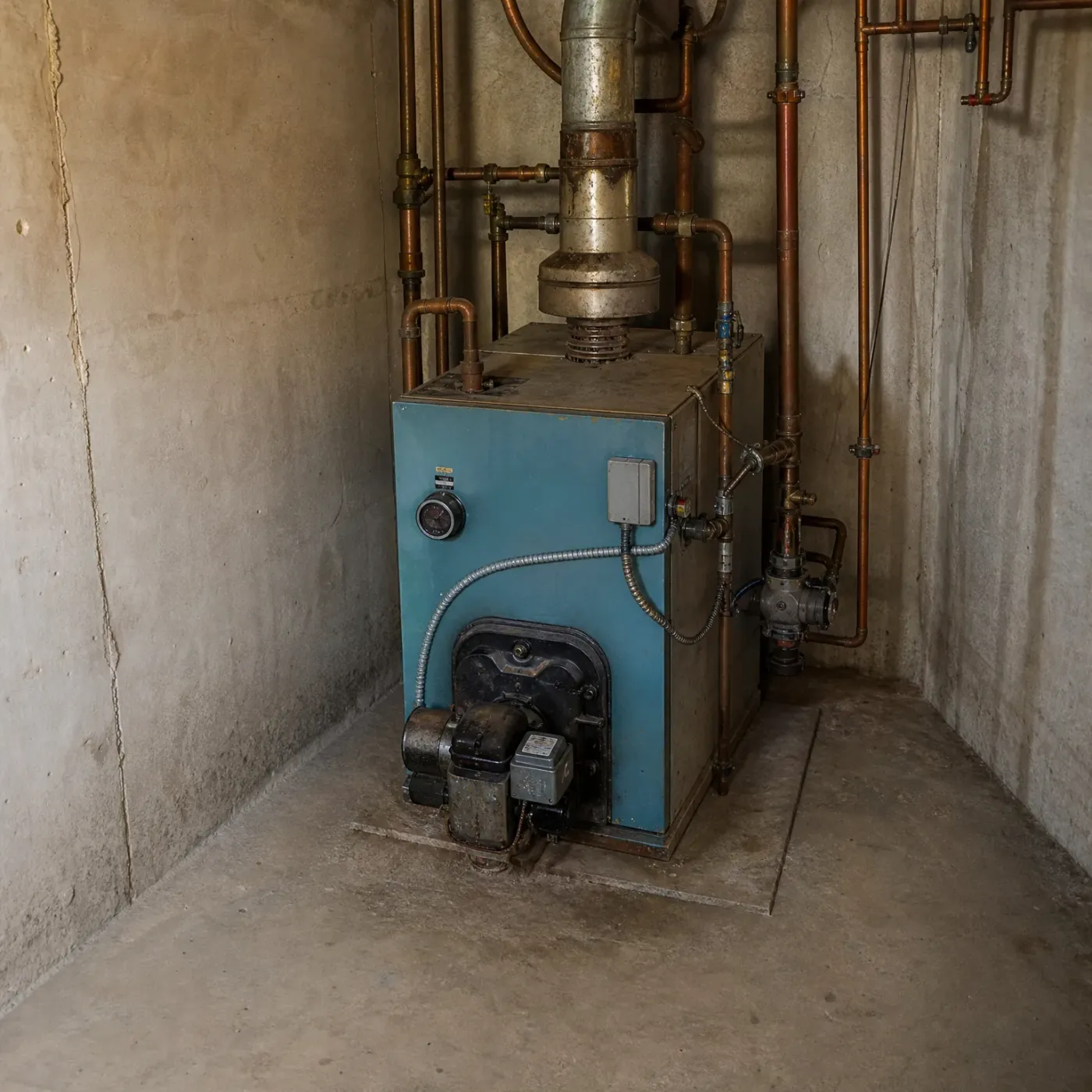
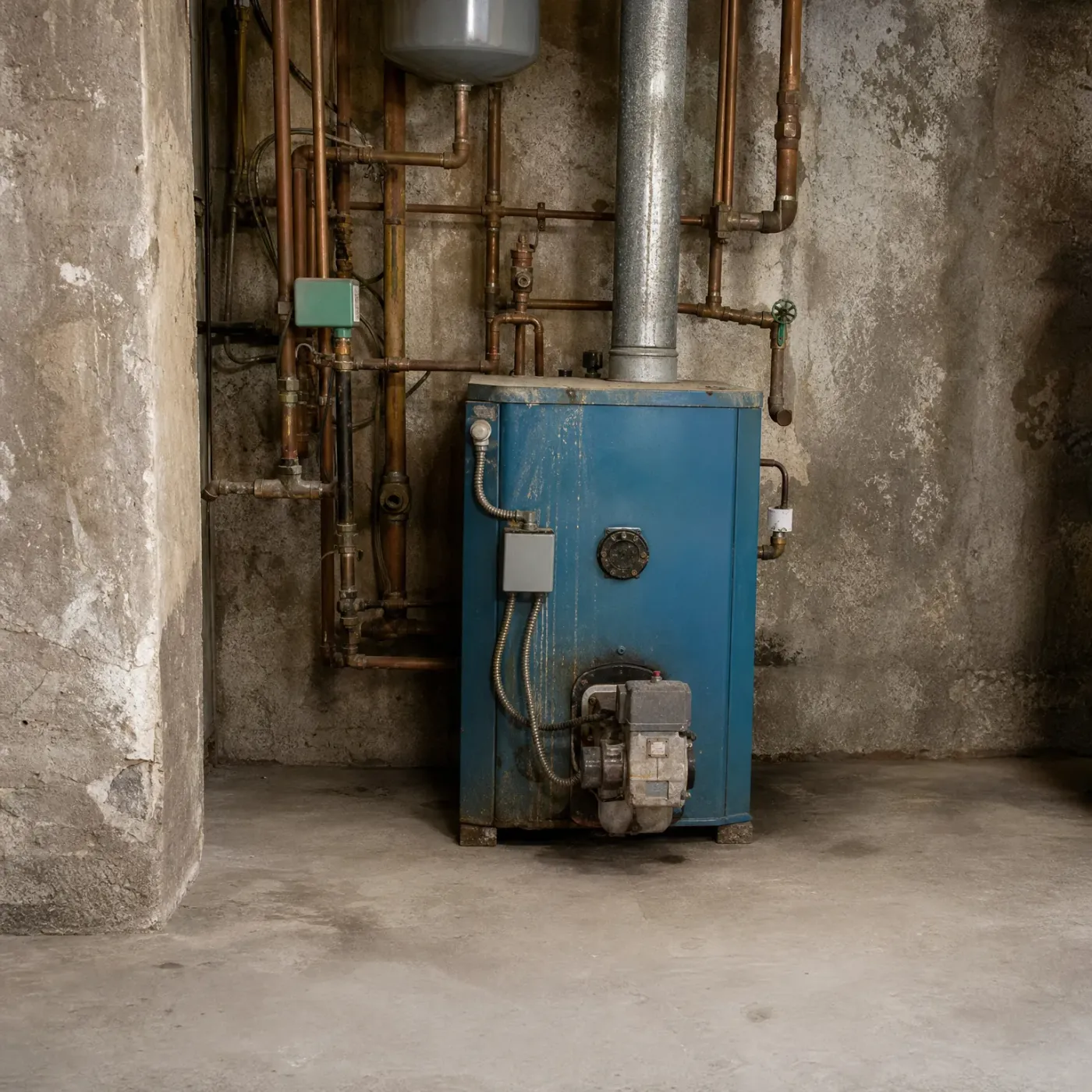
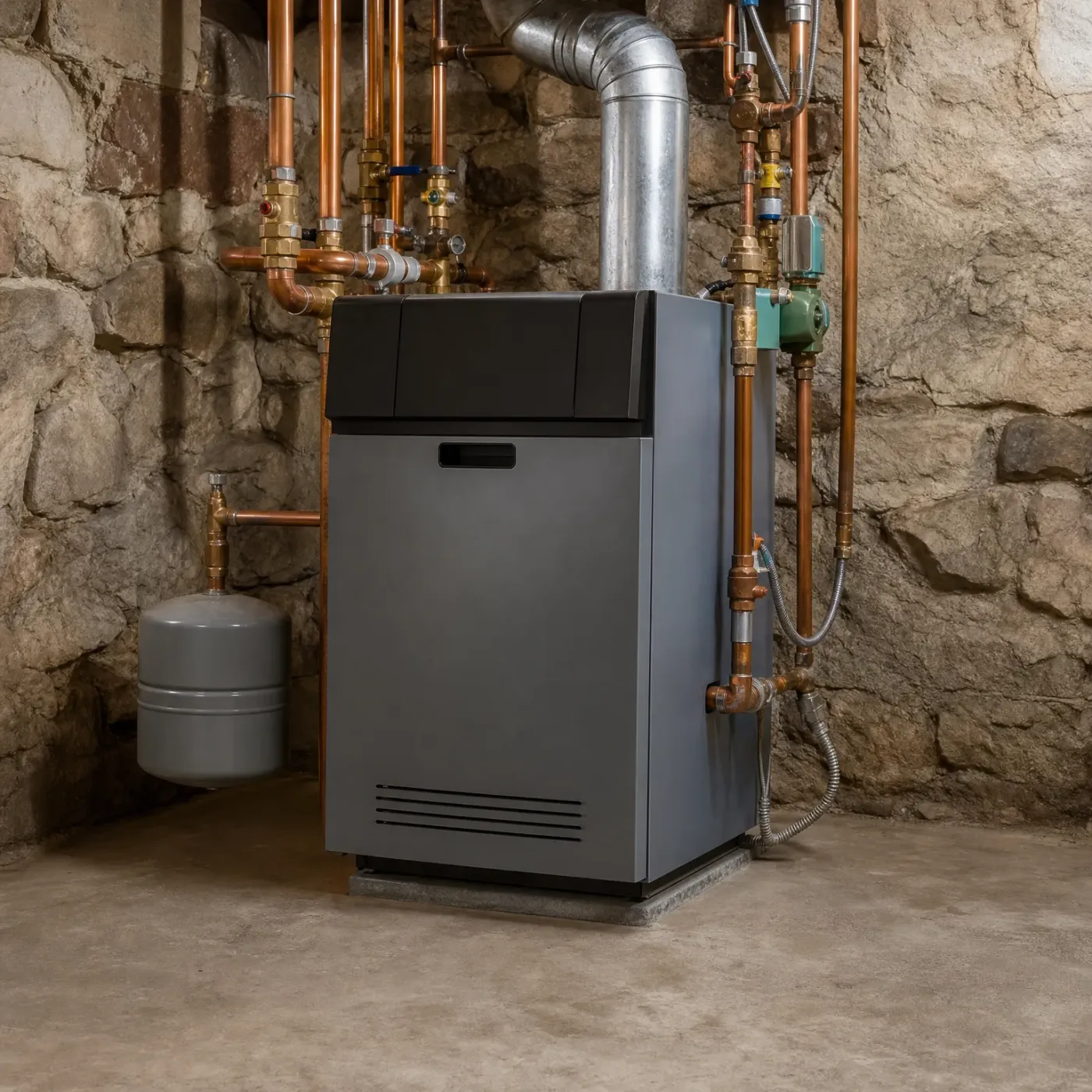
What's Actually Happening Inside
- A thermostat call for heat opens the zone valve or starts the circulator before the burner ever fires.
- An aquastat tracks the water temperature inside the boiler and tells the burner when to shut off.
- Low water cutoff hardware stops the burner if the water level drops too far to protect the heat exchanger.
- A pressure relief valve opens on its own if pressure inside the system climbs past a safe limit.
- Sediment that collects at the bottom of the tank makes the burner work longer to heat the same water.
- An expansion tank gives hot water room to expand so the system doesn't short cycle on pressure alone.
Every call for heat starts the same way. The thermostat signals the zone valve or circulator, and only once water starts moving does the burner fire. That order matters, because a burner firing without water flow is how a heat exchanger cracks. The aquastat is what decides how long the burner runs, reading the water temperature and cutting the burner once it hits the setpoint, then calling for heat again once the water cools. If the water level in the boiler drops low, the low water cutoff is what shuts the burner down before the heat exchanger runs dry and overheats. A pressure relief valve is the backup behind all of it. If pressure inside the system climbs too high for any reason, it opens and releases water rather than letting a line or fitting fail. Two things wear on this system quietly over years. Sediment settles at the bottom of the tank, and the burner has to run longer to push heat through it, which is extra strain with nothing to show for it. The expansion tank is supposed to prevent a different problem. Water expands as it heats, and the tank gives it somewhere to go, so the system isn't relying on the pressure relief valve to manage normal temperature swings. When the expansion tank waterlogs or fails, the boiler can short cycle on pressure even though nothing else is wrong. Each of these parts is small, but any one failing changes how the whole boiler behaves.