How to bleed radiators before a Nebraska winter

A local pro who services boilers gets in touch about the tune-up.

Get a boiler pro

How do I bleed my radiators before winter hits?

Before the cold sets in, it's worth checking your radiators so the boiler isn't working against trapped air all winter. If one or two have been cooler at the top than the bottom, or you've heard gurgling, that's air sitting where hot water should be. Bleeding them now, while the system isn't running hard yet, means you're not doing it in the middle of a January cold snap.

Open the bleed valve on each radiator until water runs out steady, then close it

Turn the boiler off first. Starting at the radiator farthest from the boiler, use a radiator key on the bleed valve at the top and hold a cloth under it. You'll hear a hiss as air escapes. Once that stops and water starts coming out in a steady stream, close the valve. Work your way through the rest of the house the same way, then check the boiler's pressure gauge once everything's closed up, since bleeding radiators drops the system pressure and most boilers need it topped back up to run right. With gas heat and a long Nebraska winter ahead, a radiator full of air just means the boiler burns more to heat the same room.

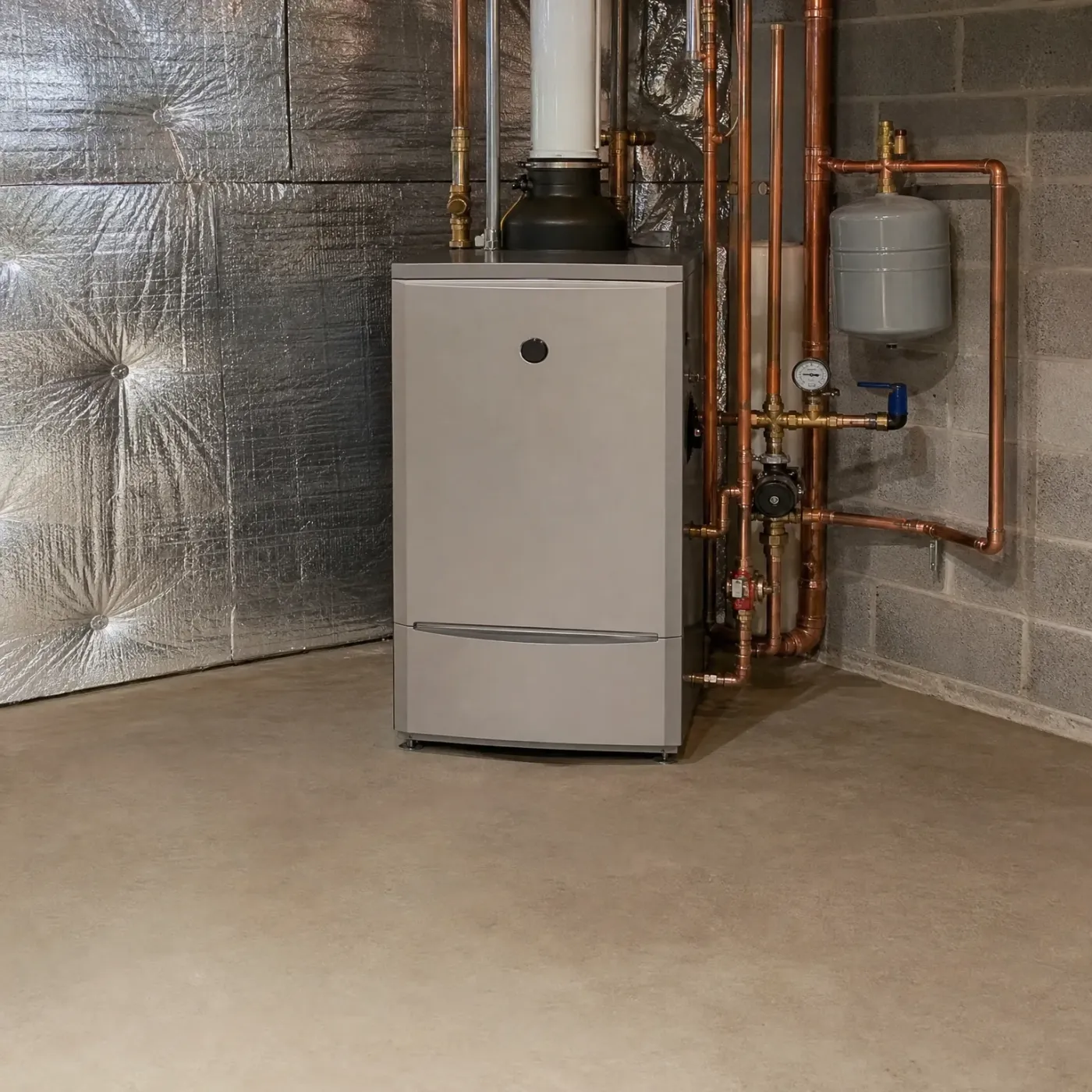
A gray residential boiler in a basement corner with copper piping, a circulator pump, pressure gauge, blue-handled valve and gray expansion tank against a concrete block wall, next to a foil-insulated wall.

Radiators bled, boiler running clean

With the air out, water moves through every radiator and the circulator pump isn't working to push past pockets that don't belong there. The pressure gauge holds steady, and heat reaches the top of each radiator the same as the bottom.

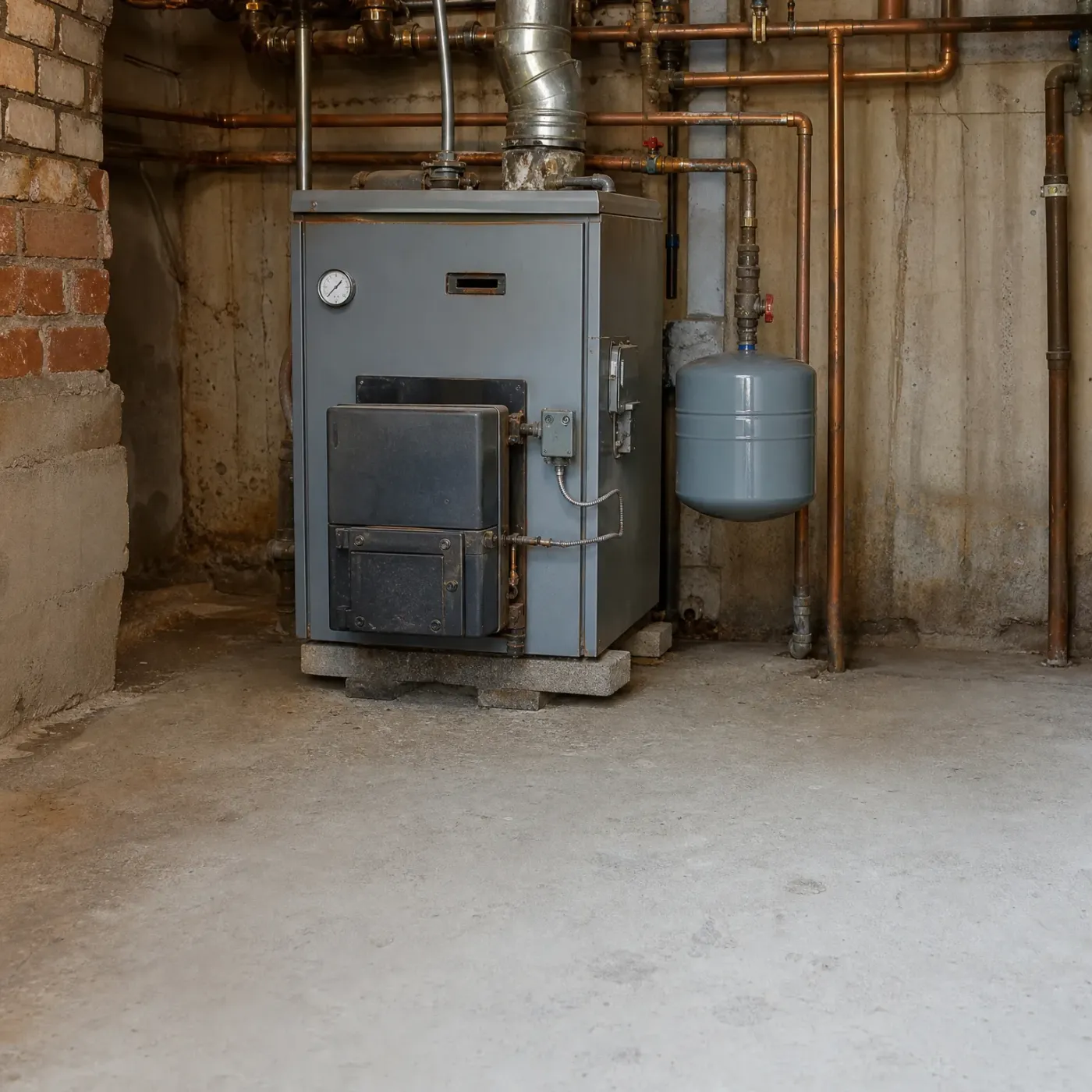
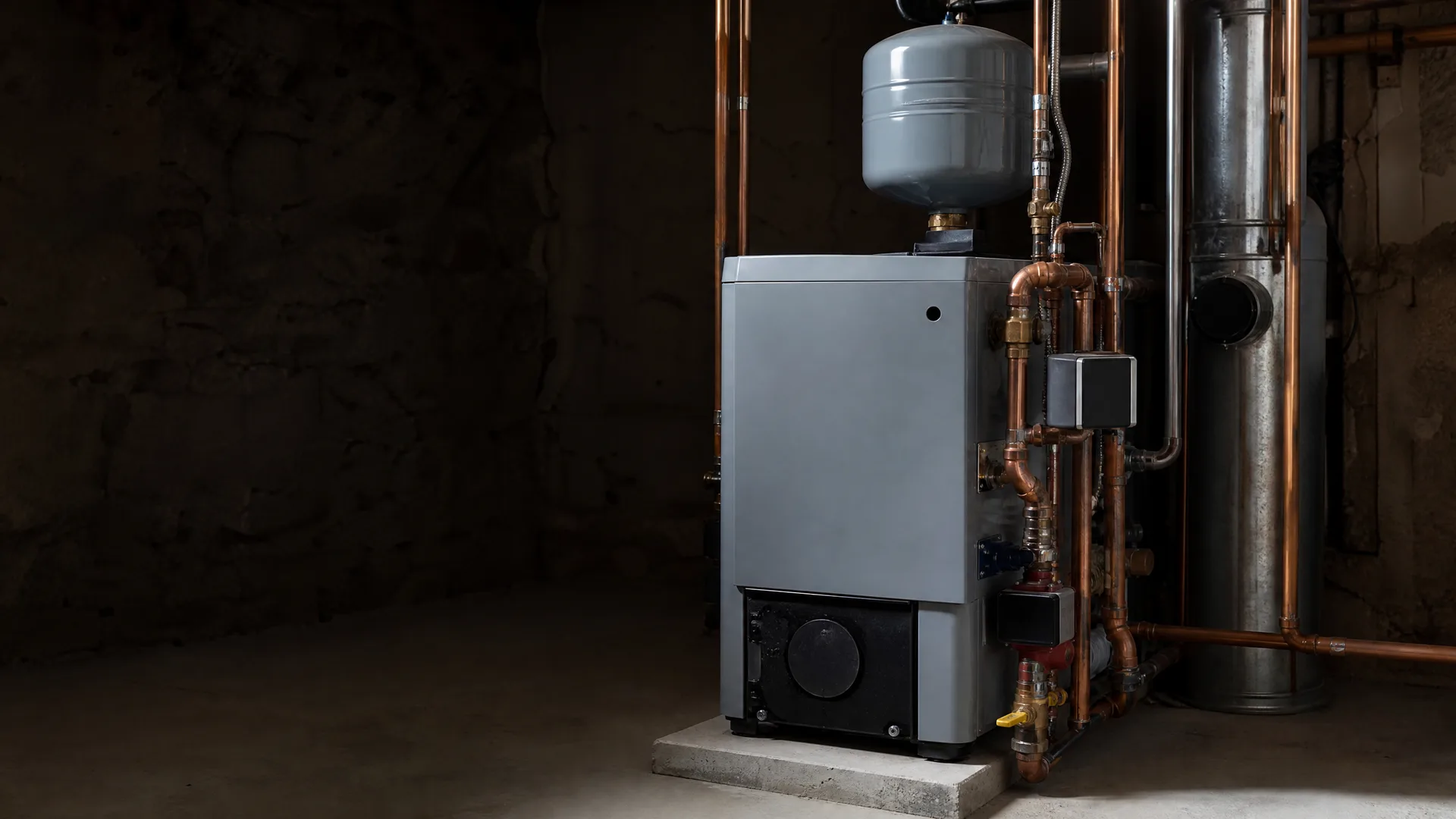
A gray boiler on a concrete block base in a basement, with copper piping, a metal flue, and a gray expansion tank mounted beside it against a concrete wall.

Air still trapped going into winter

A boiler fighting trapped air runs longer to heat the same rooms, and some radiators stay cool at the top no matter how long the system runs. Left alone, that strain on the pump and fittings adds up over a full Nebraska winter.

Why does one radiator never get fully warm?

Walk your rooms and put a hand on each radiator, top and bottom. One that's warm at the bottom and cold at the top has air trapped inside. You might have noticed it already, a room that never quite gets comfortable even with the boiler running, or a knocking or gurgling sound from the pipes when the heat kicks on. That's water trying to move past air that has nowhere to go. Left alone through a Nebraska winter, the boiler runs longer to heat the same rooms, and the circulator pump keeps pushing against air it can't move. Some homes end up with one cold bedroom all season because nobody traced it back to a radiator that needed bleeding.

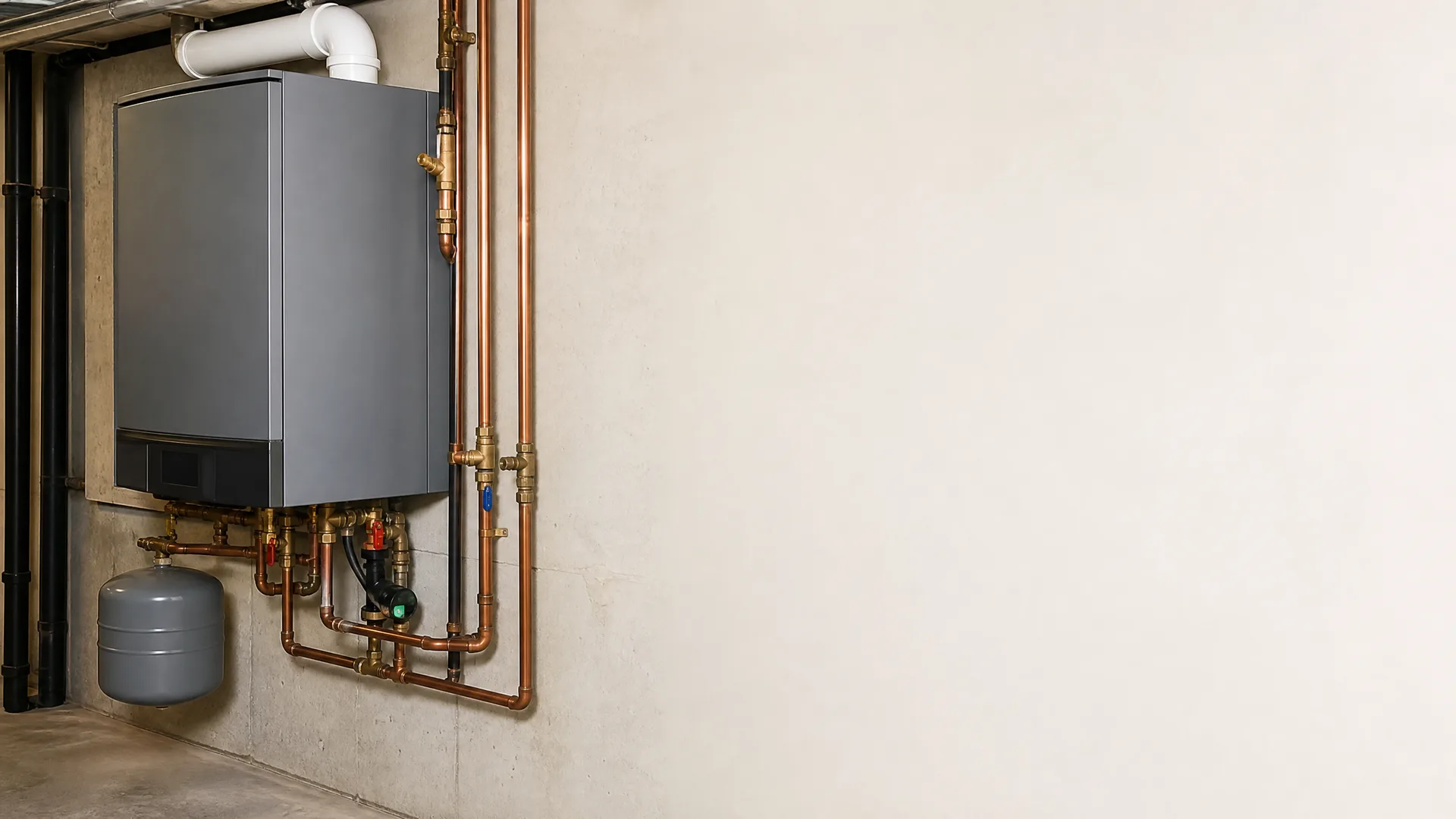
A gray wall-mounted boiler with copper piping, valves and a gray expansion tank installed on a plain concrete basement wall.

What the trapped air is doing

Water carries heat through the system. Air doesn't, so wherever it collects, that spot stops radiating heat into the room. The circulator pump has to work harder to push water past that pocket, and the boiler keeps firing to make up for a radiator that isn't giving up its heat. Over a full winter that adds up to longer burn times for the same rooms. Bleeding the radiator lets the air out through the valve so water fills the whole thing, top to bottom, and the pump stops fighting a blockage that was never supposed to be there.

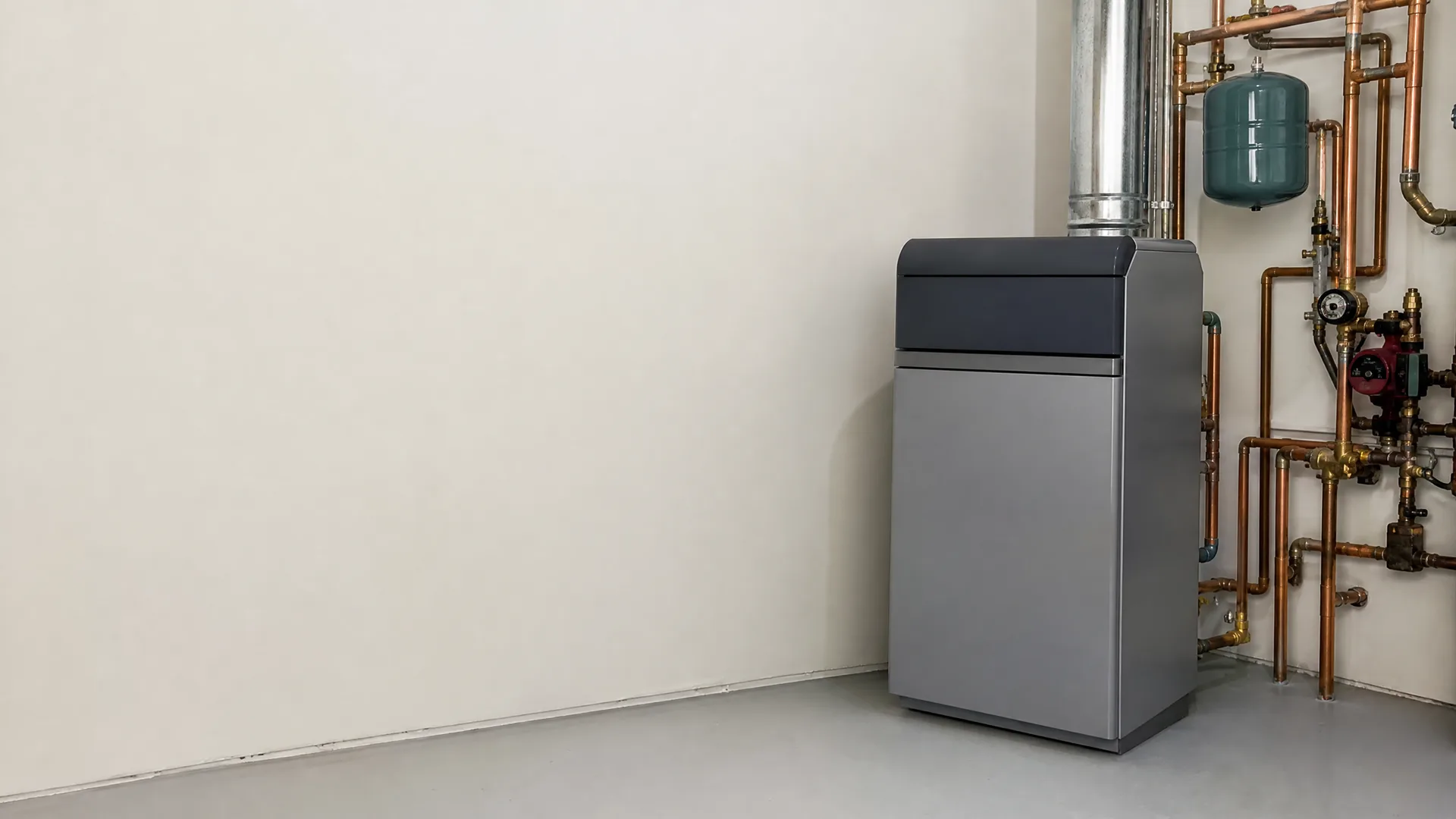
A grey floor-standing boiler with a metal flue pipe stands in a corner of a bare room next to copper pipework, valves and a green expansion tank mounted on the wall.

Why this check is seasonal

Air works its way into a boiler system on its own, through small amounts dissolved in the water or through minor leaks at fittings and valves over months of use. A system bled clean in spring can have air in it again by the time you need steady heat. Checking before the furnace runs hard means you catch it while the fix is simple, a few minutes with a radiator key, rather than mid-January when a cold bedroom is harder to ignore and the boiler's already working overtime to cover for it.

A woman in a long cream cardigan and jeans stands at an open wooden front door of a gray shingled house with stone-based porch columns, with a second person visible inside, and potted flowers and shrubs beside the entry.

What's happening inside the radiator when you open the valve

Each radiator has a bleed valve near the top, usually a square fitting you turn with a radiator key. Open it a quarter turn and you'll hear air hissing out first, since air sits above the water. Keep a cloth under it. Once the hiss stops and water starts to dribble out steady, close the valve. That's it for that radiator.

Do this on every radiator in the house, not just the one that felt cold. Air can migrate between them as the system cools and heats again, so a radiator that bled clean last year can pick up a pocket this year. If you get through all of them and one still won't hold heat at the top, that's not an air problem anymore. That's usually something a local boiler tech would want to look at, someone who sees this exact setup every fall and knows whether it's the valve, the pump, or something further back in the loop.

Interior corner with sheer white curtains at a window, a brown upholstered sofa in the foreground, and a wooden multi-drawer cabinet holding a round ceramic vase with leafy branches.
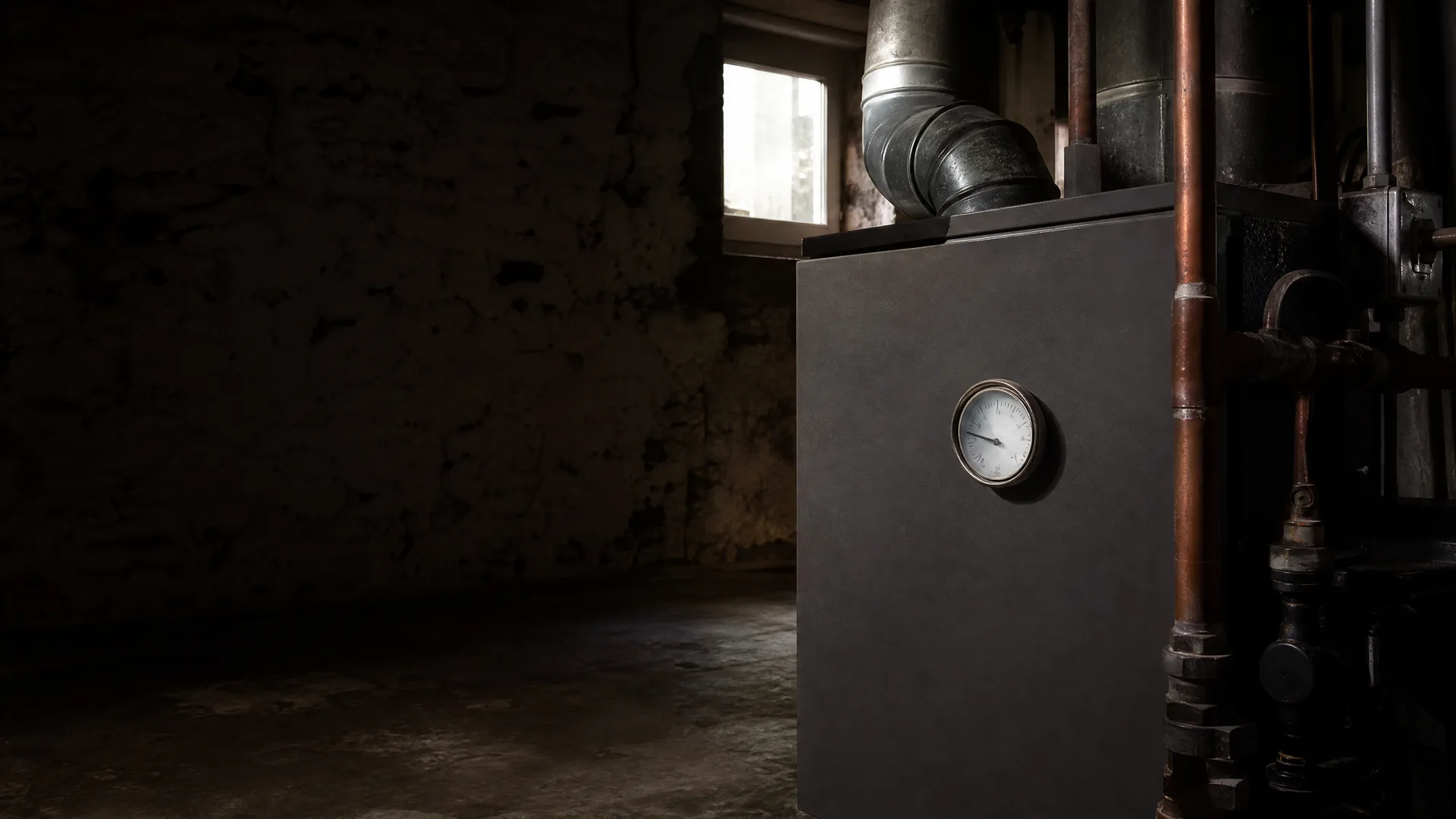
A dark basement with a gray boiler unit bearing a round pressure gauge, connected to metal ductwork and copper pipes, beside a weathered wall and small window.

You're down in the basement on a gray October afternoon, the kind where the furnace next door would already be running but your boiler's been quiet since September. You crouch by it with the radiator key still in your hand from upstairs. The pressure gauge is right there at eye level, its needle sitting low, under where it should be. You tap the glass once out of habit, but it doesn't move. Outside, the first hard frost of the year is still a few weeks off, and you'd rather deal with this now, standing in a dry basement, than in January with the boiler straining and a cold bedroom upstairs. You make a note to get the pressure looked at before you close the basement door.


Matched to your boiler job

A licensed local pro takes the request for your boiler tune-up.

Sending the form costs nothing.

Bleeding radiators in order

  • Bleed each radiator from the lowest floor up, so the whole loop clears toward the top rather than pulling air back into rooms you already finished.
  • Hold the key steady and catch the water in a cloth or small pan, since it can carry rust from the inside of the pipes.
  • Close the valve the moment water runs in a steady stream with no hissing, because leaving it open even a little lets air back in.
  • Check the pressure gauge after each radiator and top off the boiler if it drops below what the manufacturer lists for a cold system.
  • A radiator that won't hold a hiss when you open the valve may have a stuck valve rather than trapped air, which is a job for someone who works on boilers.

Start at the lowest floor and work up through the house. Air rises, so clearing the bottom radiators first keeps you from pulling air back into a loop you already bled. Bring a cloth or a small pan to the job, because the water that comes out first can carry rust from inside the pipes, and it will stain a carpet or a finished floor. Turn the key slowly and listen. You'll hear a hiss as air escapes, then the sound changes once water reaches the valve. Close it right then. Waiting even a few seconds after the stream runs steady does nothing for you, and leaving the valve cracked open lets air find its way back in.

After each radiator, glance at the pressure gauge on the boiler. Bleeding pulls water out of the system along with the air, and the pressure can drop below what the boiler needs to run a full loop. Most manufacturers list a minimum reading for a cold system, usually marked on the gauge itself or in the manual that came with the unit. Top it off if it's low before moving to the next room.

Not every radiator cooperates. If you open a valve and get no hiss, no drip, nothing at all, the problem likely isn't air. A valve that's stuck or corroded shut needs a boiler technician, not a radiator key.

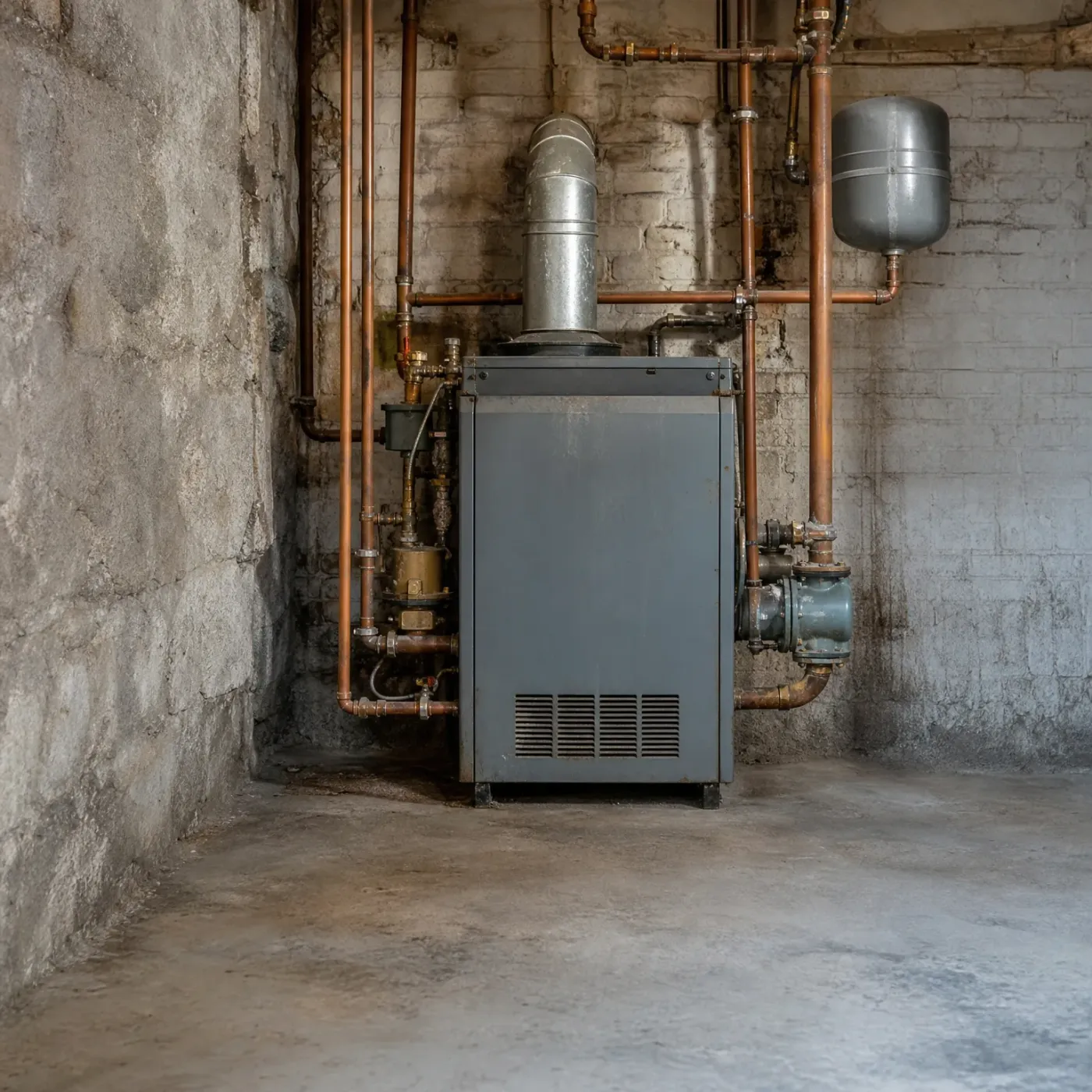
A gray boiler with a metal flue pipe and copper piping stands against a weathered painted brick basement wall, with an expansion tank mounted overhead and a bare concrete floor in front.
Before you get your boiler maintenance
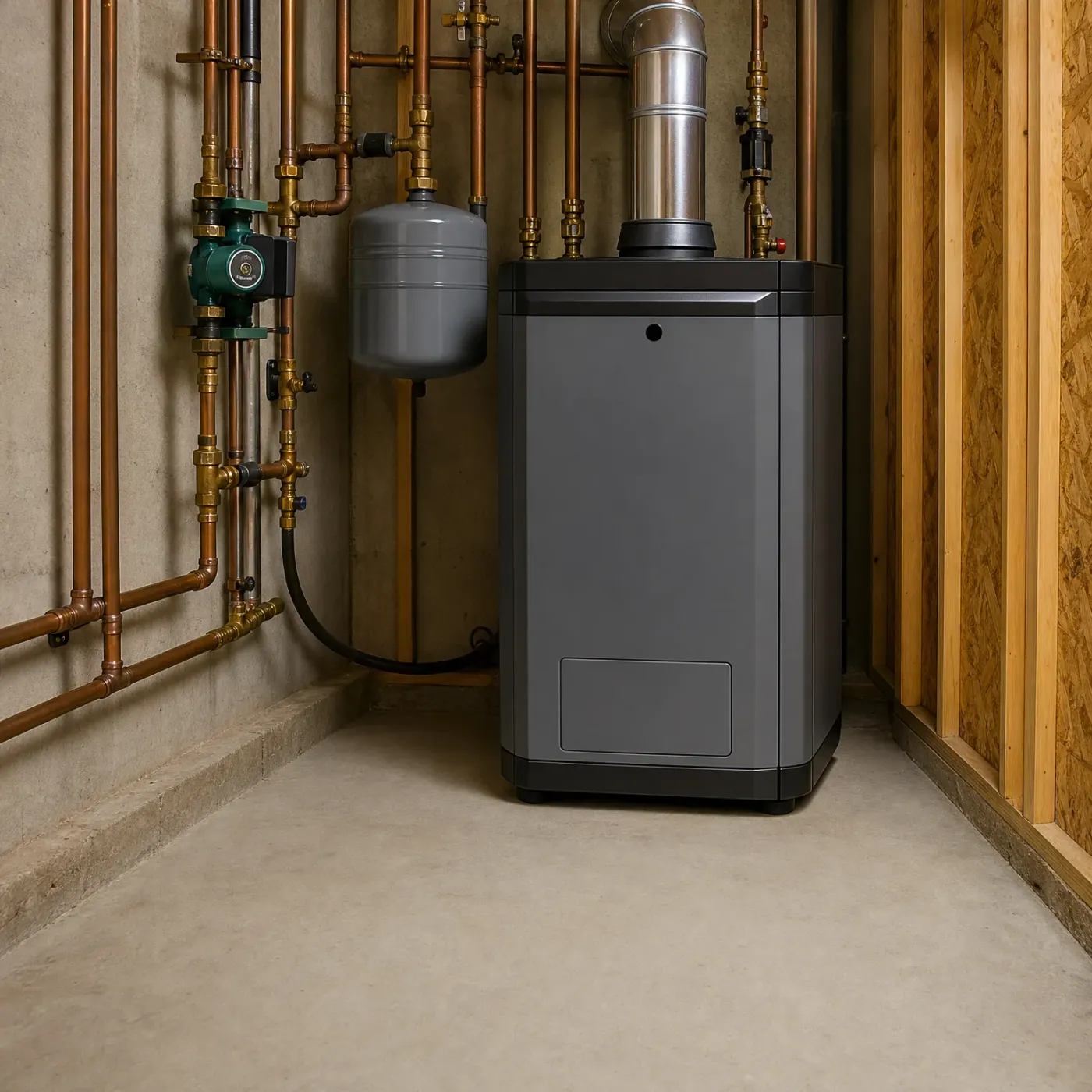
A gray floor-standing boiler with a metal flue pipe stands in a basement corner beside copper piping, brass valves, a green circulator pump, and a gray expansion tank on a concrete wall, with exposed wood framing and sheathing at right.
After you get your boiler maintenance

Bleeding the radiators yourself

A radiator key costs little and the job takes an afternoon. You go room to room, check the gauge before and after, and you know exactly what was done. If your boiler has been quiet and steady and only a radiator or two runs cold at the top, this is usually enough. Nebraska winters give you plenty of warning before the hard cold sets in, and this is the kind of job that rewards doing it yourself once you've seen it done. No one needs to come out for one sticky valve or a bleed key that won't turn easily once you've got the right size.

Calling in a local contractor

If the pressure won't hold after bleeding, or one radiator stays cold no matter how long you leave the valve open, something upstream needs a closer look. A contractor who works on boilers in this area all winter knows what usually causes a loop to keep losing pressure or a zone valve to stick. Getting matched with one means a single local contractor reaches out to you, not several competing for the job. That's worth more once the furnace next door has been running for weeks and your boiler still isn't holding steady, because a system that won't clear on its own isn't getting better left alone.

A woman with long gray hair wrapped in a checked blanket sits on a sofa by a window with yellow autumn foliage outside, with a lamp, framed picture and plant in the background.
An older woman in a cream knit sweater sits on a sofa by a window, looking out at sunlit trees with yellow and orange autumn leaves, with a bookshelf and lamp behind her.
A woman with gray shoulder-length hair in a dark knit sweater sits on a cushioned seat by a window, looking out at yellow autumn foliage, with a living room, armchair, houseplant and framed picture behind her.
An older woman with gray hair in a bun, wearing a cream knit sweater, sits on a sofa with a gray blanket and looks out a large window toward yellow-green autumn trees, with a lit table lamp and dark armchair behind her.
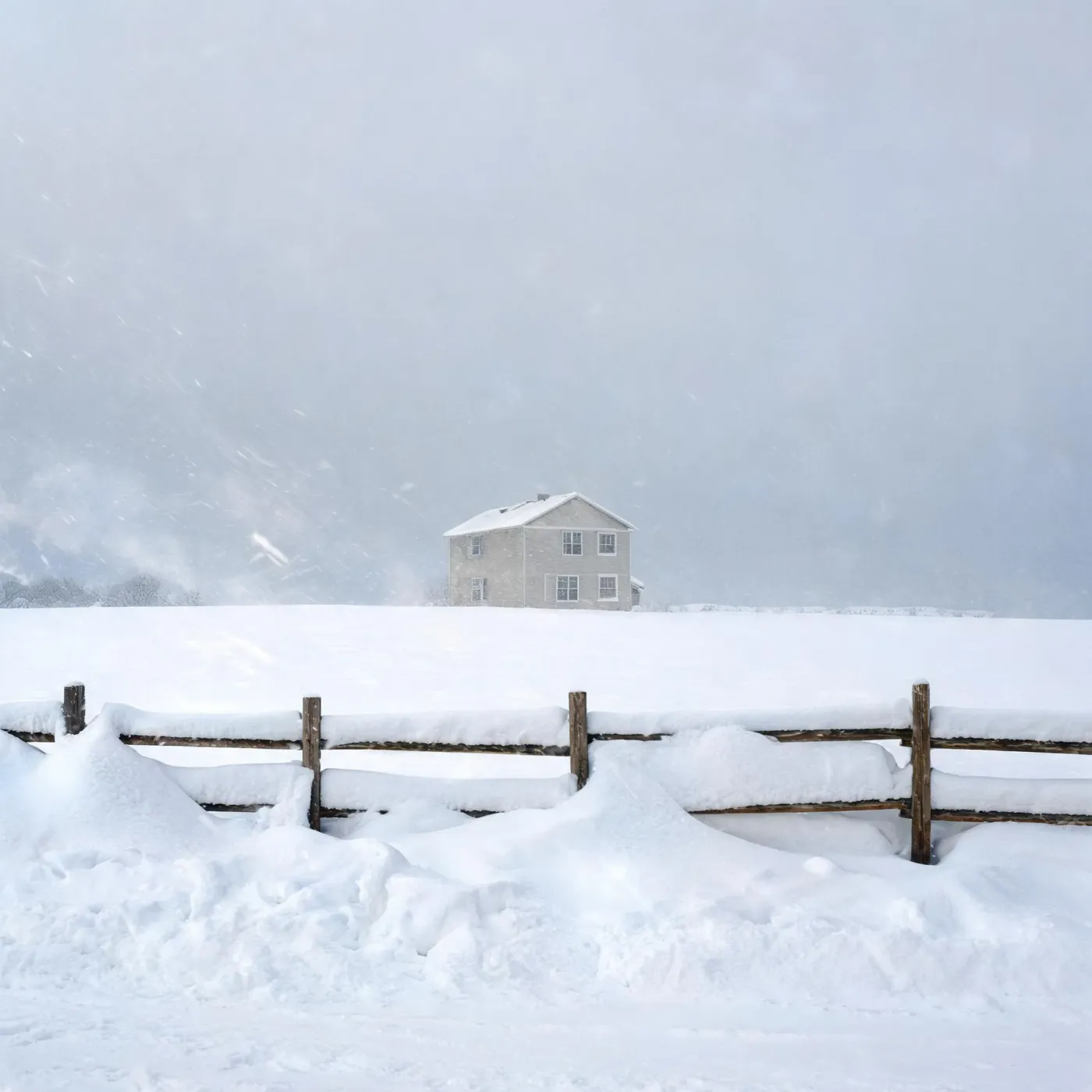
A two-story light-colored house with a snow-covered roof stands on a snowy rise behind a partly buried wooden rail fence during falling snow and low visibility.

Winter nights average 17°F statewide, according to the National Weather Service. That's enough cold that your boiler is firing through the night, not just in the morning, and it will keep firing until the water in every radiator loop gets back up to temperature. If a pocket of air is sitting in a radiator, the boiler doesn't know to stop. It just keeps running, trying to heat a room that's only half getting the water it needs. On a night that cold, that's hours of extra runtime for no extra warmth upstairs.

NOAA nClimDiv 1991-2020 county normals weighted by homes

A woman in a cream knit sweater sits in an armchair with her eyes closed near a window showing yellow autumn foliage, with a mug on a round wooden side table beside her.
A gray-haired man with a beard in a blue button-placket shirt reclines on a couch with his eyes closed, beside a sunlit window with a green plant.

Bleed them yourself

You check each radiator, open the valve with a key, and catch the water in a cloth. A local contractor can tell you if what you found means more than trapped air.

Find a local pro

Have it checked before the cold sets in

A local contractor who works on boilers all season can bleed every radiator, check the pressure, and catch a failing valve before it's the only thing between you and a cold January night.

Find a local pro

Winter nights average 17°F statewide

At 17 below freezing, a radiator with trapped air is losing you real heat, not just comfort in one room. Your boiler has to run longer to make up for the spot that never gets warm, all the way through December, January and February. Bleeding it now means it's not fighting that fight on the coldest nights.

NOAA nClimDiv 1991-2020 county normals weighted by homes

Bleeding your radiators comes down to this: open each valve, let the air hiss out, close it the moment water runs steady, and check the gauge when you're done. Do that on every radiator in the house and your boiler stops fighting trapped air for the rest of the winter. If you get partway through and a radiator still won't heat, or the pressure won't hold once you've closed everything up, that's past what a key in the valve can fix. A local contractor who services boilers through a Nebraska winter sees this exact problem on this exact equipment every year and knows what's usually behind it. You'd be matched with one contractor, not a handful calling at once, someone who can look at what you found and tell you straight whether it's just air or something the boiler itself needs looked at.

A gray residential boiler on a concrete pad in a dim basement, connected to copper piping, a gray expansion tank overhead, and a metal flue pipe along the wall.

A local pro for your boiler maintenance

Step 1 of 3: Equipment