



Nebraska Boiler Service
Profile view of a bearded man wearing a dark green baseball cap and a dark gray T-shirt against a plain light background.

Is a high-efficiency boiler worth it in Nebraska

Step 1 of 3: Equipment

Is a high-efficiency boiler worth it in Nebraska?

Your boiler keeps the house warm through long Nebraska winters, and you've seen the gas bills that come with it. A high-efficiency model costs more to install, so you want to know if it actually pays you back or if a standard boiler does the job just as well here.

Yes, in most Nebraska homes it's worth it

A standard boiler vents a lot of heat straight out the flue. A high-efficiency boiler pulls more heat out of the same gas before it leaves the house, and condenses the exhaust to get even more. With most Nebraska homes heating with gas and winters here lasting months, that difference shows up on every bill from November through March. Power is cheap in Nebraska, so there's less reason to switch a gas boiler to electric heat. The real case for high-efficiency is the gas itself: less of it burned for the same warmth, winter after winter. For a house that runs its boiler hard for a good stretch of the year, that adds up enough to matter.

A woman with long light-brown hair in a gray knit sweater sits in a living room looking off to the side, with a sectional sofa, houseplant, lamp, wooden table and large windows behind her.
A woman in a chunky gray turtleneck sweater sits indoors looking off to the side, with a blurred dining table, chairs, pendant lamp and window behind her.
A woman in a cream knit sweater with her hair in a bun stands near a window, looking off to the side, with a gray sofa, houseplant and open kitchen with pendant lights blurred behind her.
A woman with long brown hair in a cream knit sweater stands near a window, looking to the side, with a white sofa, shelving, and a hallway visible behind her.

Standard vs. High-Efficiency Boiler

Standard Boiler

  • Costs less to install, which matters if you're not staying in the house long enough to recover the difference.
  • Runs at a lower efficiency, so more of the gas you burn goes out the flue instead of into the house.
  • Parts and repairs are familiar to most local contractors, since this is still what a lot of Nebraska homes run.
  • Needs a standard flue, so if yours is already set up for one, there's nothing to change there.
  • Gas use stays higher through the cold months, and that shows up on every bill from November to March.

High-Efficiency Boiler

  • Costs more upfront, and that gap is the thing you're weighing against lower bills over time.
  • Pulls more heat out of the same amount of gas, so less of what you pay for escapes unused.
  • Vents through PVC pipe instead of a standard flue, which can mean extra work during install if your house isn't already set up for it.
  • Cuts gas use most where winters run long and the furnace works hard for months at a stretch, which fits Nebraska.
  • Since gas heats most homes here and power stays cheap, the savings show up on the fuel you're actually using the most of.
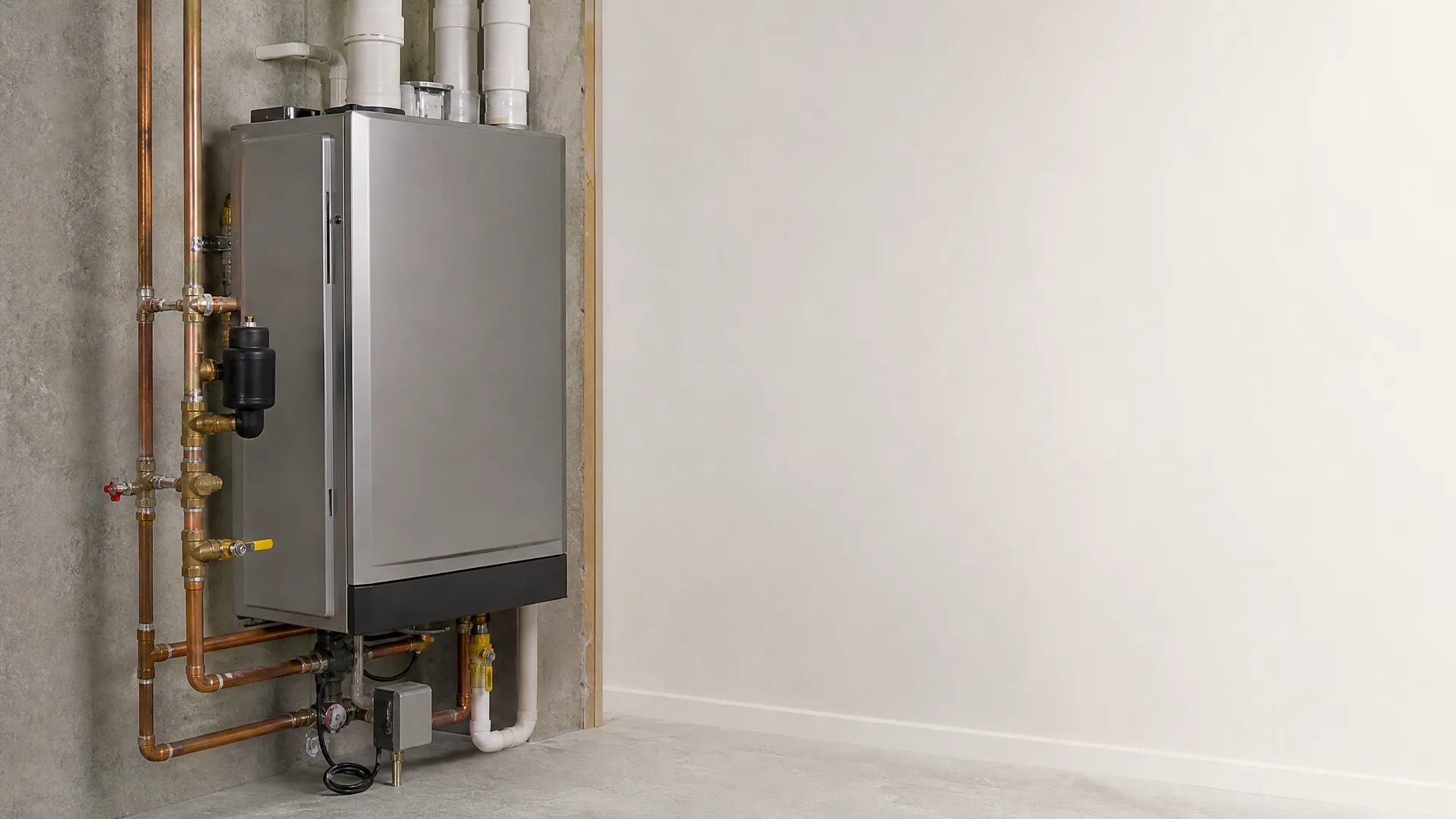
A wall-mounted grey boiler with copper pipework and white flue pipes installed against a concrete wall in an empty room with a plain pale wall to the right.

Where the difference comes from

A standard boiler sends a lot of heat straight out the flue along with the exhaust. A high-efficiency boiler cools that exhaust further before it leaves, usually through a second heat exchanger, and pulls more of the heat from the gas you're paying for into the water that warms your house. That's why the vent pipe on a high-efficiency unit is often plastic instead of metal. The exhaust leaving it is cool enough that metal isn't needed.

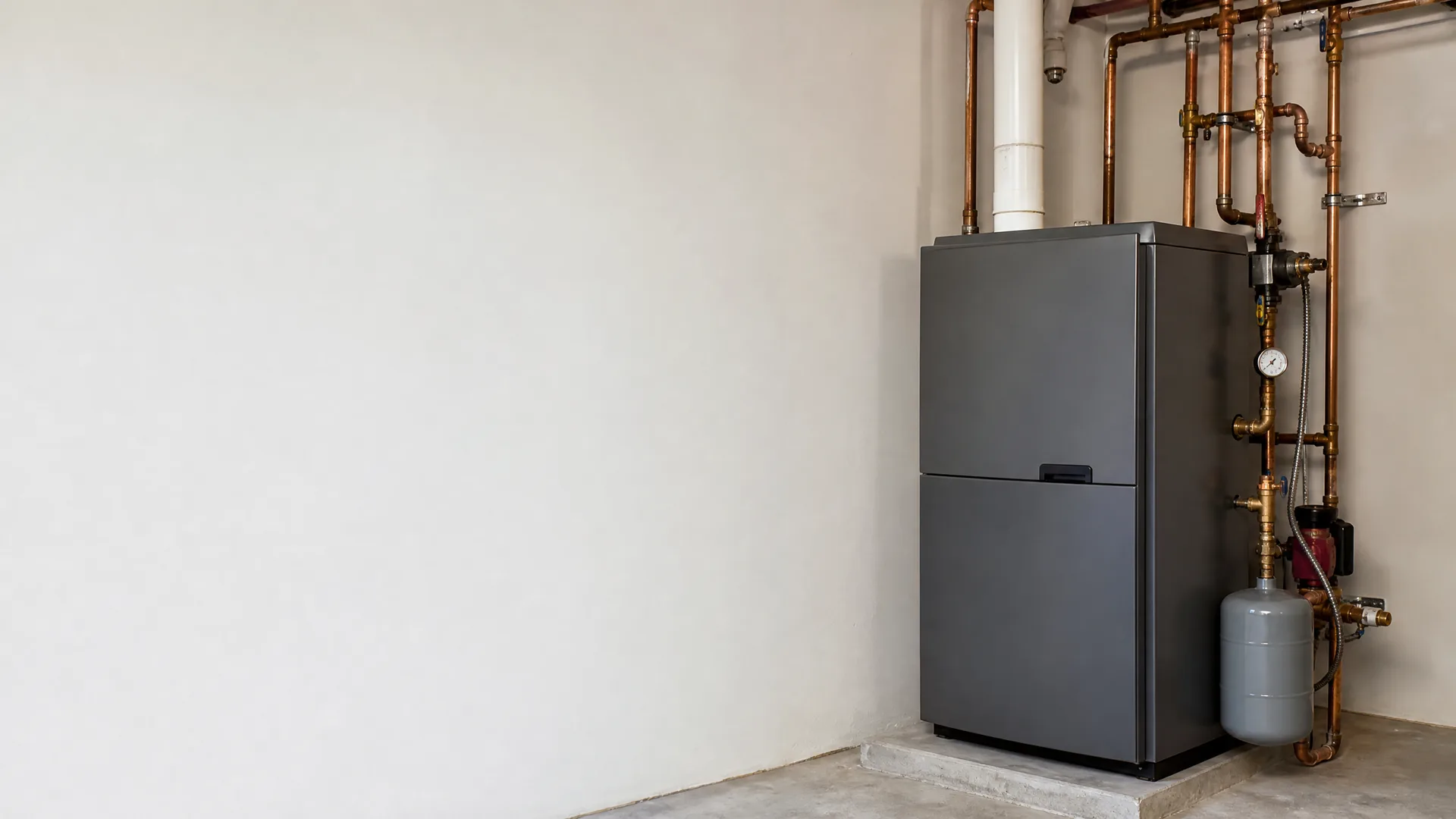
A dark grey boiler unit stands on a concrete pad against a plain light wall, connected to copper pipes, a pressure gauge, a pump and a grey expansion tank.

What that means over a Nebraska winter

Nebraska winters run long, so your boiler isn't firing for a few weeks a year, it's working for months. A unit that pulls more heat out of every therm keeps doing that every time it runs, from the first cold snap through the last one in spring. The gap between a standard boiler and a high-efficiency one shows up slowly, cycle after cycle, over a heating stretch that doesn't let up until the weather turns.

Winter nights average 17°F statewide

At 17 below to freezing most winter nights, your boiler is running long stretches to hold the house steady till morning. That's where a high-efficiency model earns its keep, since it's firing those same cold hours at a lower gas cost per degree.

NOAA nClimDiv 1991-2020 county normals weighted by homes

What a Nebraska winter costs you

A Nebraska winter runs long, and your boiler is working most days from October to March. That's a lot of hours for the difference in efficiency to add up on the gas bill. You won't see it as one big number. You'll see it as a bill that's a little lower every month the boiler is firing, for as long as you own the house. If you've lived here a few winters already, you know which months hit hardest. Those are the months a high-efficiency boiler is working for you the most, burning less gas to hold the same temperature through the night.

What stays steady in the house

The point of any boiler is keeping the house warm enough for the people in it, night after night, without you thinking about it. A high-efficiency model doesn't change what the house feels like. The rooms hold the same temperature either way. What changes is what it costs to get there, and how the boiler holds up doing it. If the one you have now came with the house, it's worth finding out its age and its efficiency rating before you decide whether replacing it early makes sense for your winters.

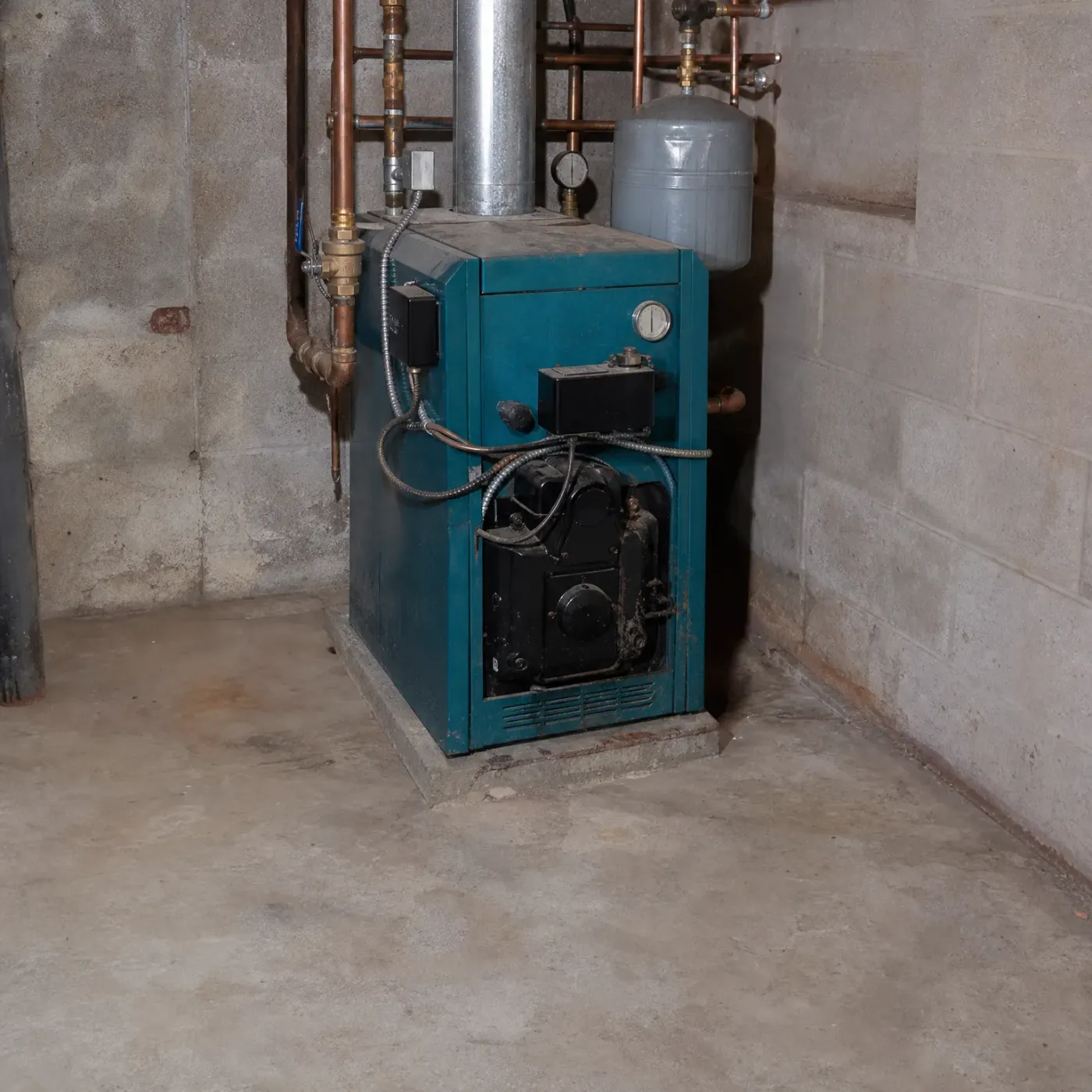
A teal boiler with a pressure gauge and black burner unit sits on a concrete pad in a basement corner, with copper pipes, a flue vent, and a gray expansion tank above against concrete block walls.
Before you get your boiler installation
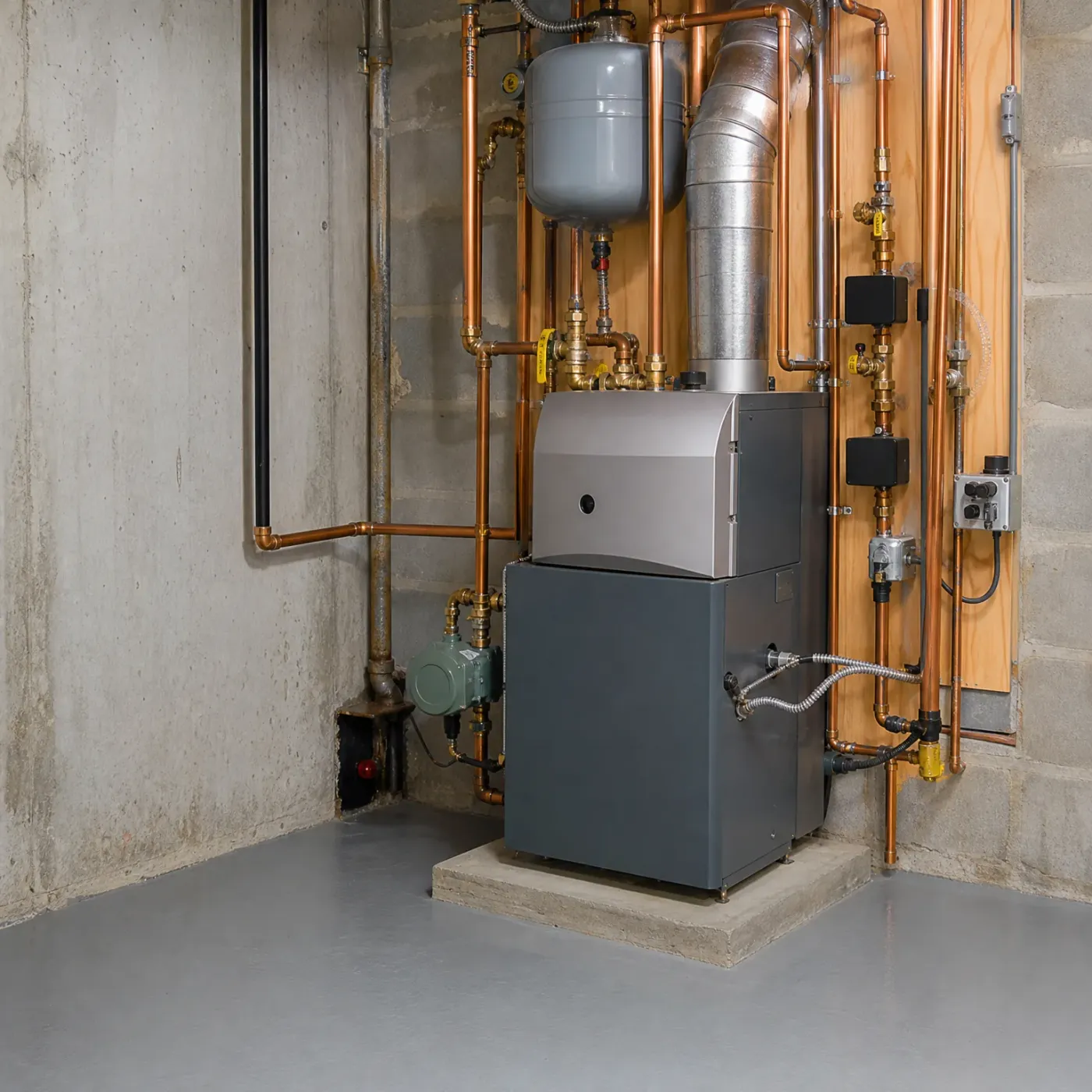
A gray residential boiler on a concrete pad in a basement corner, connected to copper piping, an expansion tank, circulator pumps and insulated flue ducting against concrete and plywood walls.
After you get your boiler installation

One form, no calling around

Deciding between a standard and a high-efficiency boiler is one thing. Finding a contractor who installs them correctly is another. A high-efficiency boiler has to be vented and condensate-drained the right way, and whether it earns back what it costs you depends on that install being done right the first time. That's not something you want to learn by calling around to three or four companies, explaining your boiler and your gas bills to each one, then trying to compare quotes that aren't quite measuring the same job. This connects you with one licensed Nebraska contractor who installs boilers in homes dealing with the same winters yours does, and knows what a proper venting and condensate setup takes on this equipment. No sorting through competing calls, no repeating yourself. Just the install, handled by someone who works on this all season, so the efficiency you're paying for actually shows up on the bill.

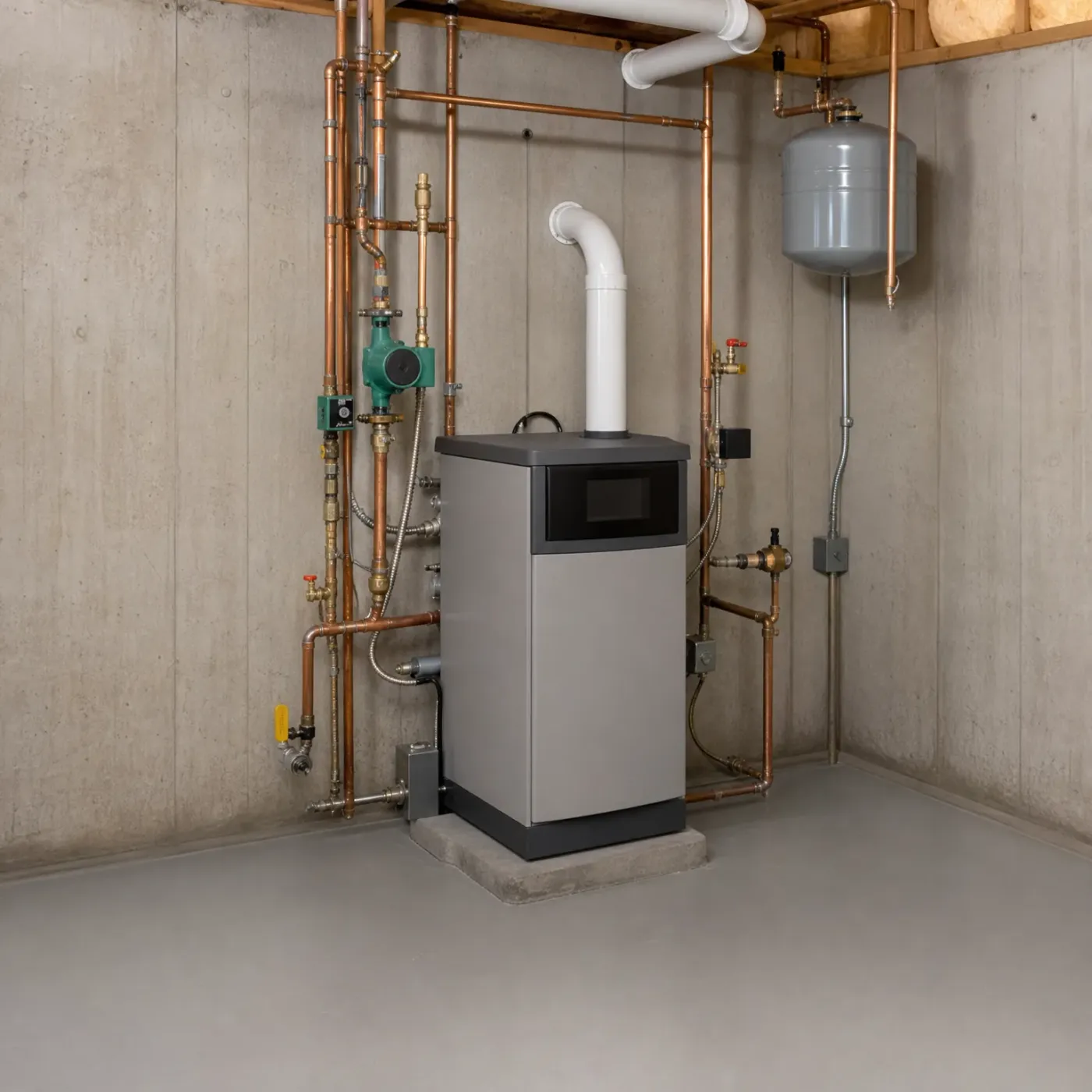
A gray floor-standing boiler on a concrete pad in a basement corner, with copper piping, a circulator pump, a white PVC flue, and a gray expansion tank mounted on the wall.

A new install, running clean

Copper lines run tight to the circulation pump, the expansion tank hangs square on the wall, and the condensate line has somewhere to go. Nothing here is fighting itself. This is what correct venting and piping look like once a contractor who knows this equipment has been through it.
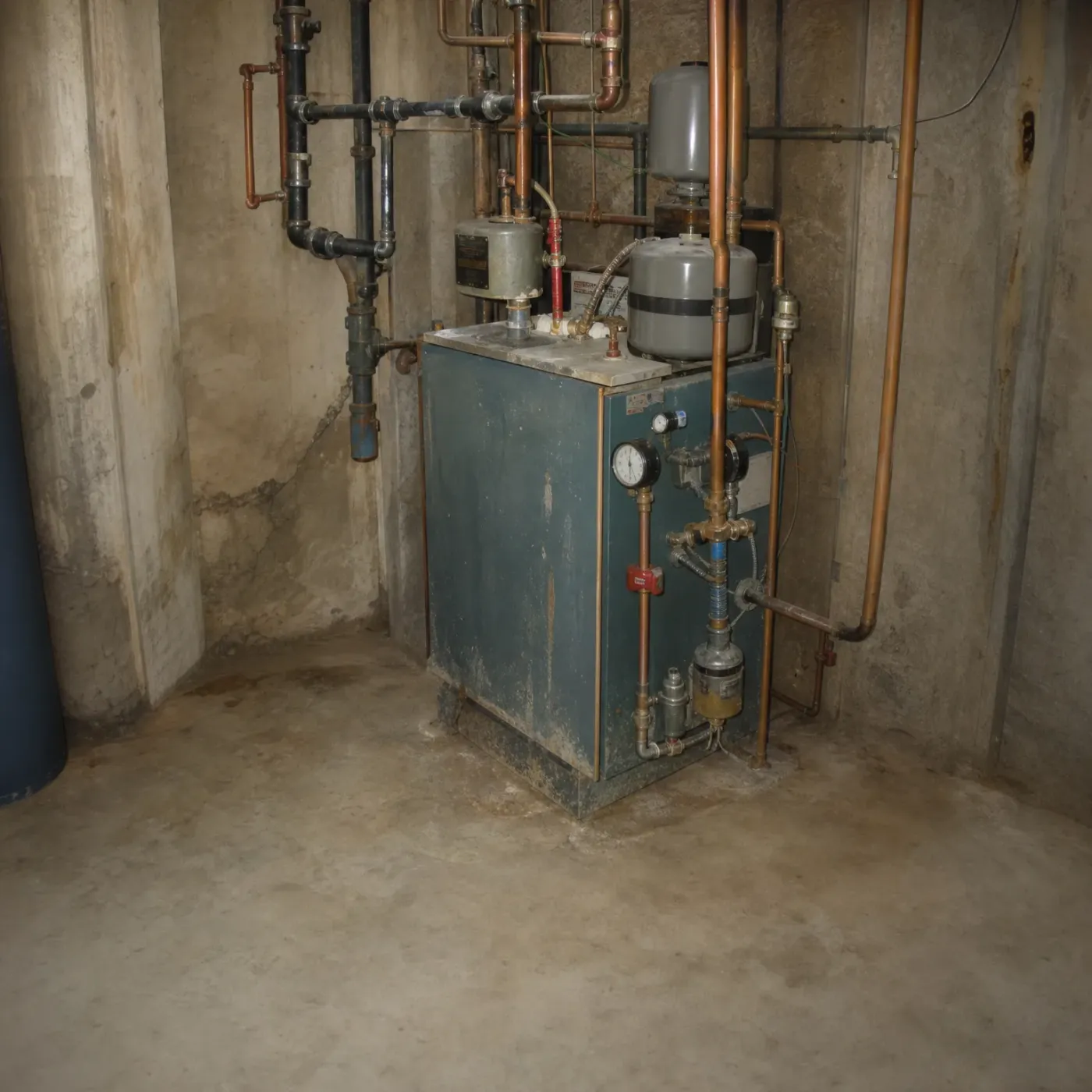

A green metal boiler with pressure gauge stands in a concrete basement corner, surrounded by copper and black iron pipes and two tank-shaped vessels.

An old boiler holding on

That cast iron has heated this basement for years, and the pressure gauge and valves around it show every patch made along the way. It still runs, but each winter it leans harder on parts that were never built for the efficiency a new system gets for free.

A woman and a child wrapped together in a knitted gray blanket on a couch, with the child's head resting on her shoulder and a lit table lamp and houseplant in the background.
An older woman with gray hair in a bun and glasses, wearing a beige knit sweater, smiles while looking to the side in a warmly lit kitchen, with a loaf of bread on the counter in the foreground and a snowy scene outside the window.

Find your own contractor

You call around, explain your boiler and your gas bill more than once, wait on quotes, and sort out who actually works on high-efficiency models.

Reach a local pro

Get matched with one

One licensed Nebraska contractor who installs boilers all winter long, already knows what the venting and condensate work takes, and calls you back.

Reach a local pro
A closed dark laptop and a ceramic mug of coffee on a wooden dining table, with wooden chairs, a dark kitchen cabinet with cutting boards and a potted plant, and a leafy plant by a window in the background.

What's actually different inside the cabinet

A standard boiler has one heat exchanger. Combustion gas passes through it once, gives up what heat it can, and goes out the vent while it's still hot enough to need a metal flue. A high-efficiency boiler adds a second heat exchanger, usually stainless steel, that the exhaust passes through next. By the time that gas leaves the house, it's cooled enough to condense, which is why these units vent through PVC pipe instead of metal and why they need a condensate line running to a drain. That second pass is where the extra efficiency actually comes from, not from the burner or the controls.

It also means there's more for an installer to get right. The condensate has to drain somewhere it won't freeze or back up, and the PVC venting has to run at the correct pitch and length for that specific model. Working that out on your own means calling around to find a contractor who's installed condensing boilers before, not just serviced standard ones, then explaining your setup to each one before you even get a quote.

A living room corner with a beige sofa and cushion, a round wooden coffee table holding a pale ceramic vase of eucalyptus stems and a wooden bowl, and a curtained window with a potted plant above a latticed radiator cover in the background.
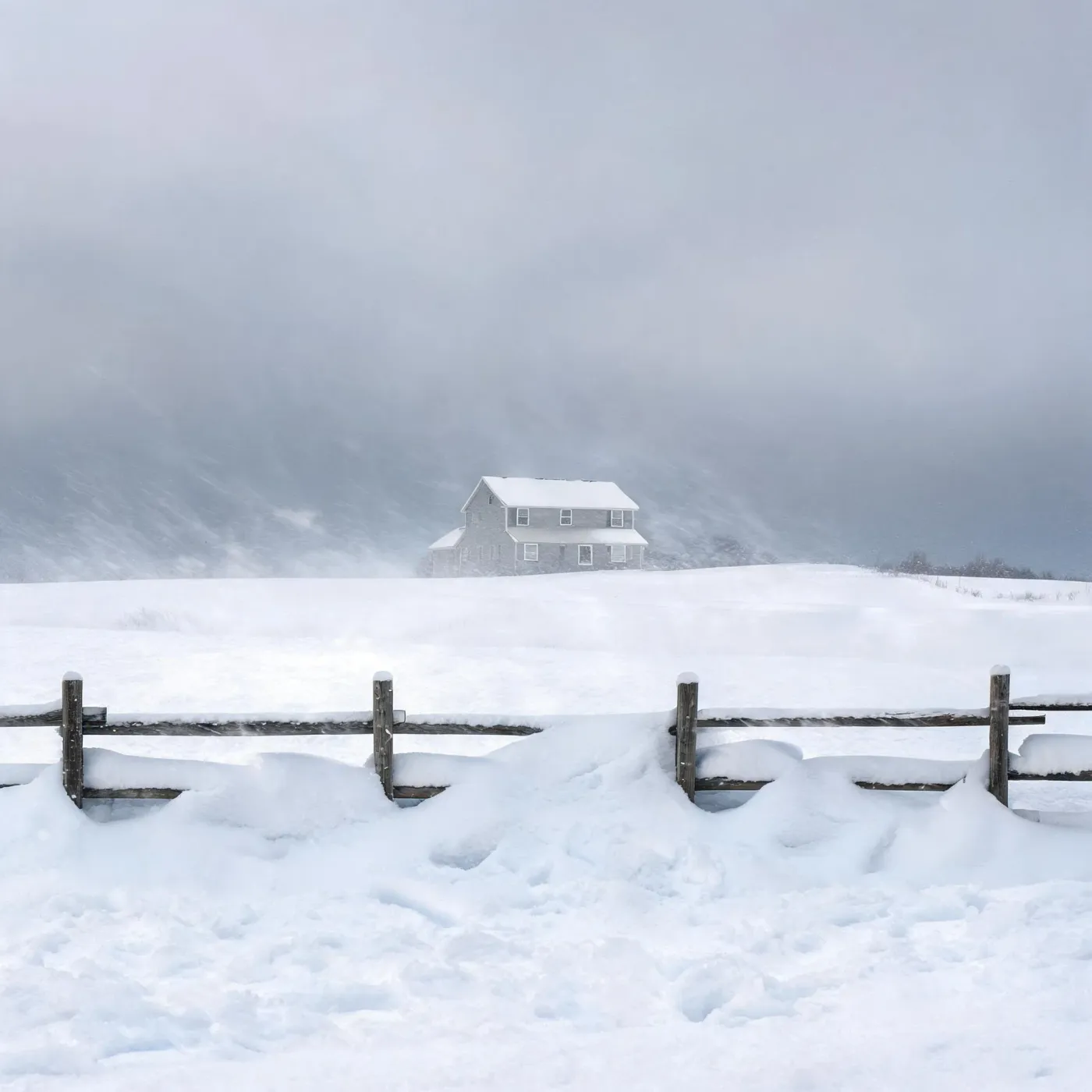
A two-story light-colored house stands on a snow-covered rise under a gray sky during blowing snow, with a partially buried wooden post-and-rail fence in the foreground.

Statewide, winter nights average 17°F, according to NOAA climate data. Your boiler isn't just running in the morning chill, it's holding that line for eight or nine hours straight while everyone sleeps. A standard boiler does that by firing more often, sending a larger share of the gas straight out the flue each time it cycles on. A high-efficiency model holds the same temperature by running longer, steadier stretches at a lower gas cost per hour. You'd notice it less as warmer rooms and more as a furnace that doesn't seem to be working as hard, because it isn't.

NOAA nClimDiv 1991-2020 county normals weighted by homes

Why does your boiler run so long before morning

You've probably noticed the burner kicking on and off most of the night rather than settling into a steady rhythm. On a standard boiler that's normal. It's heating water, losing a good share of that heat out the flue, and firing again sooner than you'd like. You might also notice the flue pipe or chimney feels warm to the touch, or the basement near the boiler stays warmer than the rest of the house. None of that means anything is broken. It just means the heat you paid for is leaving the house two ways: through the vents and through the flue. Left alone for years, a boiler working harder than it needs to wears its parts faster, which shows up later as repairs.

  1. Cold water enters the second heat exchanger first

  2. That exchanger pulls heat from the exhaust before it vents

  3. A sensor reads flue temperature to adjust the burner

  4. Flue gas cools enough to condense into water

A high-efficiency boiler earns back what it costs through a long Nebraska winter, but only if it's installed right, with the venting and condensate drain set up the way that boiler needs. That part has nothing to do with gas prices and everything to do with who's doing the work. A contractor who installs and services boilers all winter in Nebraska has seen what goes wrong when a second heat exchanger isn't drained right or a flue isn't sized for the lower exhaust temperature, and knows how to avoid it the first time. You'll get matched with one licensed local contractor, not a handful of companies competing for your callback, so there's no explaining your boiler and your gas bill over and over to different people. Whichever boiler you choose, standard or high-efficiency, the install is what decides whether it runs the way it's supposed to for the winters ahead.

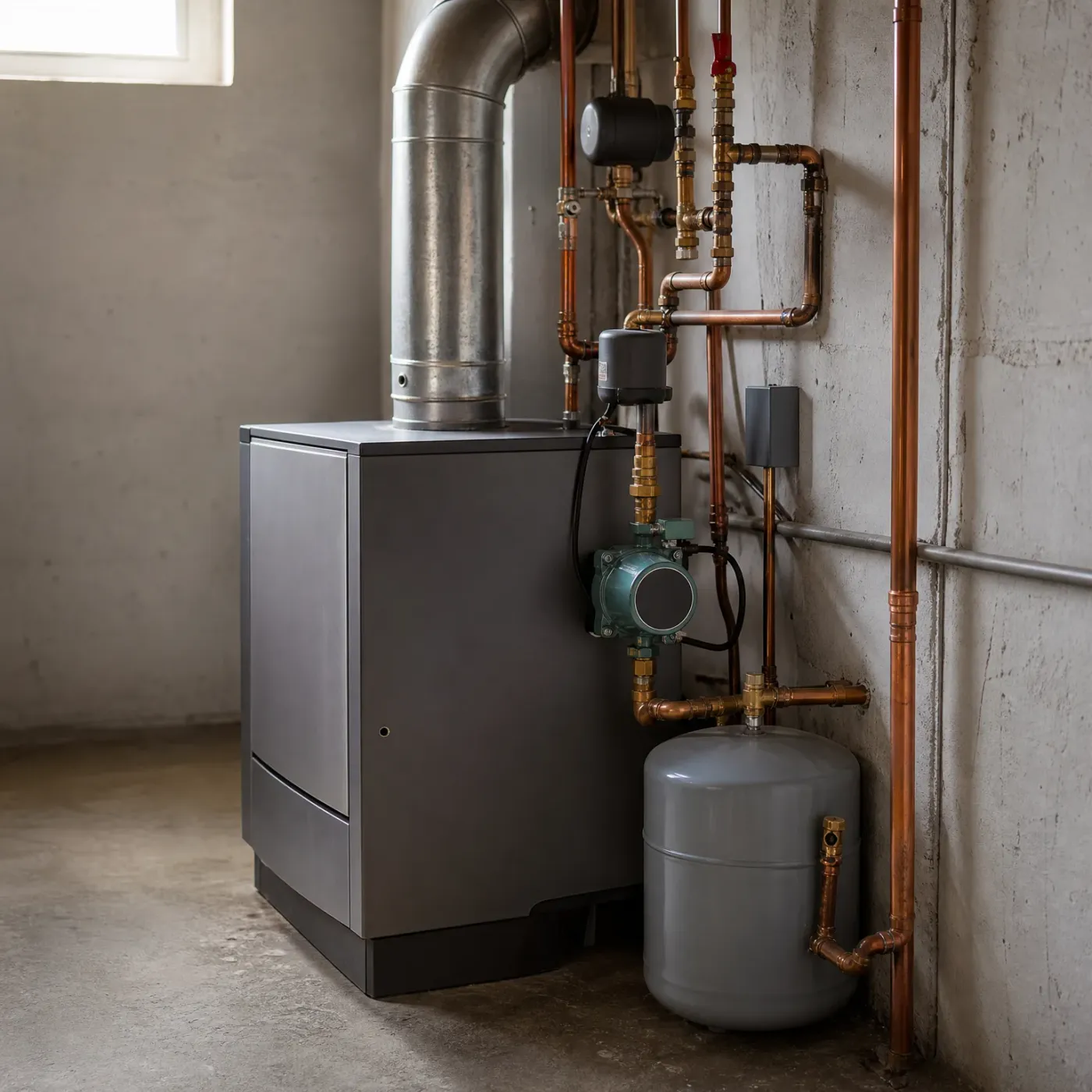
A gray boiler with a metal flue pipe stands in a concrete-walled basement, connected to copper piping, a circulator pump, and a gray expansion tank on the floor.

Explain it one time

Find a licensed boiler pro

The pro who reaches out is licensed in Nebraska.

You only hire the pro if you want to.