
The system doing its job
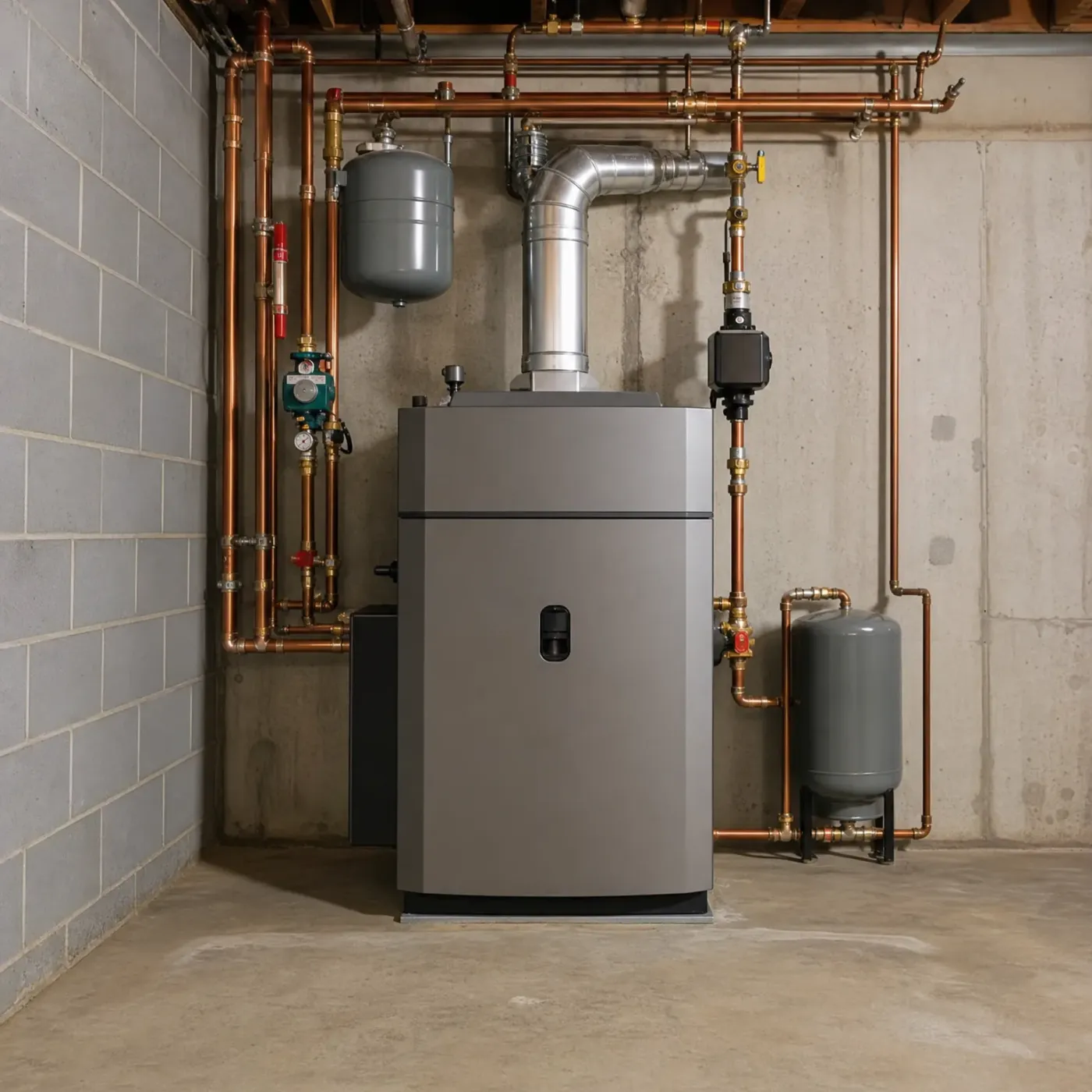
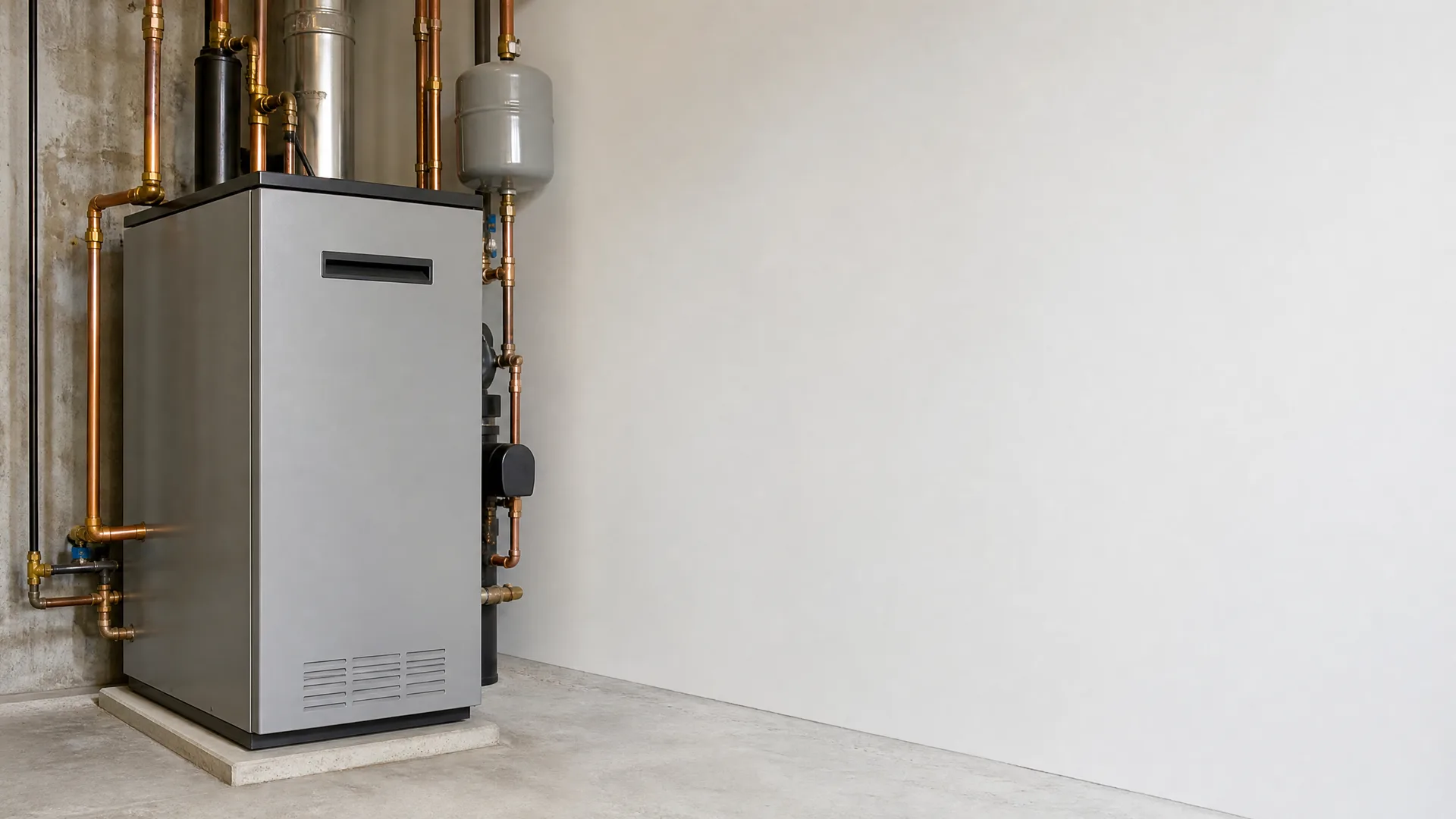
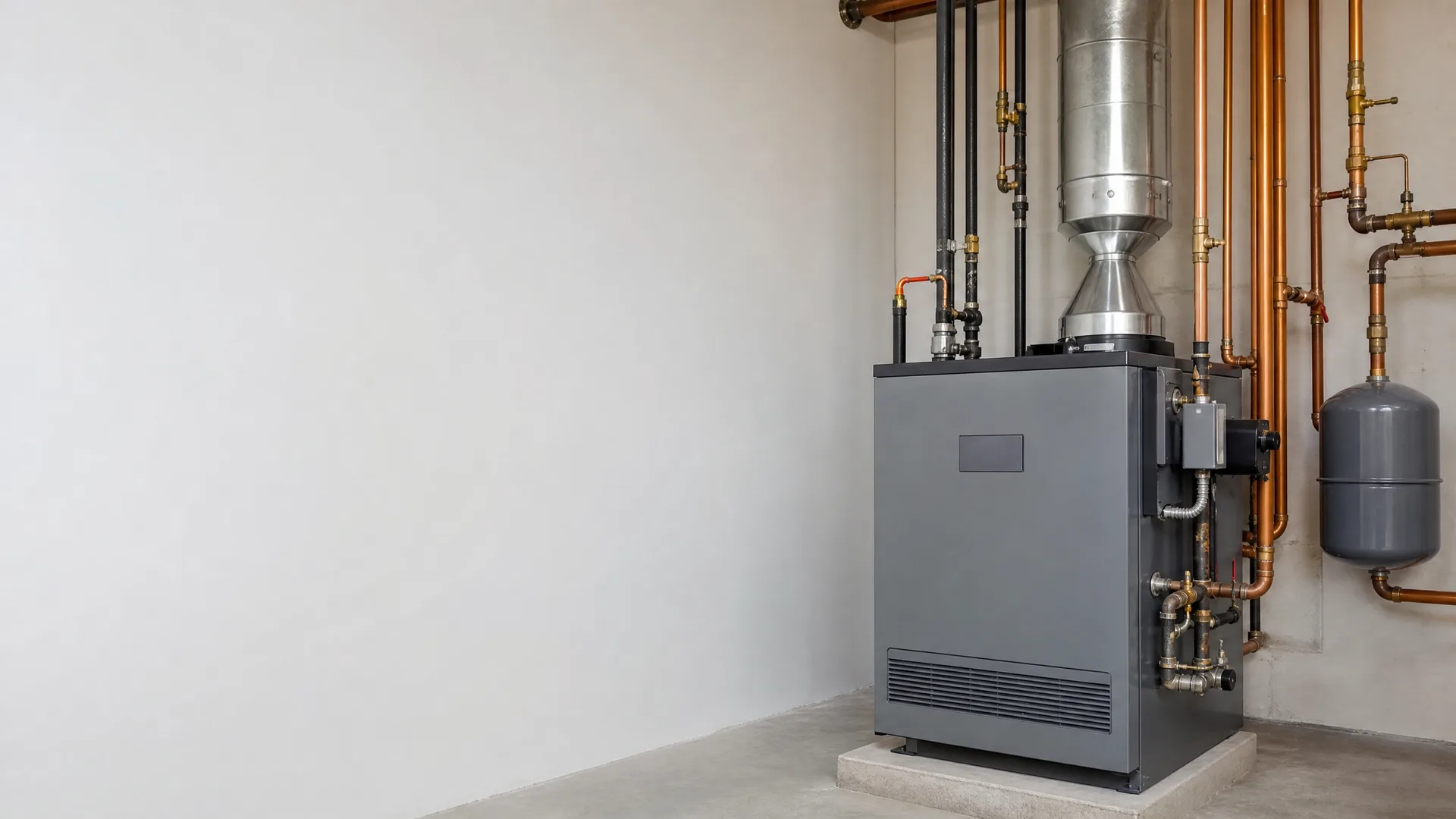
That expansion tank holds steady pressure, the zone boxes switch loops on and off as each room calls for heat, and the flue vents clean. A boiler set up like this can run a radiant system for years without drama.

Radiant floor heat is worth it in Nebraska if you're already running a boiler, because that boiler is what makes it practical. Instead of baseboards or radiators, the same hot water runs through tubing under the floor, warming the room from the ground up. In a Nebraska winter that means warm floors through the cold months, and a lot of homeowners find that more comfortable than air blown from a vent. It also runs quieter, and it heats evenly instead of leaving cold spots near the walls. The tradeoff is that radiant floors respond slowly. They take time to warm up and time to cool down, so they work best as steady winter heat rather than something you adjust hour to hour. Most homes here already heat with gas, so pairing radiant floor heat with a gas boiler is a straightforward setup, not a departure from what your house already runs on. Whether it's worth installing comes down to your floor plan and your existing system.




Your boiler already heats water for baseboards or radiators, but radiant floors don't need it nearly as hot. Instead of 140 to 160 degrees, the loops under your floor run around 100 to 120. The water leaves the boiler and passes through a manifold first, which splits it into separate loops so different rooms can run at different rates off the same system. That matters if you've got tile in a bathroom and wood in a living room nearby. Once the floor warms up, it holds onto that heat and keeps releasing it even after the boiler shuts off, which is part of why rooms heated this way can feel warmer at the same thermostat setting than a room heated by forced air. The thermostat itself is usually reading the floor, not the air, so the boiler fires based on what the slab or subfloor needs rather than a quick swing in room temperature. The result is a boiler that runs steadier and cooler, rather than cycling through short, hot bursts.

Winter nights average 17°F statewide, per NOAA climate data. That kind of cold means your boiler is pushing hot water through those floor loops most of the night, every night, for months. With radiant heat, you won't notice it working the way you would with a furnace kicking on and off. The floors just stay warm, and the room holds a steady temperature instead of swinging as the air cools between heating cycles. The trade-off is that a boiler running this many long stretches depends on steady pressure and clean loops to keep every room even. If one loop starts running cooler than the rest, a night this cold is when you'll feel it first, usually as a cold patch in one room while the rest of the house stays fine.
NOAA nClimDiv 1991-2020 county normals weighted by homes
You're used to a furnace or baseboard heat that warms the room within minutes of kicking on. Radiant floor heat doesn't work that way, and if you're weighing it against what you have now in a Nebraska winter, you need to know what to expect before the first cold night, not after.
The floor itself has to warm up before the room does, and that takes time, usually an hour or longer depending on the flooring above the tubing and how cold the slab got overnight. Tile transfers heat faster than carpet or engineered wood, so the same system responds differently room to room. This is why radiant heat works best left running at a steady setpoint through the winter rather than cycled up and down like a furnace. Bump the thermostat at bedtime expecting a warm floor by morning, and it'll get there, but turning it off during the day and back on at night fights the system instead of working with it.
One installer gets your project, so there's no bidding war over it.
You only hire the pro if you want to.
Most homes in Nebraska heat with gas, and that's what fires the boiler. The pump circulating water through the loops runs on electricity. Power here is cheap, so running that pump night after night through a long winter doesn't add much to the bill. The gas does the heavy work of heating the water. The electric side just needs to keep it moving.
Summers here get sticky, and radiant floor heat has nothing to do with cooling your home. The tubing sits idle once the heating season ends, and the boiler stays off unless it's also tied into your hot water. A separate system, usually central air, handles the humidity and heat from June through August. The two systems don't compete for the same equipment or the same lines.
Walk through the house in January and check the floors with your hand. If one room stays noticeably cooler than the others, or you hear the boiler running more than it used to without the house feeling any warmer, that loop may be losing balance. Look at the manifold in the basement or utility closet. A valve that's stuck or a loop that's lost pressure will show up there before it shows up anywhere else. Left alone, that room keeps drawing more hot water trying to catch up, and the boiler works harder for less heat. Carpet or rugs put down over a radiant floor will do the same thing, so check for cold spots along the edges where a rug was added after the floor went in.


Installing radiant floor heat is more than running tubing and pouring a slab. The tubing itself is almost always PEX, and it gets laid in loops spaced 6 to 12 inches apart, tighter in rooms that lose heat fast like a bathroom over an uninsulated crawlspace, wider in a space that holds heat well. That spacing is what decides how even the floor feels underfoot. Where the system sits on top of an existing subfloor rather than in a poured slab, a plate system can raise the floor height by an inch or more, which is why doorways and the bottom of a staircase need a look before work starts. The thermostat controlling each zone usually reads the temperature of the slab itself through a sensor embedded in it, not just the air in the room, because the floor responds slower than the air does. Loop length matters too. Each one is sized so the manifold's pump can push water through it evenly from one end to the other, without the far end running noticeably cooler. Before any floor covering goes down, the loops get pressure tested, since a leak discovered after tile or hardwood is in place means tearing up finished floor to reach it. What you put on top matters as well. Tile and stone pull heat up into the room quickly. Thick carpet padding sits on top like a blanket and slows the whole system down.
At 17 below zero overnight, that boiler doesn't get a break. It has to hold the floors warm against cold working against them for eight or more hours straight, night after night, all winter.
NOAA nClimDiv 1991-2020 county normals weighted by homes
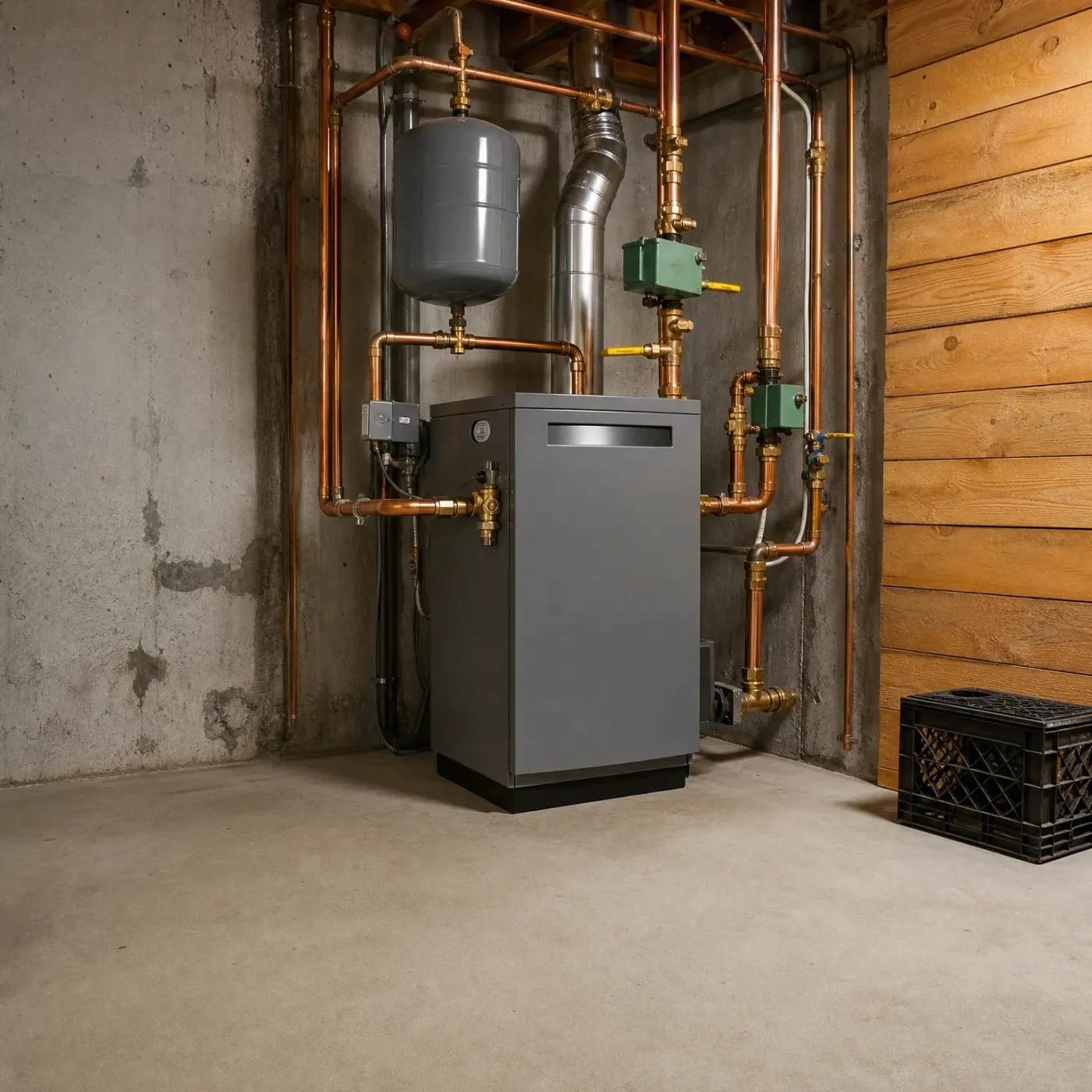
That expansion tank holds steady pressure, the zone boxes switch loops on and off as each room calls for heat, and the flue vents clean. A boiler set up like this can run a radiant system for years without drama.
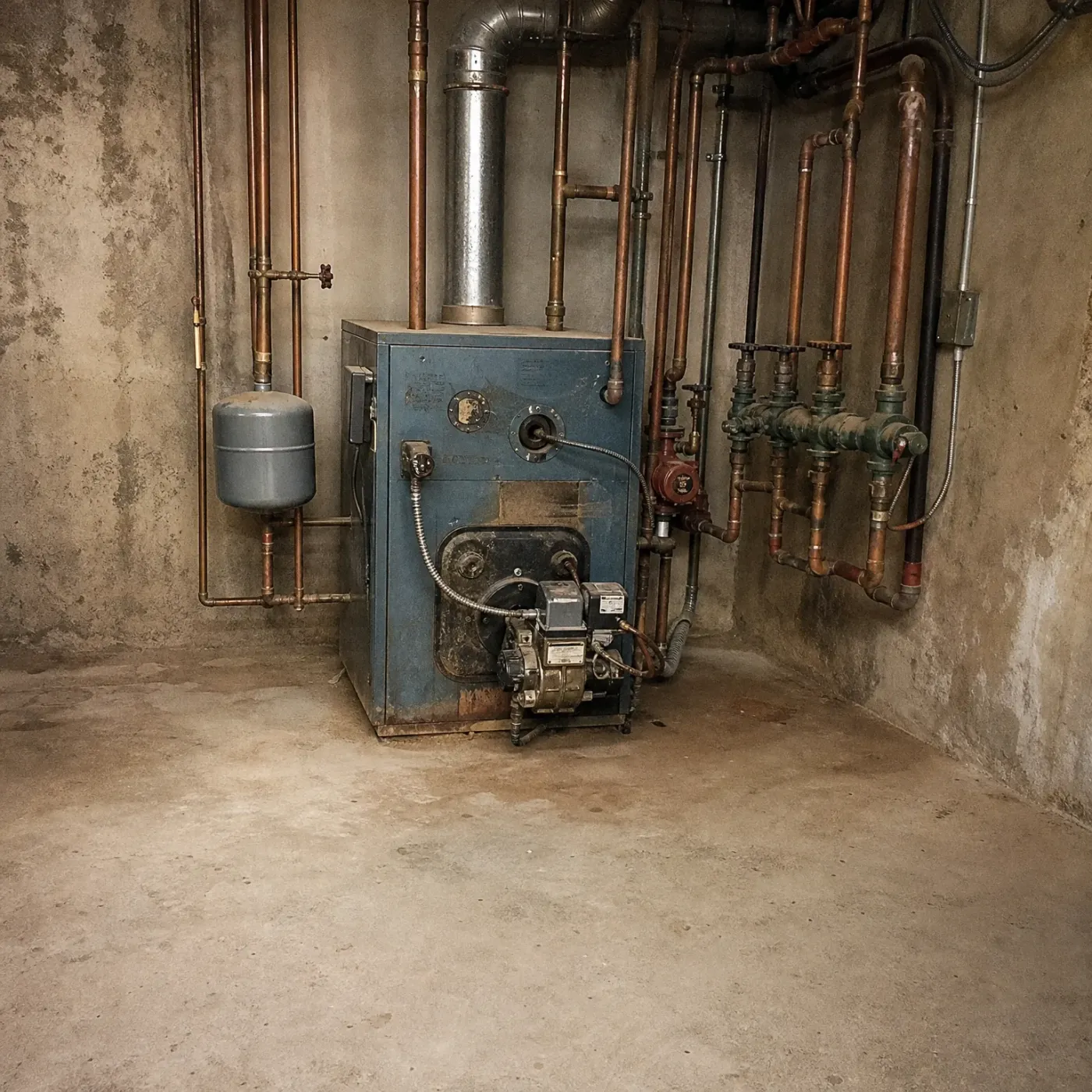
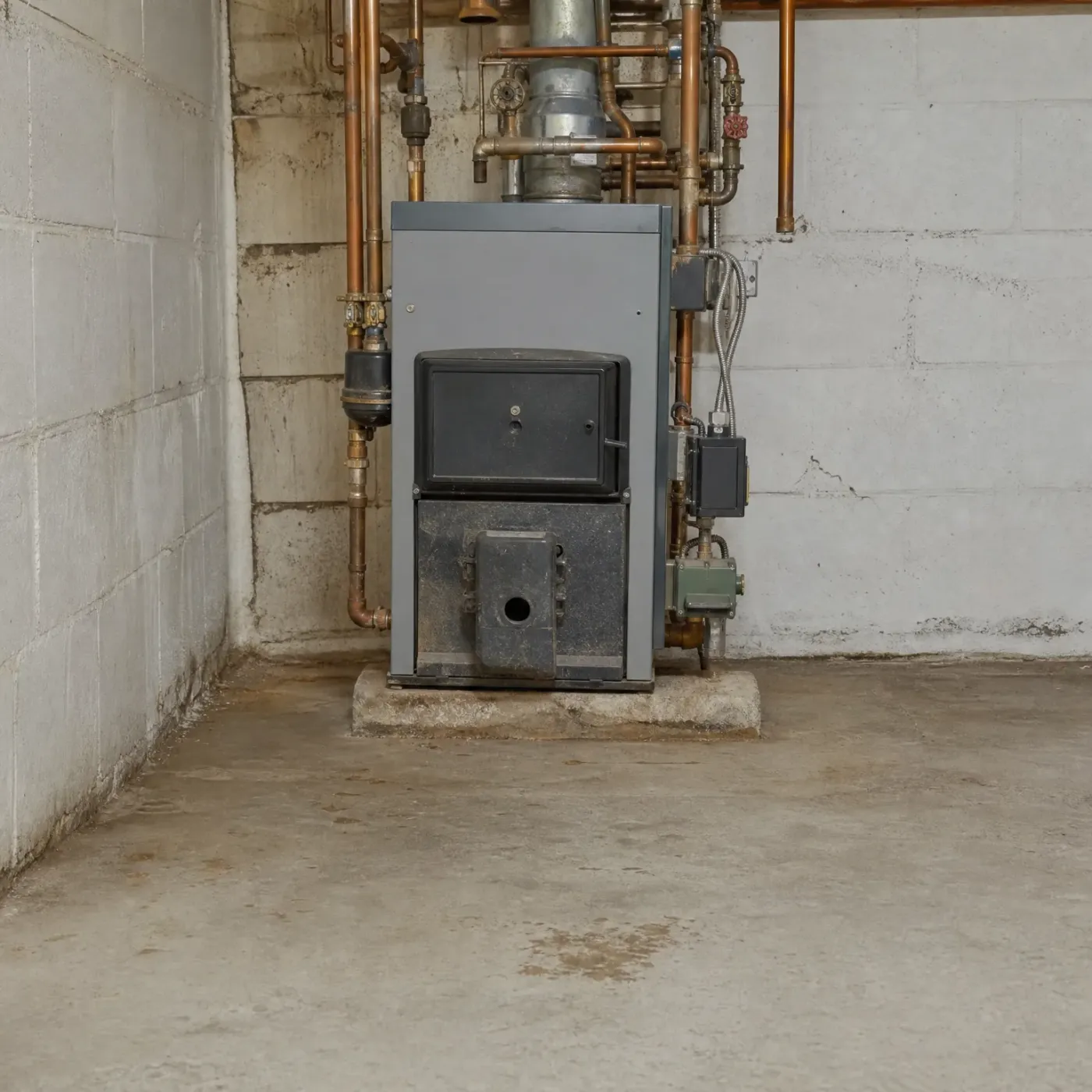
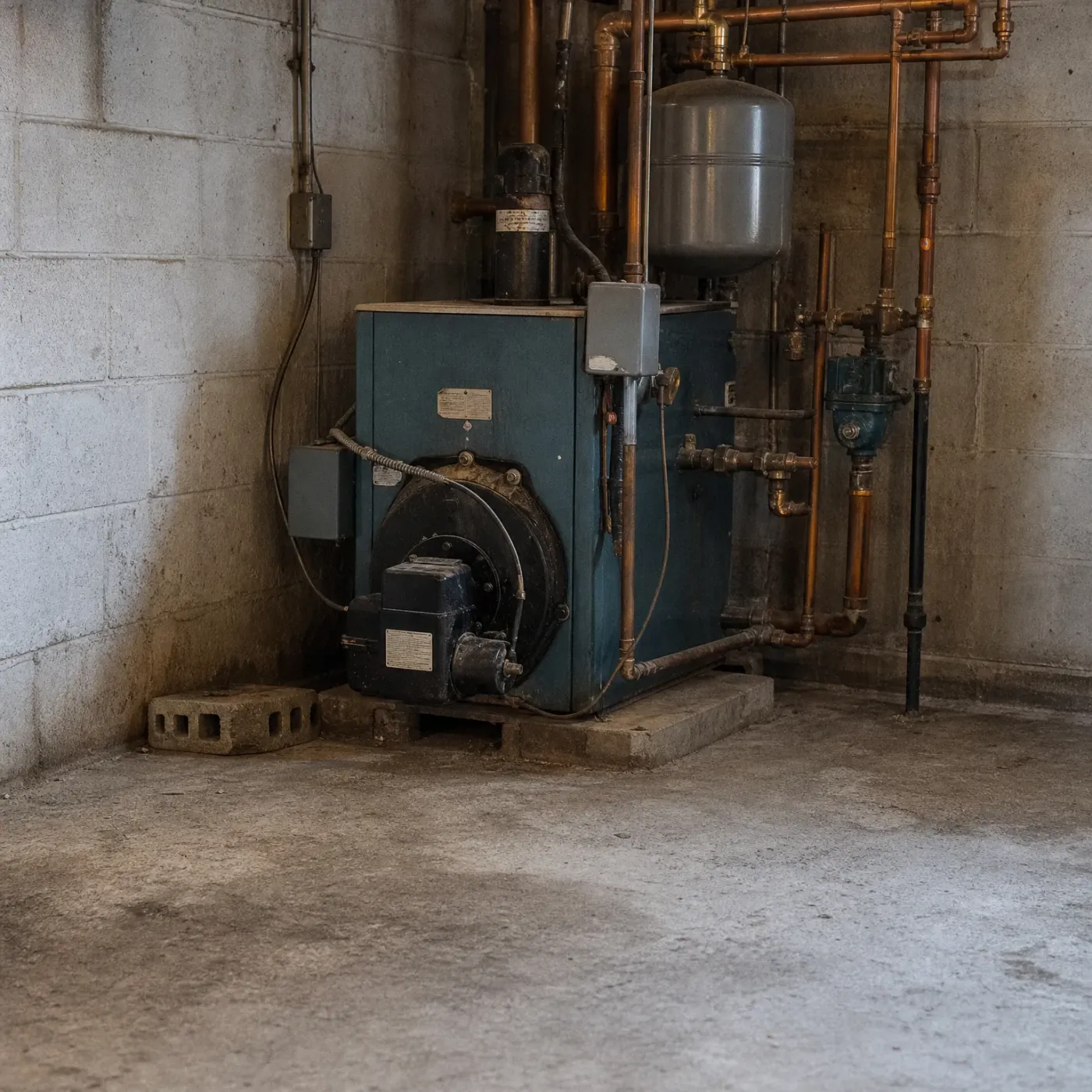
An oil-fired boiler like this one is already working harder than it should. Galvanized flue pipe rusts from the inside, old zone valves stick, and a unit this worn is a poor match to add radiant tubing onto. Replacing it first is the honest call.
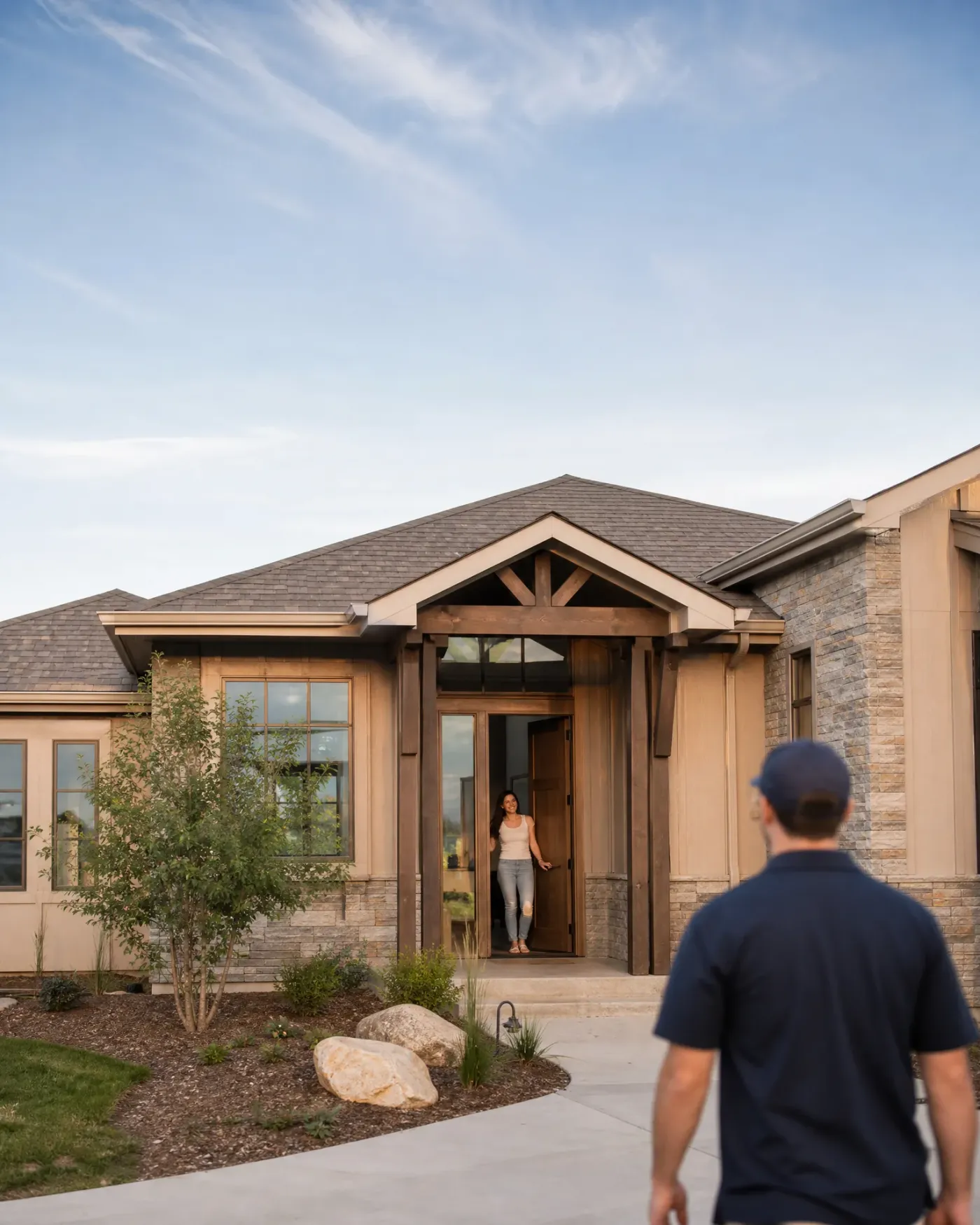
Radiant floor heat earns its keep in Nebraska when the boiler behind it is sound. Cold nights here ask a lot of that system, and a boiler holding steady pressure with clean loops will keep floors warm through the worst of it. One that's losing pressure or short-cycling will struggle long before you'd notice it from a baseboard system.
If you've read this far wondering where your own boiler stands, that's worth answering before winter does it for you. A licensed contractor working in your area sees this equipment every season and knows what tends to go first on a system like yours. You'll be matched with one contractor, not a handful calling at once, so the person who reaches out is someone who already knows the kind of system you're asking about.


The pro who reaches out is licensed in Nebraska.
Asking costs nothing, and the choice to hire stays yours.