 Hand it off
Repair or replace an old boiler in Nebraska
Once you send the form, finding a pro is off your list.
Your boiler is making the noise again, or it's not keeping the house warm the way it used to, and you're trying to figure out if this is the year you fix it one more time or just replace it. That's not a small question in Nebraska. Winters here are hard, and a boiler that quits in January isn't a problem you can sit with for long.
Most homes around here heat with gas, and a boiler that's old enough to be failing was likely sized and installed for a furnace that's since changed, or installed before current efficiency standards existed. An old boiler running on borrowed time is a different problem than a boiler with one bad part. The first is a repair. The second might not be worth repairing at all.
Figuring that out usually means getting someone out to look at it, and that's the part that eats a weekend. Calling around for a contractor who works on boilers specifically, not just furnaces. Explaining the make, the age, the symptoms, to three different people so you can compare what they tell you. Waiting on callbacks. Most people don't have that kind of time to give to a problem that's just supposed to get fixed.
Send the form on this page and that search stops being yours to do. A licensed contractor who works on boilers in Nebraska gets your information and takes it from there. You stop being the one who has to track down who's any good, who answers the phone, who actually shows up.
Whatever this boiler needs, repair or full replacement, that's a conversation you have once you're talking to someone who's looked at it. Right now the only job in front of you is getting that person lined up, and that's the part this page takes off your plate.
A boiler past 15 years that needs a repair every winter is usually cheaper to replace than to keep patching. Parts for an old boiler get harder to find and cost more as the unit ages, and a cracked heat exchanger or failing circulator pump often costs close to what a new installation runs anyway. If the repair bill is minor and this is the first issue in years, fixing it makes sense. If you're calling for the second or third time this winter, or the boiler is old enough that nobody can say how much longer it holds up, replacement is the safer bet. Nebraska winters run long, most homes here heat with gas, and a boiler that fails in January leaves you without heat while a repair gets scheduled. A new boiler installed before the cold settles in means you're not gambling on a system already on its way out.
Send one request and you're done looking
Answer a few questions instead of calling shop after shop.
After you send the request, you're done searching.
Sending the form costs nothing.
Why does your boiler sound and act like this
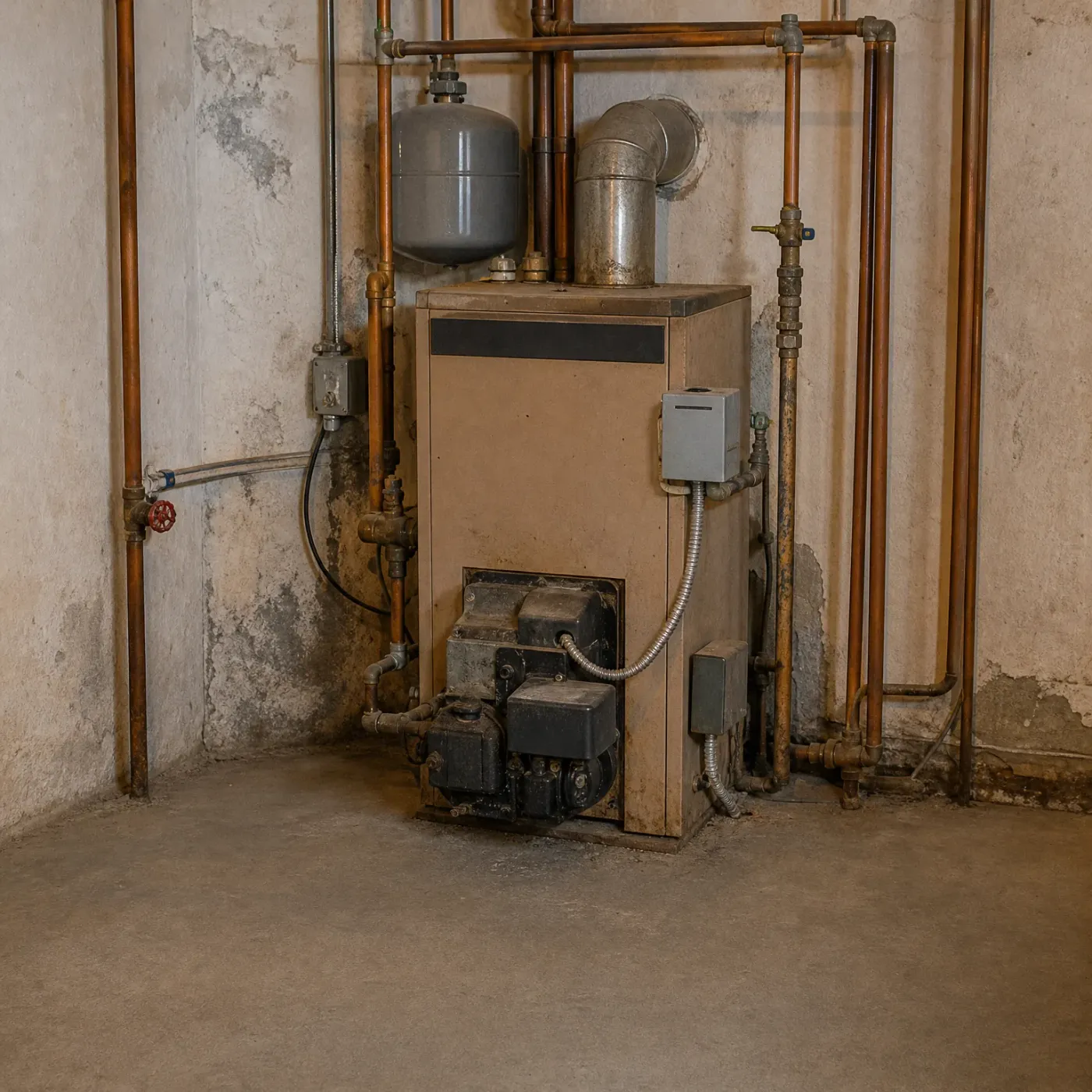
You know the pattern by now. The boiler kicks on and makes that banging or kettle-like sound before the radiators ever get warm. Some rooms heat fine and others stay cold no matter how long it runs. The pilot light looks weak or yellow instead of blue. Maybe you've noticed water pooling near the base of the unit, or the gas bill climbing even though you haven't changed how you use the house. Any one of these on its own might not mean much. Together, or showing up more than once this winter, they usually mean the boiler is working harder to do less. Left alone, a leak or a cracked part can fail outright on a cold night, and that's a repair you don't get to schedule.

Winter nights across Nebraska average 17°F, according to NOAA climate data. That kind of cold means your boiler is running most of the night, every night, for months straight, not cycling on and off a few times like it might in a milder state. An old boiler built to handle that kind of steady demand starts showing it: the burner runs longer to recover heat, the circulator pump works harder to push water through the system, and any weak seal or worn bearing gets found out fast. If yours has been short-cycling or losing pressure, cold nights like these are when you'll notice it first, usually around 2 or 3 in the morning when the house can't hold its heat.
NOAA nClimDiv 1991-2020 county normals weighted by homes


Patch It Again or Replace It
Repair
- A single repair, like a new circulator pump or a replaced ignitor, makes sense if the boiler is under 10 years old and this is the first issue it's had.
- If the heat exchanger is sound and the repair bill comes in well under what a new unit would cost, patching it keeps you through this winter.
- Parts for newer boilers are still in stock, so the repair gets done faster than sourcing something for a 20-year-old unit.
- A repair buys time if you're not ready to plan an installation right now, but it doesn't reset the clock on the rest of the unit.
- Fixing the immediate problem won't stop the next part from wearing out on its own schedule, especially once the boiler has 12 or more winters on it.
Replace
- Once you're paying for a repair every winter, those bills start adding up to more than a new boiler would have cost outright.
- A new boiler is sized and set up for how your home actually loses heat, so rooms that have stayed cold for years can finally even out.
- Replacing it ends the guesswork of whether the next cold snap brings another breakdown in the middle of a 17°F night.
- Newer boilers run more efficiently than one installed decades ago, which matters when yours is firing most of the night for months at a stretch.
- If the heat exchanger is cracked, replacement isn't really optional, since that's the part that makes the boiler unsafe to keep running.
- Once it's installed, you're done thinking about it for years instead of bracing for the next repair call.





So which is it: fix it again or replace it
If your boiler is past 15 years and you're calling for a repair most winters, replacing it is the straightforward call. If it's younger than that and this is its first real problem, a repair is the right move, and you can stop reading here. The hard cases are the ones in between, and that's a judgment a licensed contractor should make in your house, looking at your actual unit, not a guess from a search page.
Either way, the next step is finding someone who can look at it. That usually means searching around, calling a few places, explaining the banging noise and the cold rooms again on each call, then sitting with quotes trying to tell them apart. Send the form here and that part is done. You won't be the one tracking down who's available and who knows boilers in Nebraska. Someone gets matched to your situation, and you wait for the call instead of making a dozen of them.

Finding a pro stops being your job
Describe your boiler job once, to one pro.