Send it once and finding someone is no longer on you.
A boiler that's too big for your house cycles on and off all winter, and one that's too small runs flat out on the coldest nights and still can't keep up. Either way, someone has to actually work out the number, room by room, window by window, not just swap in whatever size was there before.
That sizing work depends on your house, not a chart. How much square footage you're heating, how many exterior walls, what your windows are like, how the place is insulated. A 1,500 square foot house in Omaha with old single-pane windows needs a different boiler than the same size house with newer construction. Nobody can give you a straight answer without looking at the place.
Winters here are the kind that test a system. A boiler sized right keeps the house even through the worst stretch of January without running constantly. Most homes around here heat with gas, and gas boilers in particular need to be matched to the house or the gas bill shows it.
This is where a load calculation comes in, a room by room accounting of how much heat your house actually loses, done by someone who installs boilers in Nebraska homes all winter and knows what tends to go wrong with sizing in houses like yours. That's not a guess made from a square footage chart. It's a number worked out for your house specifically.
Send the request through and that search becomes someone else's job. A local contractor who installs boilers for a living gets the details of your house and works out what size fits. One contractor, not a handful of strangers calling about the same job. You stop carrying the question around and let the person who answers it every week take it from here.
What size boiler do I need for my house in Nebraska?
Nebraska winters push a boiler hard for months at a time, so it's natural to wonder if the one heating your house is actually the right size, especially if you're replacing an old unit or had rooms that never seemed to get warm enough last winter. The answer isn't a single number that works for every house. It comes from how much heat your specific house loses on the coldest days.
The right size comes from a heat loss calculation, not your square footage
A contractor figures your boiler size by calculating how much heat your house loses on the coldest days, using your walls, windows, insulation and layout, not a chart based on square footage alone. Two houses the same size in Nebraska can need different sized boilers if one has more windows or less insulation. This matters here because winter design temperatures in Nebraska drop well below freezing, and a boiler sized off a rough estimate instead of that calculation either short cycles on milder days or can't keep the house warm when it's coldest. Getting the number right means a contractor measuring your actual house, not guessing from its size.
Why a load calculation matters
Sizing a boiler comes down to a Manual J load calculation, which weighs how much heat your house actually loses on a cold night against how much the boiler can put out. It accounts for your square footage, your window count, your insulation and how your rooms are laid out. Two houses on the same street can need different sized boilers if one has more glass or a finished basement. Skipping this step and matching the old boiler's number just carries forward whatever mistake was made the first time.
What an oversized boiler costs you
A boiler that's too big satisfies the thermostat fast, then shuts off, then fires again a few minutes later. That short cycling wears on the ignition system and the pump well before their time, and it leaves the air in your house swinging between too warm and cooling off again. A correctly sized boiler runs longer stretches at a steady output, which is actually easier on the equipment and holds the temperature in your house more evenly through a January night.
Does your house ever feel too cold or too warm?
A boiler that's wrong for your house shows up in how the rooms feel, not just the bill. If it's oversized, you'll notice it firing up, running hot for a few minutes, then shutting off again and again, and some rooms never quite feel even. If it's undersized, the far bedrooms stay cool on the coldest nights no matter how long it runs, and the boiler seems to be working constantly without catching up. You might also hear it short cycling, a quick on off on off instead of a long steady burn. Left alone, a mismatched boiler wears out its parts faster and leaves someone in the house cold on the nights they need heat most.
One installer gets your project, so there's no bidding war over it.
No fee to send it, and nothing to sign.
How a Boiler Is Sized
A boiler is sized in BTUs per hour, the amount of heat it can deliver on the coldest night, not by the number of rooms it serves.
Nebraska's design temperature, the coldest typical outdoor reading used in the Manual J, sets the output a boiler has to match.
Most gas boilers here are non-condensing or condensing units, and the venting differs, which can affect what size fits your mechanical room.
A boiler produces heat at the burner, then moves it through a heat exchanger into water that circulates to radiators or baseboard.
Radiators and baseboard each give off heat at a different rate per foot, so the distribution system factors into the sizing, not just the boiler itself.
An oversized boiler short cycles, meaning it never runs long enough to warm the water evenly through the whole system.
A boiler's job is to match the heat your house loses on the coldest night with the heat it can put out, measured in BTUs per hour. That output number comes from the design temperature for your part of Nebraska, the cold snap reading contractors use as the worst case rather than an average night. The burner makes the heat, then a heat exchanger passes it into water, and that water is what actually moves through the house to radiators or baseboard. Those two don't give off heat the same way. A cast iron radiator holds and releases heat differently than a run of baseboard, so the length and type of what's in your walls now changes what output the boiler needs to deliver, not just the square footage of the rooms. Whether your house runs a condensing or non-condensing unit matters too, since the venting is different for each and that can decide what actually fits in your mechanical room. Get the output too high for what the house and its distribution system call for, and the boiler short cycles, firing up and shutting off before the water ever heats evenly through the system. That's wear on the burner and the ignition, and rooms that never settle into an even temperature. None of this is guesswork a homeowner should be doing alone with a tape measure. It's a calculation that weighs the house, the climate, and what's already moving the heat around it.
A boiler matched to your house cycles on, holds a steady heat through the house, and shuts off until it's needed again.
A boiler sized wrong runs too long or too short, and you feel it as cold rooms or a basement that never stops working.
1
A contractor measures every room, wall and window in your house.
2
The Manual J calculation sets your home's actual heat loss.
3
That number is matched to a boiler's rated BTU output.
4
The boiler is installed sized to hold heat through a Nebraska winter.
Oversized vs. Undersized Boiler
Oversized boiler
It heats the house fast, then shuts off, then fires again within minutes, all through a cold January night.
Short cycling like that wears on the igniter and the pump sooner than a boiler that runs a normal length cycle.
Rooms farthest from the boiler can still feel cold because the heat comes in short bursts instead of a steady flow.
Gas gets used in quick, repeated bursts rather than a long, even draw, which adds up over a Nebraska winter.
An oversized boiler costs more to install than the house actually calls for, since output beyond your heat loss number buys nothing.
Undersized boiler
On the coldest nights it runs close to nonstop and still may not bring the house up to the temperature you set.
A basement or an addition farthest from the boiler is usually the first place to feel it fall behind.
It runs long and steady rather than cycling, which is easier on the igniter and pump but still won't close a real heat loss gap.
Once a January cold snap hits, there's no reserve capacity left to call on, so the house just runs cooler.
The lower upfront cost is tempting but it's set by your house's actual heat loss, not by what's cheapest to install.
Running the way it should
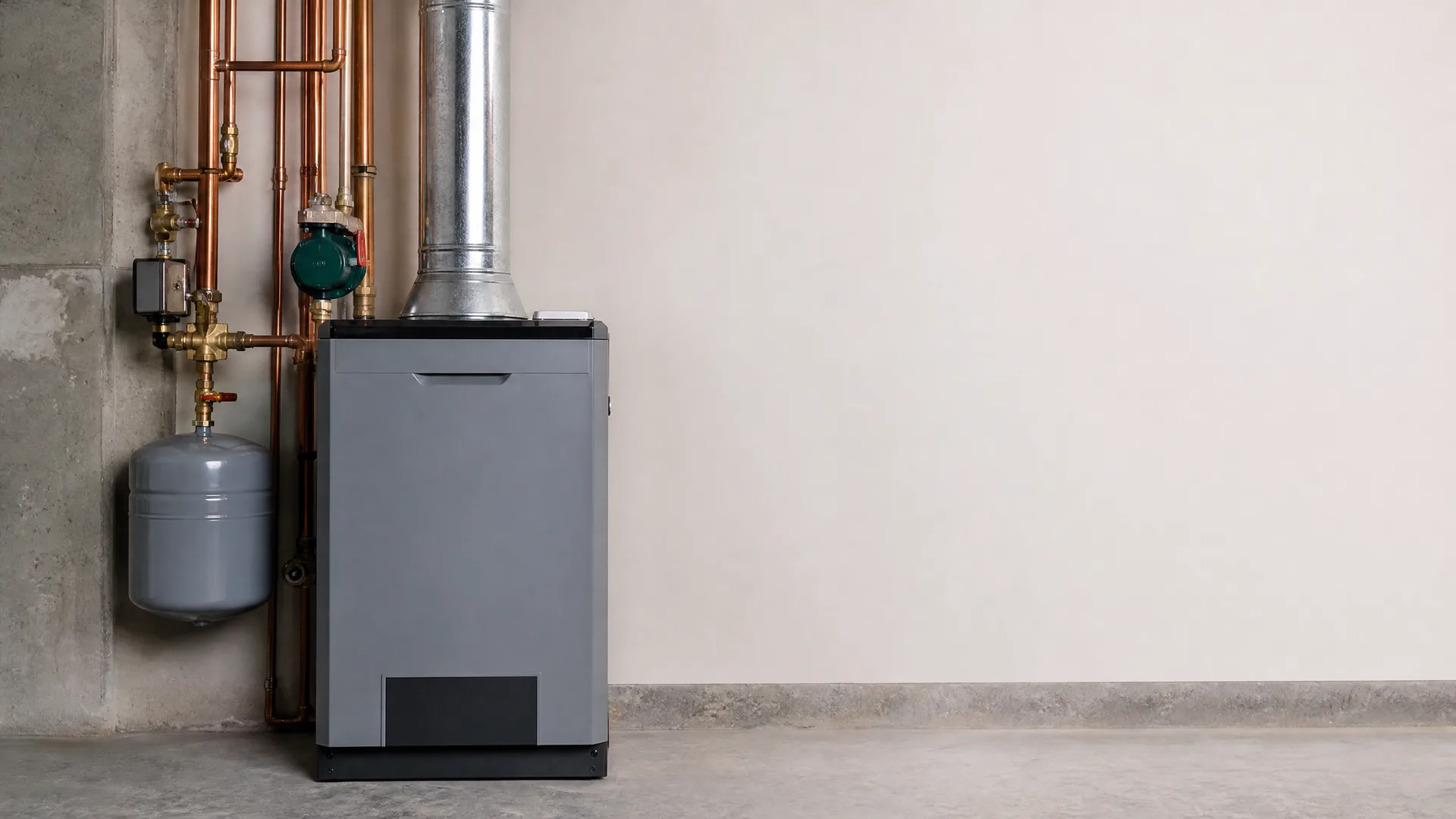
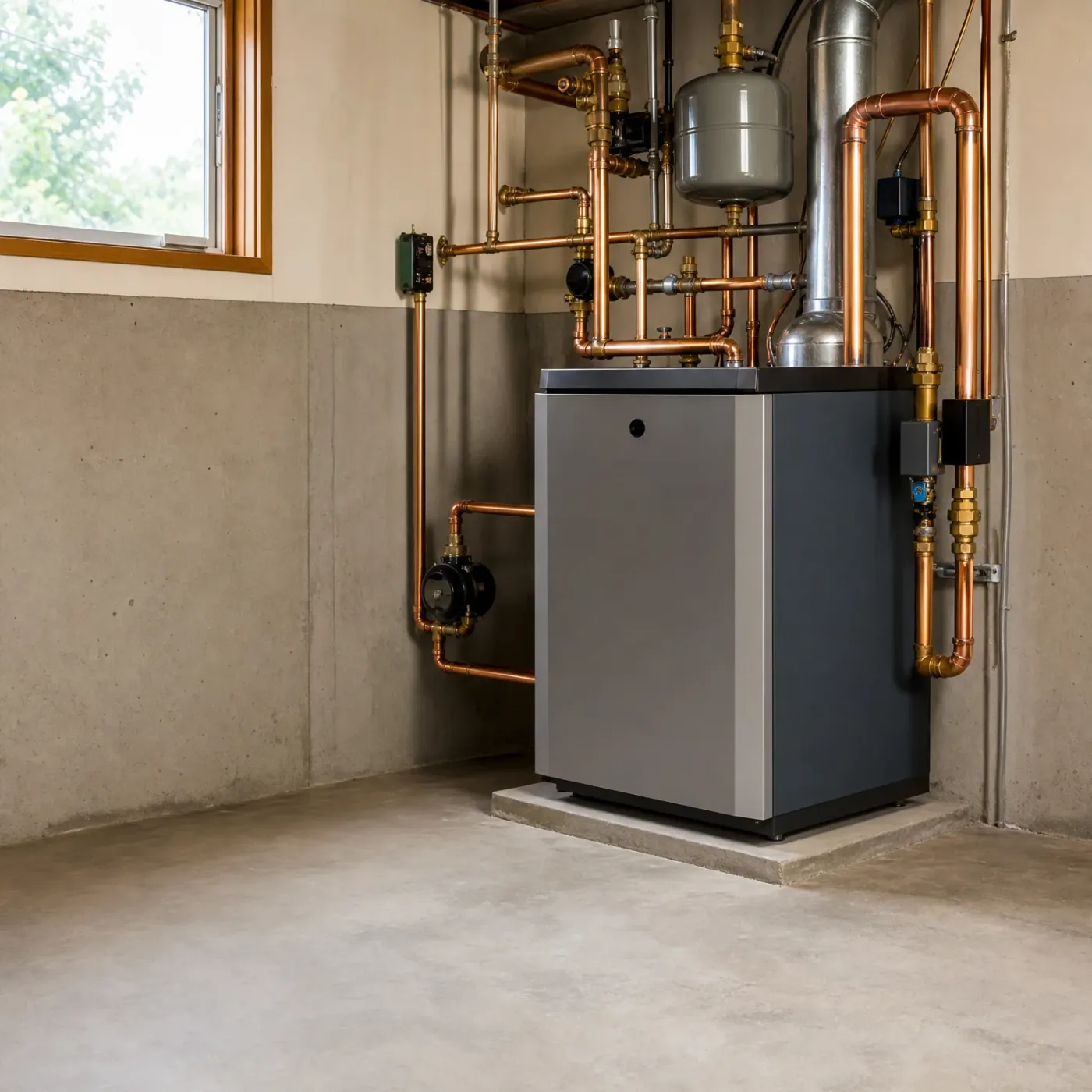
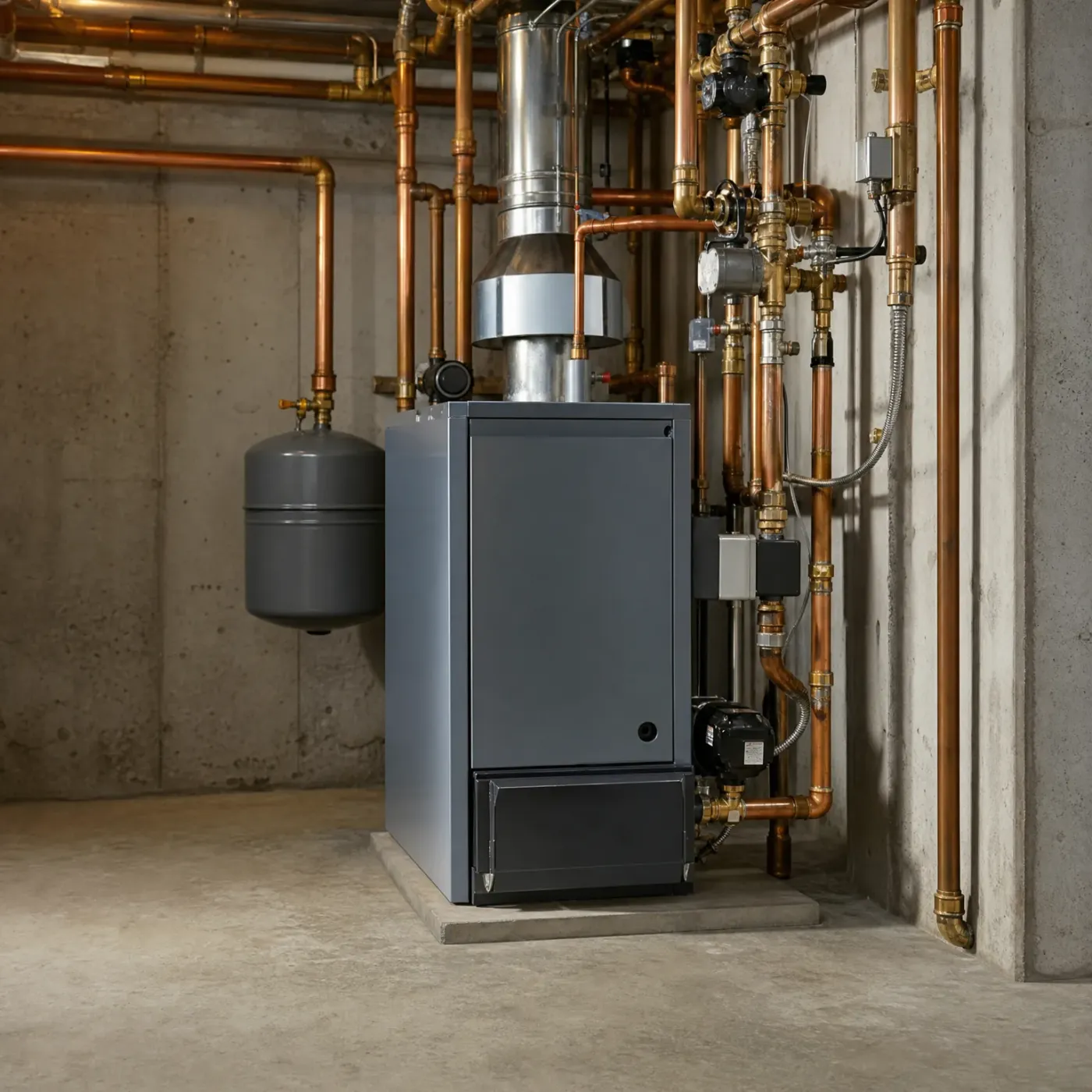
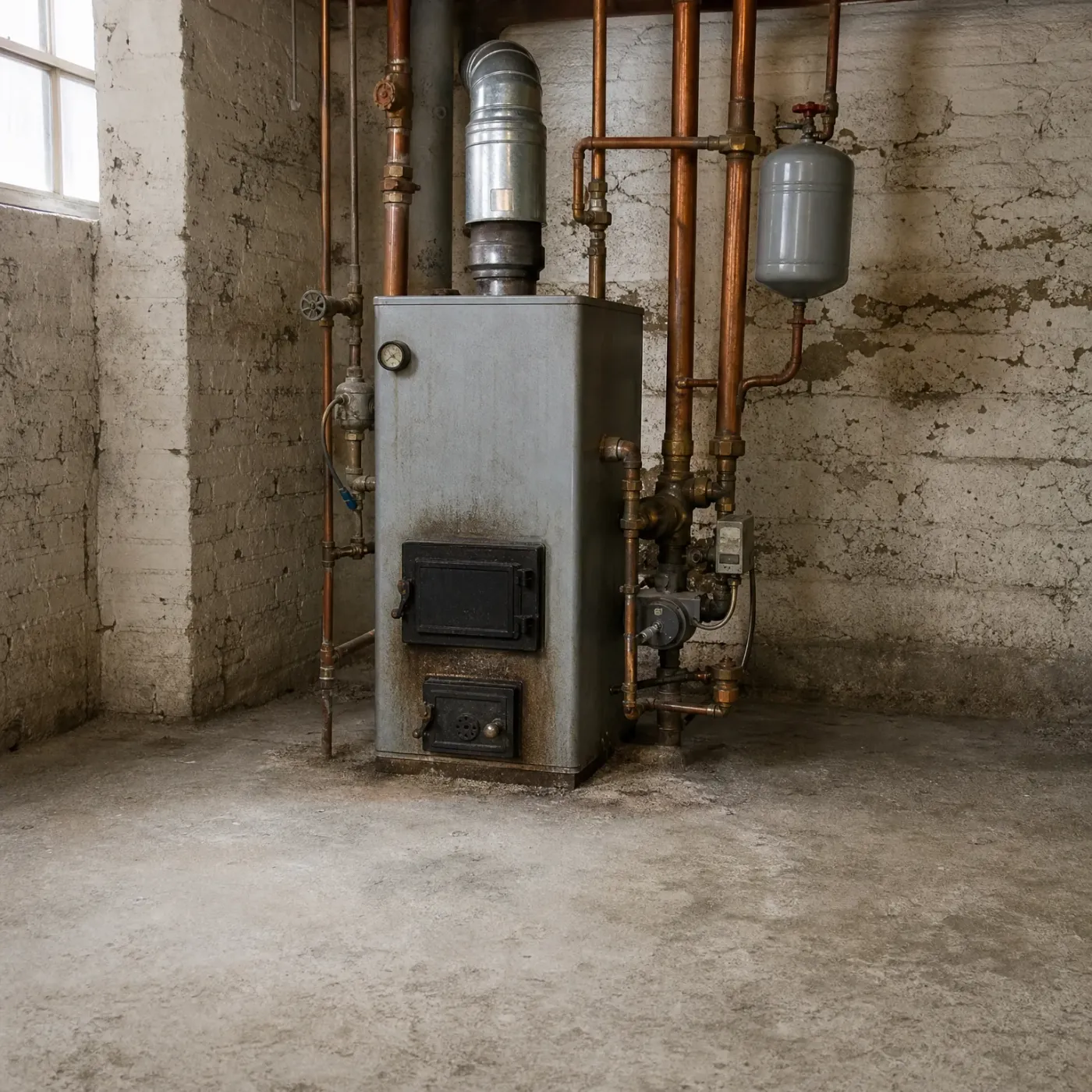
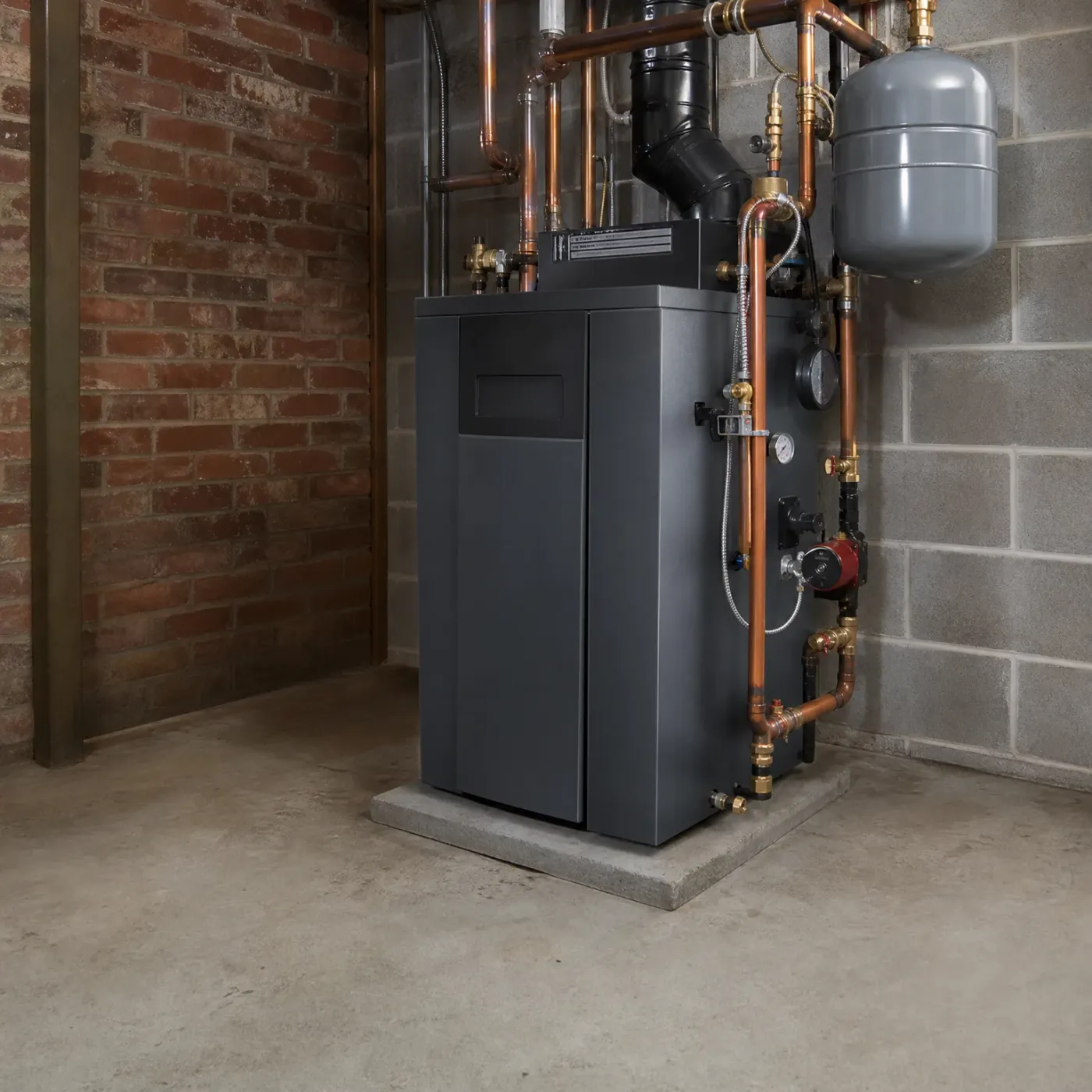
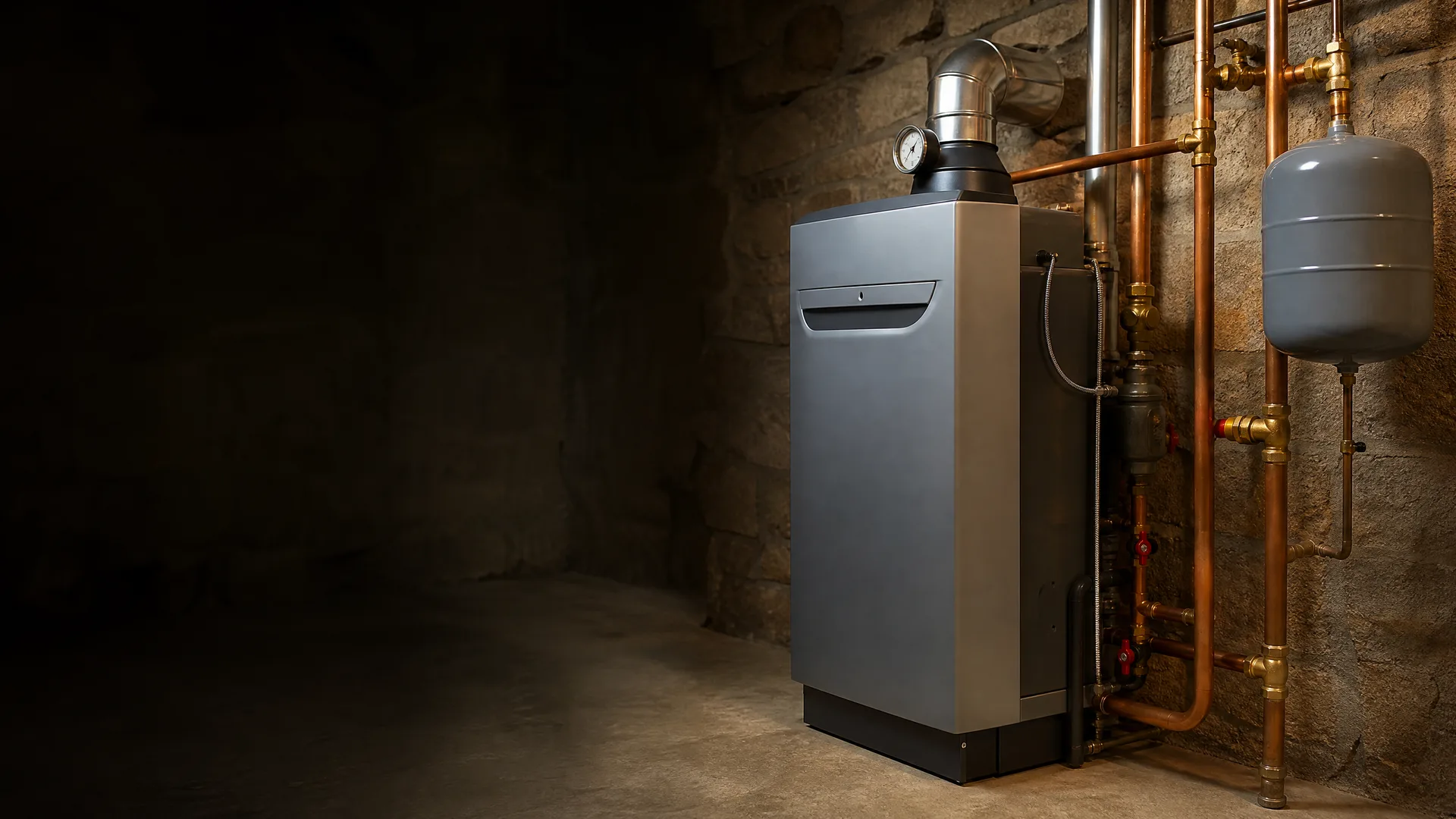
This is a boiler sized to the house. It fires, sends heat through the copper lines to every radiator, and shuts off once the rooms reach temperature. The pipes and pumps stay quiet between cycles. On a hard Nebraska night it holds that heat without strain.
Working too hard
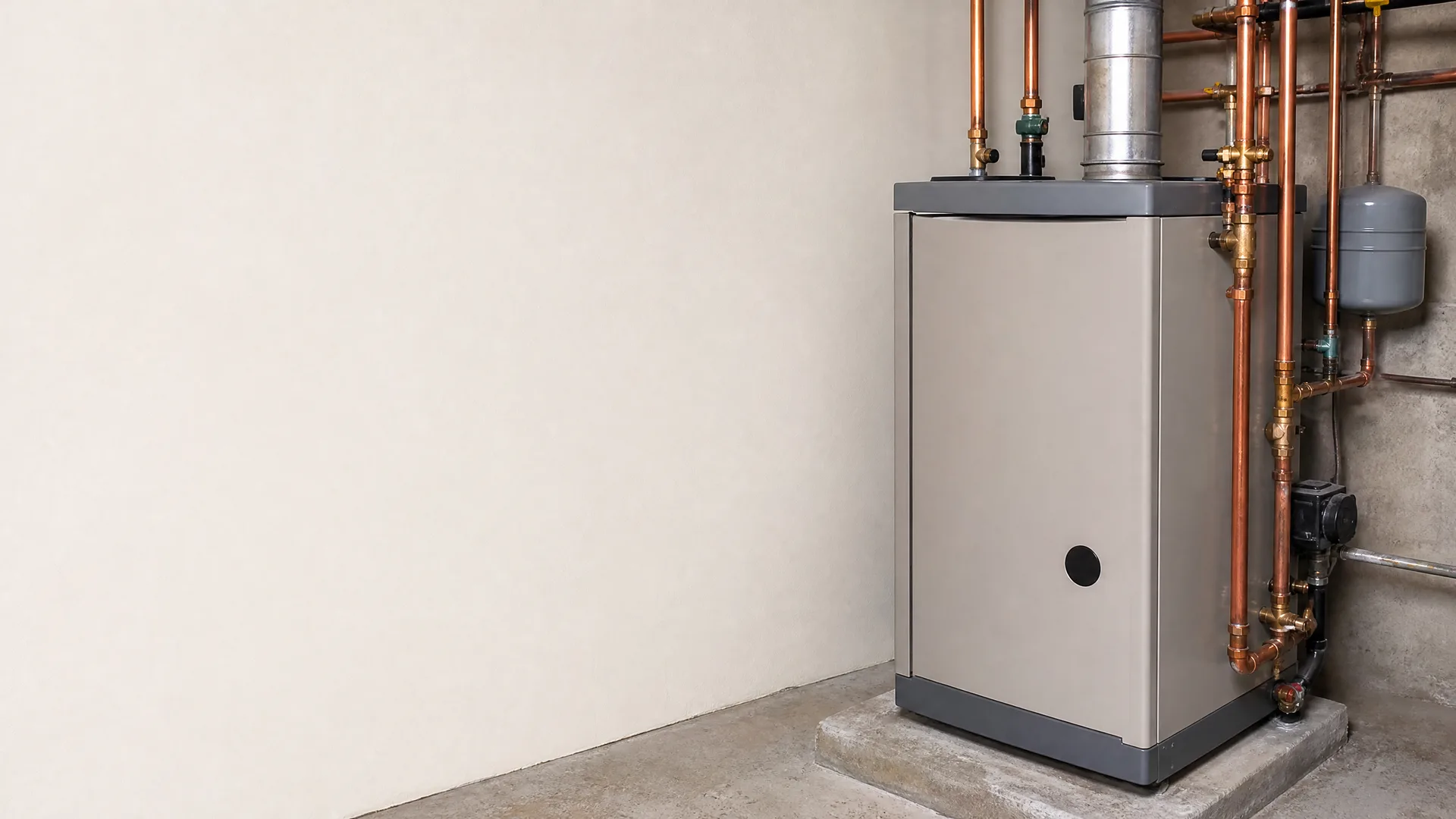
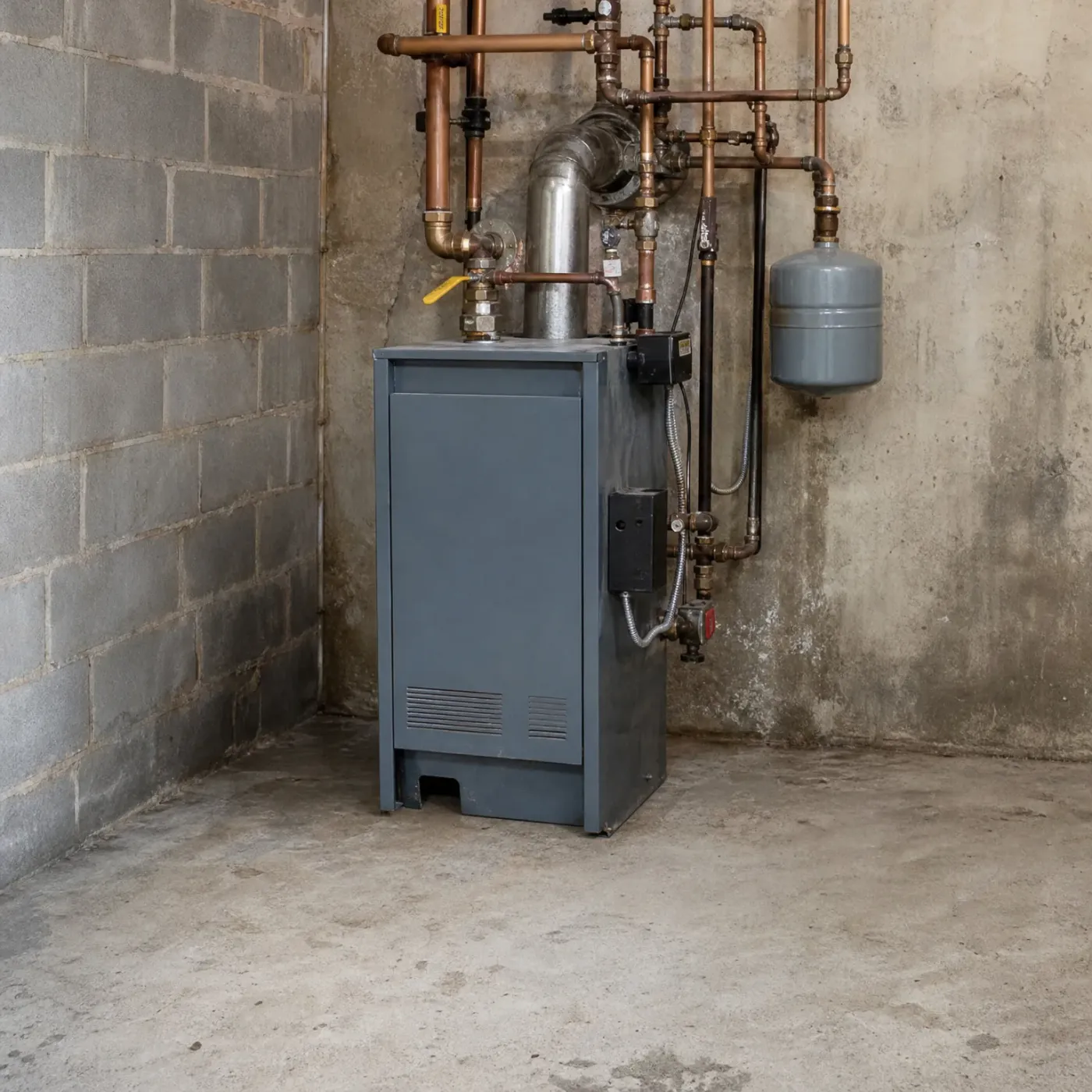
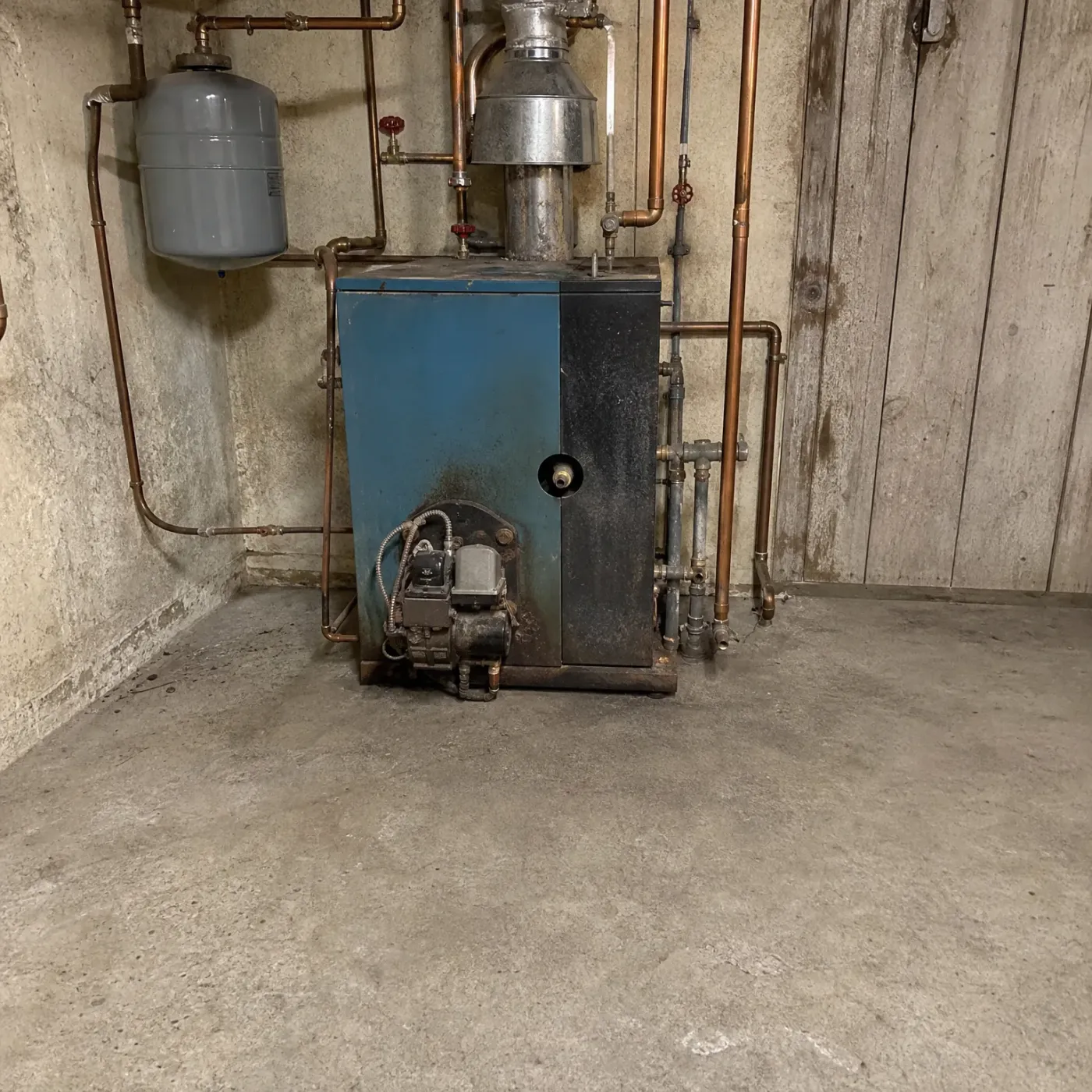
This boiler sits alone in a bare basement, old and carrying more than it should. An undersized or aging unit like this runs long stretches trying to catch up, and the rooms farthest from it stay cool while it works. The cast iron and the flue take the wear.
Before you get your boiler installationAfter you get your boiler installation
Winter nights average 17°F statewide
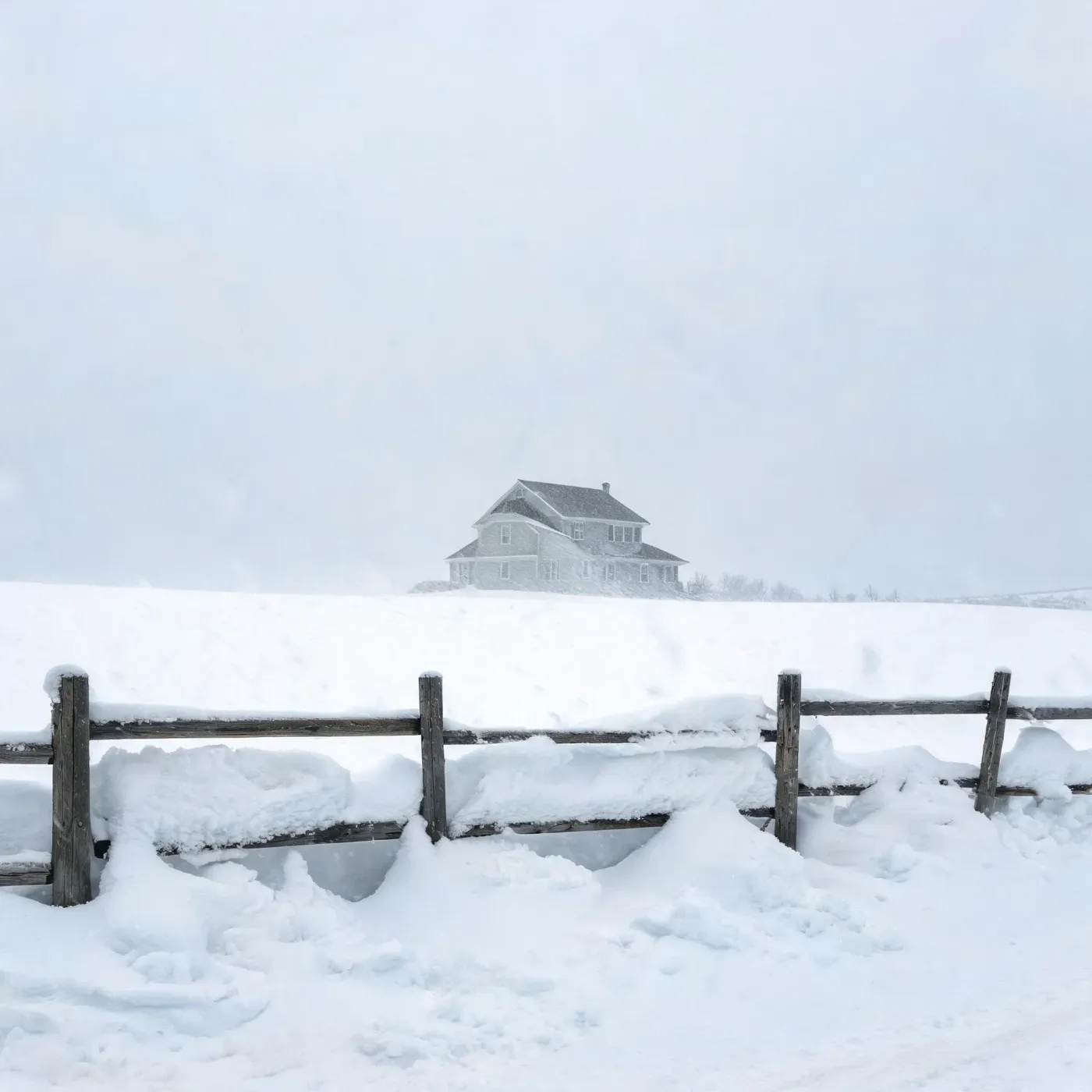
A 17°F night is a normal Tuesday here, not a cold snap. Your boiler has to hold every room against that for hours at a stretch, not just reach temperature once and coast. That's the number a load calculation has to answer to.
NOAA nClimDiv 1991-2020 county normals weighted by homes
Statewide, winter nights average 17°F, and that's the number your boiler is working against for most of the night, not just at the coldest point. A boiler sized to your house will hold every room at temperature through that whole stretch without strain. One that's undersized falls behind around 2 or 3 in the morning, and you'll feel it first in the room farthest from the boiler, a cold bedroom or a chilly basement that the radiators never quite catch up on. Source: NOAA climate normals.
NOAA nClimDiv 1991-2020 county normals weighted by homes
The right size for your boiler comes from the load calculation, not from guessing at the old unit's rating or going a size up for safety. Once that number is set, installing a boiler matched to it is what keeps every room in your house warm through a 17°F night without the short cycling or the cold corners. A local contractor who installs boilers in Nebraska homes all winter has seen which sizes get undersized here and why, and runs the same calculation before quoting anything. You'll work with one contractor on this, not a handful of companies calling about the same job, so the person who comes out is the one who does the install. Get that match right once and the question of what size boiler your house needs is settled for as long as the equipment runs.