

Why your boiler is gurgling in Nebraska
Send the request and finding a pro stops being your problem.
Let a pro reach outThat gurgling is usually air trapped in the system, or water running low. Boilers push hot water through a closed loop, and once air gets into the pipes or the radiators, it bubbles and knocks as the water tries to move past it. The same sound shows up when the water level has dropped below where the pressure sensor wants it, which happens slowly over a heating season even in a system with no leak. Gas is the main way homes heat here, so a boiler that's gurgling is likely one that's running hard most days from fall through spring, and small air pockets get more noise and more chances to show up the more it cycles. Left alone, trapped air wears at the pump and keeps parts of the system from heating evenly, so a room or two stays cold while the boiler keeps firing. Bleeding a radiator can quiet it for a day. Finding out why the air or the water loss keeps happening takes someone who can get inside the system.
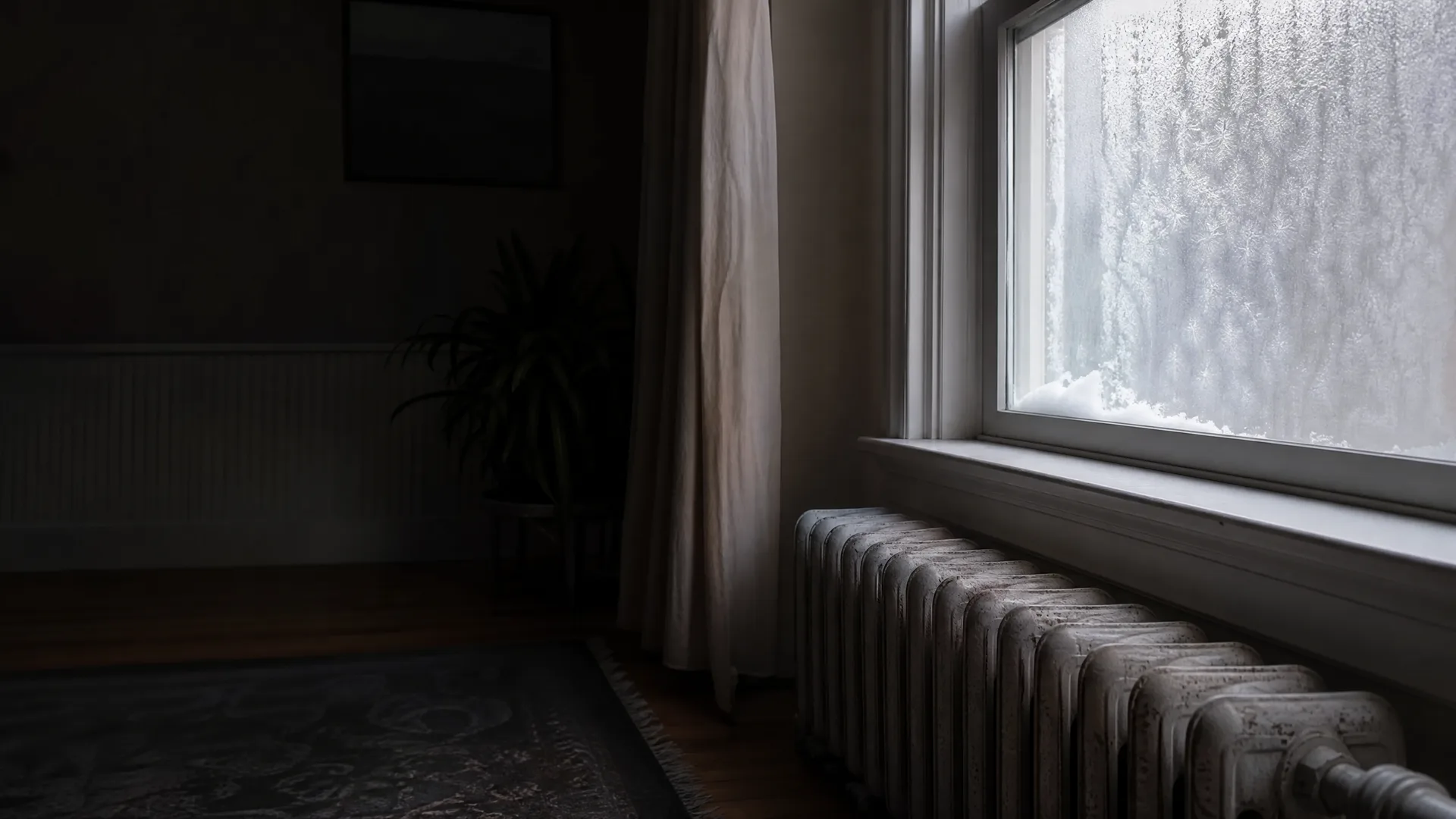
You're up before the sun, and the living room is cold enough to see your breath near the window. The cast-iron radiator under it is ticking and gurgling, same as it's done for a week, and the glass has a skin of ice on the inside. Outside it's still deep January in Nebraska, the kind of morning that doesn't let up. You put a hand on the radiator. The top is warm. The bottom is cold. The gurgling starts again as you stand there, and the room still hasn't warmed by the time you need to leave for work.
Bleed It or Call a Tech
Bleed it yourself
- Bleeding a radiator takes a key and a rag, and most homeowners can do it in a few minutes once shown how.
- It only clears air from that one radiator, so if three rooms are gurgling you're doing it three times.
- If the noise comes back within days, the air isn't the real problem, it's a sign the system is losing water somewhere.
- You won't see the pressure gauge or know what a safe refill level looks like for your boiler, so guessing can leave it too low or too high.
- A radiator that won't stop gurgling after bleeding usually points to a failing valve or a feed that isn't shutting off right.
Have it looked at
- A tech who services boilers all winter in Nebraska has likely seen this exact gurgle a dozen times this season and knows what it usually is before opening the panel.
- They can check the expansion tank and the automatic feed at the same time, not just the radiator you heard noise from.
- Low water pressure in a gas boiler can trip a safety switch and shut the whole system down, not just one room.
- One licensed, local contractor takes the call, so you're not fielding quotes from three different companies while your living room stays cold.
- If the gurgling turns out to be a cracked seal or a bad valve, that's a part only a tech can source and replace correctly.




Send one request and you're done looking
The pro who reaches out is licensed in Nebraska.
Sending the form costs nothing.
Low water pressure does the same thing
A boiler loop has to stay pressurized to push water through the pipes and radiators. When the pressure drops, the pump pulls in air along with water, and that air makes the same gurgle and knock as a radiator that needs bleeding. Most boilers have a gauge on the front showing a safe range, often marked in a different color. If the needle sits below that range, the system is losing water or pressure somewhere, and bleeding a radiator won't fix it. A contractor can find whether it's a slow leak, a faulty valve, or a feed that needs adjusting.
Ignoring it wears on the pump
Trapped air doesn't just make noise. It forces the circulator pump to work against pockets of air instead of water, and a pump running that way wears faster than one moving water cleanly through the loop. Left alone over a winter, the gurgling can go from an occasional knock to a constant rattle, and the pump can fail outright in the cold months when you need it most. A local contractor who services boilers through a Nebraska winter has seen which pumps and valves tend to go first, and can check the system before it gets to that point.
Winter nights average 17°F statewide
At 17 below freezing most winter nights, your boiler is running long stretches to hold the house. That's more hours for air to work loose in the pipes and for pressure to drift down, which is why the gurgling tends to show up and stay once the cold sets in.
NOAA nClimDiv 1991-2020 county normals weighted by homes


What the Gurgling Comes Down To
- Gurgling almost always traces back to trapped air or low water pressure in the loop, not a failing boiler.
- A radiator that still gurgles after bleeding usually points to pressure or a feed valve issue further back in the system.
- Nebraska's long, cold stretches mean more run time, and more run time gives air and pressure more chances to drift off.
- A boiler tech who works this equipment all winter in your area knows which of these two causes shows up first.
- Sending one request means one licensed local contractor looks at your system, not a handful of companies competing for the job.
- Once that contractor has the details, finding the right person to fix it is off your plate.
The sound almost always comes from one of two places: air that worked its way into the loop, or pressure that's dropped below what the pump needs. Bleeding a radiator clears the first. If the gurgling comes back, or if it's showing up in more than one room, the cause is further back in the system, usually at the feed valve or the pressure gauge itself. That's not a job to chase with guesswork, because a loop that keeps losing pressure will keep pulling in air no matter how many radiators you bleed.
Nebraska winters push boilers into long runs, week after week, and that run time is exactly what gives air and pressure the chance to drift off in the first place. A system that's quiet in October can start gurgling in January for no reason other than how many hours it's been working. That pattern is familiar to anyone who services boilers through a full Nebraska winter. They've seen which cause shows up first in which kind of system, and they know what to check before they touch a valve.
Sending a request through this page puts the system in front of one licensed, local contractor, not a handful of companies calling to bid on the job. You explain it once, to someone who already knows the equipment and the climate it's running in. From there, tracking down who can fix it is no longer something you have to manage yourself.

Boiler Repair
Finding a pro stops being your job

- A local pro who knows boilers gets your details and gets in touch.
- Tell a local repair pro what your boiler is doing.

- Send it once and finding someone is no longer on you.
- Send the request today and let a boiler pro reach out to you.

- Describe what your boiler is doing once, in one form.
- Answer a few questions instead of calling shop after shop.

- Your request stays with one local pro.
- Your request goes to one pro, not a list of companies.