Why your boiler keeps turning off in Nebraska

Step 1 of 3: Equipment

A boiler that keeps shutting off is usually telling you about pressure, airflow, or a safety switch doing its job. Low water pressure trips the pressure switch and the boiler locks out rather than run dry. A blocked flue or condensate line will do the same thing, and so will a flame sensor that's picked up enough soot to stop reading a flame correctly. Through a Nebraska winter, a boiler that short cycles over and over is working harder each time it restarts, and that wear adds up faster than the thermostat clicking on and off suggests. It also means the house isn't holding heat evenly while you wait on it. Most of these causes are small on their own, a valve, a sensor, a switch, but a boiler that keeps cutting out rarely fixes itself, and catching it early is what keeps a short cycle from turning into a cold night with no heat at all.

A smiling man in a gray long-sleeved shirt stands in a kitchen looking to the side, with open shelves of dishes, a white mug on the counter, a potted plant, and a view through a doorway into a living room.
A smiling bearded man in a green sweater sits at a white marble kitchen island with a mug, potted plant and bowl of fruit, in a bright white interior with open shelving and an arched doorway.
A smiling man with dark curly hair and a beard, wearing a dark green knit sweater, stands at a white marble kitchen counter with a dark blue mug, with open shelving, pendant lights and a houseplant behind him.
A smiling man in a green ribbed sweater stands behind a wooden table holding a ceramic mug of coffee in a kitchen with white subway tile, shelves of potted plants, and a bowl of fruit.

What are you noticing when it shuts off

You might hear the burner fire, run for a bit, then go quiet before the house has actually warmed up. Some rooms stay cold while the thermostat shows it's still calling for heat. The pressure gauge on the boiler itself might sit low, below where it should. You may notice a faint smell near the flue, or condensation pooling where it shouldn't be. If this keeps happening through a Nebraska winter, the boiler is shutting off before it finishes a cycle, and the house never quite catches up to the temperature you set. Left alone, a boiler that repeatedly locks out can wear on the parts that keep tripping to protect it, and on gas heat that's the system most homes here depend on.

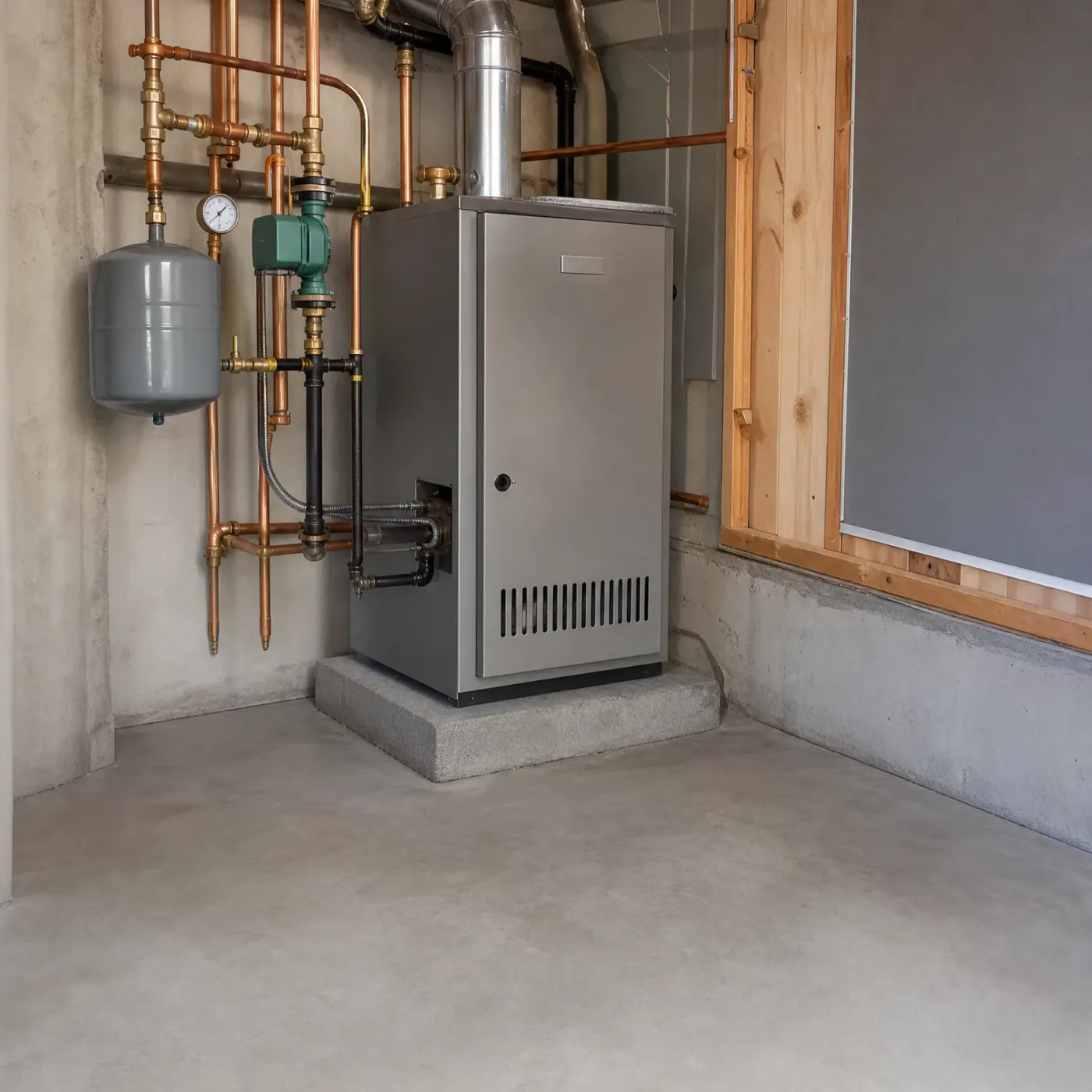
A gray boiler on a concrete pad in a basement corner, connected to copper and black pipes with a gauge, circulator pump, and gray expansion tank, beside a wood-framed wall.

Running the way it should

Pressure holds steady on the gauge, the pump moves water without noise, and the burner stays lit until the thermostat is satisfied. The flue draws clean and the expansion tank keeps pressure from swinging as the water heats.

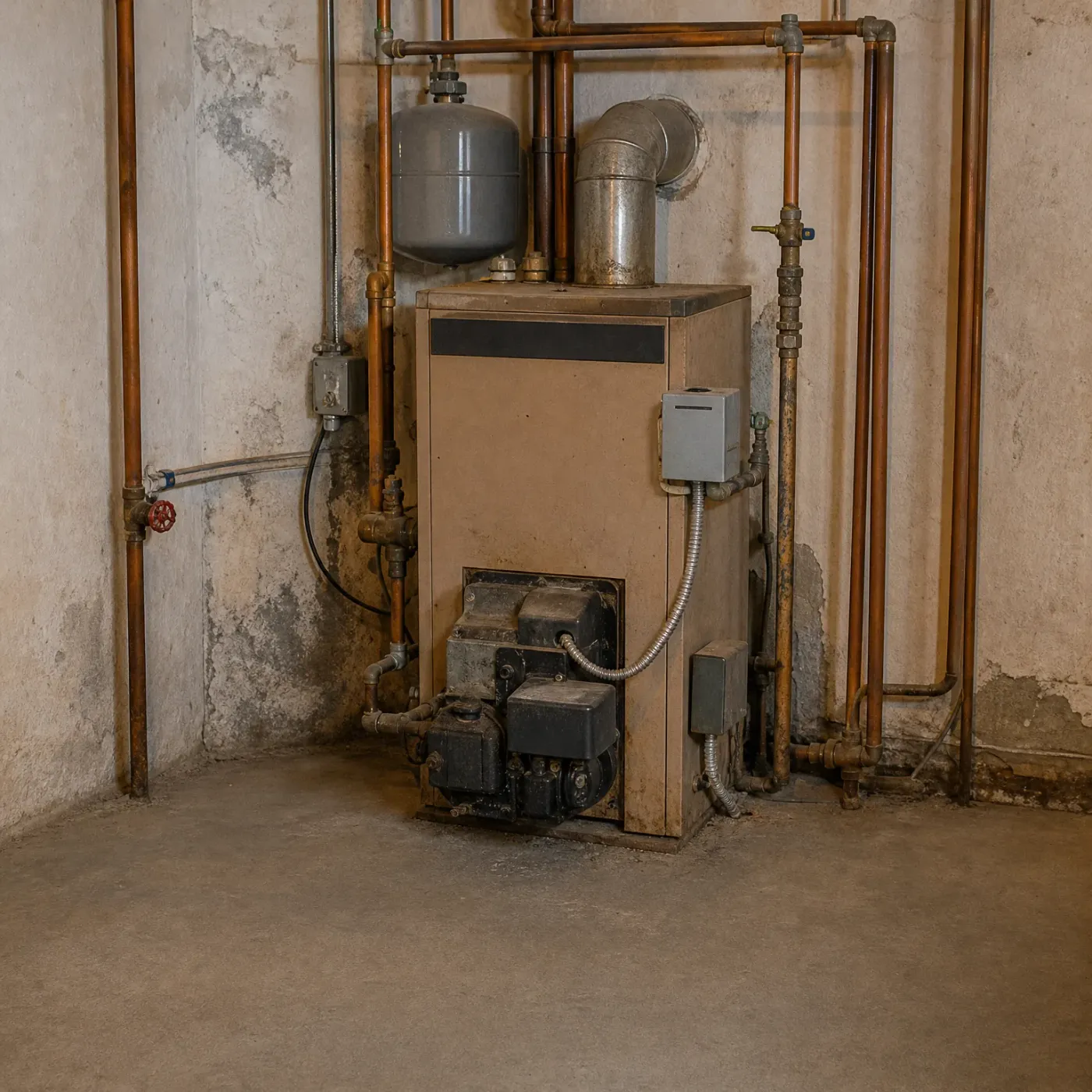
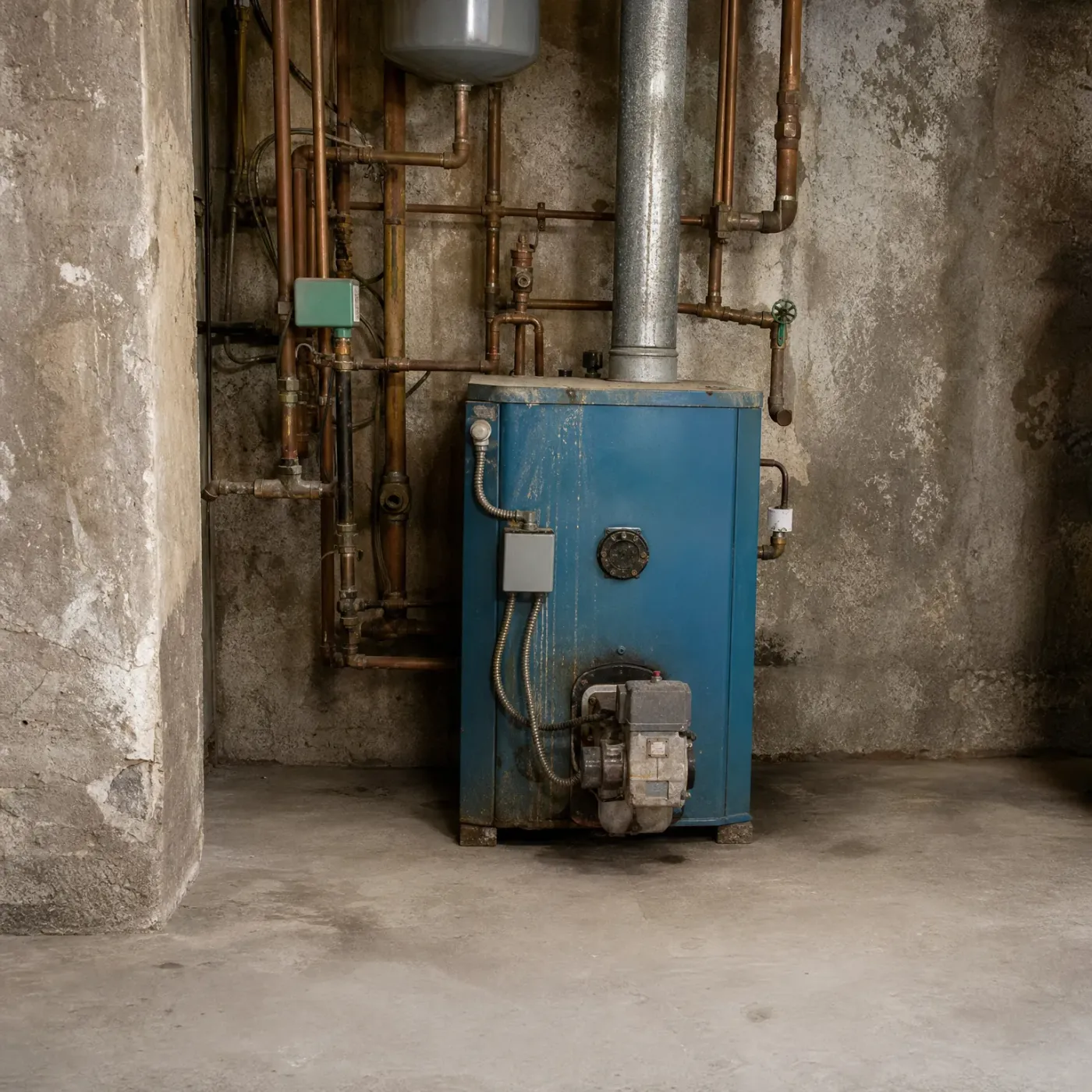
An older oil-fired boiler with a burner unit, flue pipe, expansion tank and copper piping stands in the corner of a concrete-floored basement with weathered plaster walls.

Running the way it shouldn't

An aging boiler like this one has had more chances for a joint to weep or a flue elbow to clog with soot. More pipe and more fittings means more places for pressure to drop or air to get trapped, and more reasons the switch shuts it down.

Call Now or Wait It Out

Call now

  • A boiler that short-cycles can stress the heat exchanger and the pump every time it restarts.
  • Waiting through a Nebraska cold snap means more hours the house runs short of heat while the lockouts keep happening.
  • A local contractor who works on boilers all winter knows which switch or sensor in your area usually causes this.
  • One contractor means one visit scheduled, not a string of calls from companies competing for the job.
  • If it's a pressure or safety switch issue, catching it now is a smaller job than waiting until the exchanger or pump is involved.
  • Sending the request once means the search for who to call is no longer something you have to carry.

Wait and watch

  • If the shutoffs are rare and short, you might be able to track the pattern before deciding anything.
  • Checking the pressure gauge yourself after each shutoff tells you whether it's dropping or holding steady.
  • A boiler that only trips once in a while during the coldest stretch may just need the pressure topped off.
  • Watching it another week costs you nothing if the house is still holding heat room to room.
  • The risk is that a switch tripping to protect the boiler now becomes a switch that's failing on its own later.
  • Nebraska winters don't leave much room for a boiler to be down once the shutoffs turn into no heat at all.
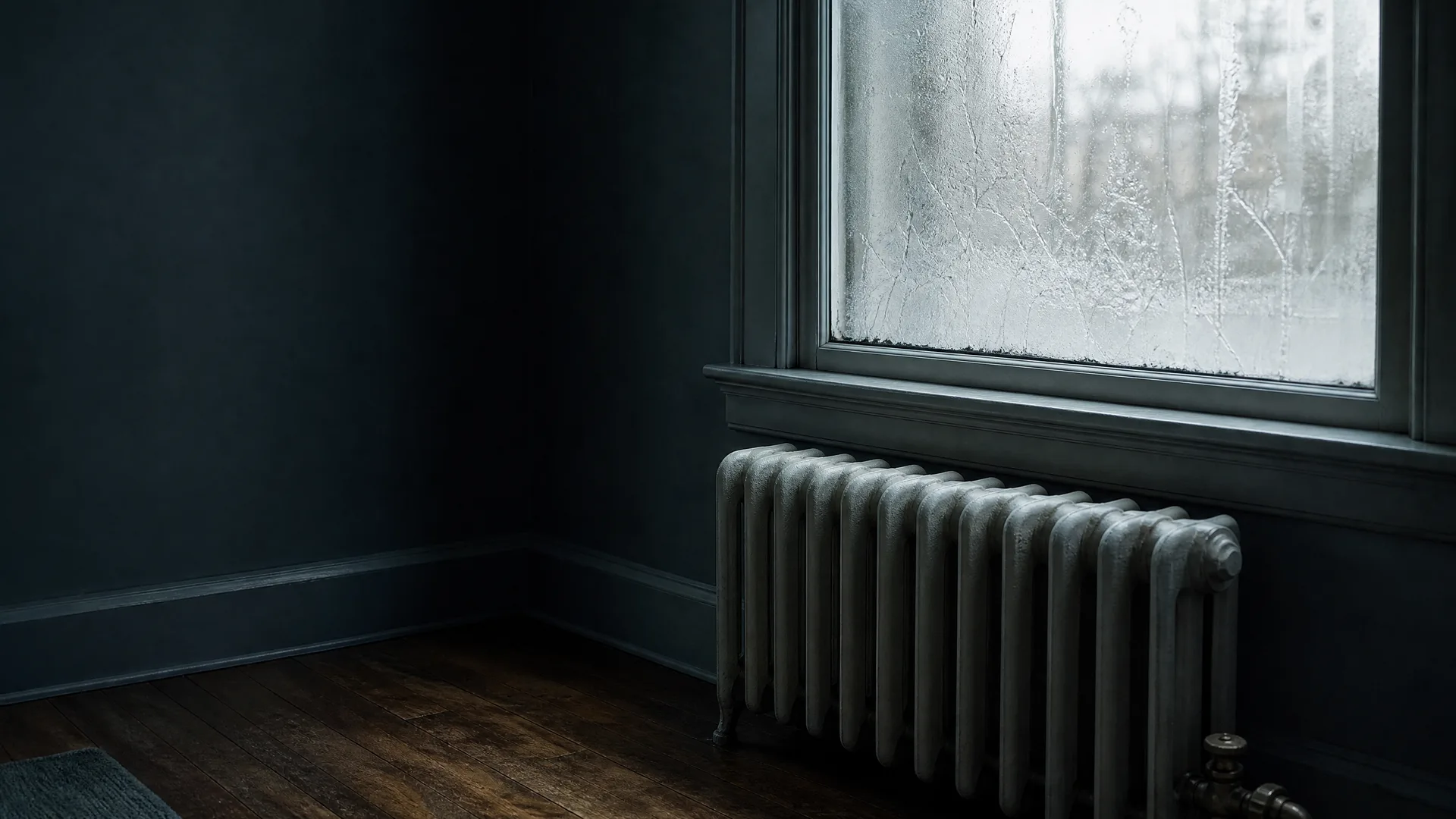
A cast iron column radiator under a condensation-covered window in a dim room with dark walls, dark baseboard trim and a worn wood floor.

You're up before the rest of the house, and the cold got to the living room overnight. The radiator under the window ticked a few minutes ago and went quiet again. Now there's ice feathered across the inside of the glass, and when you touch the cast iron it's barely warm at the top. The thermostat on the wall still reads low, still calling. Outside it's a flat gray January morning, the kind Nebraska gets plenty of, and the furnace room downstairs is silent. You wait for the burner to catch again. It doesn't, not yet.


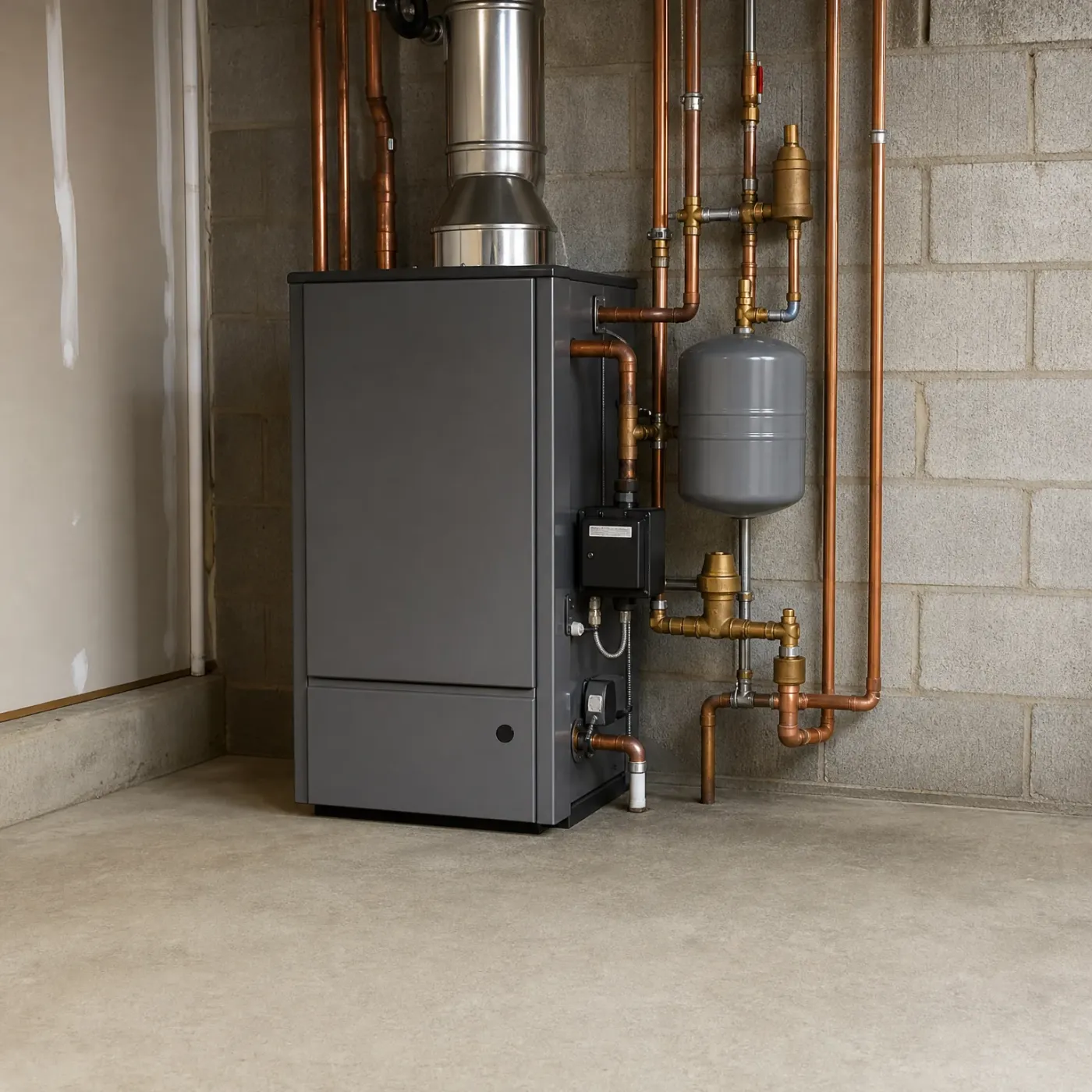
A gray floor-standing boiler with a metal flue stands against a concrete block wall, connected to copper pipes, brass valves and a gray expansion tank, on a bare concrete floor.
A boiler like this holds steady pressure, clean copper runs, and a flue pipe drawing freely, which is what keeps the burner cycle normal.
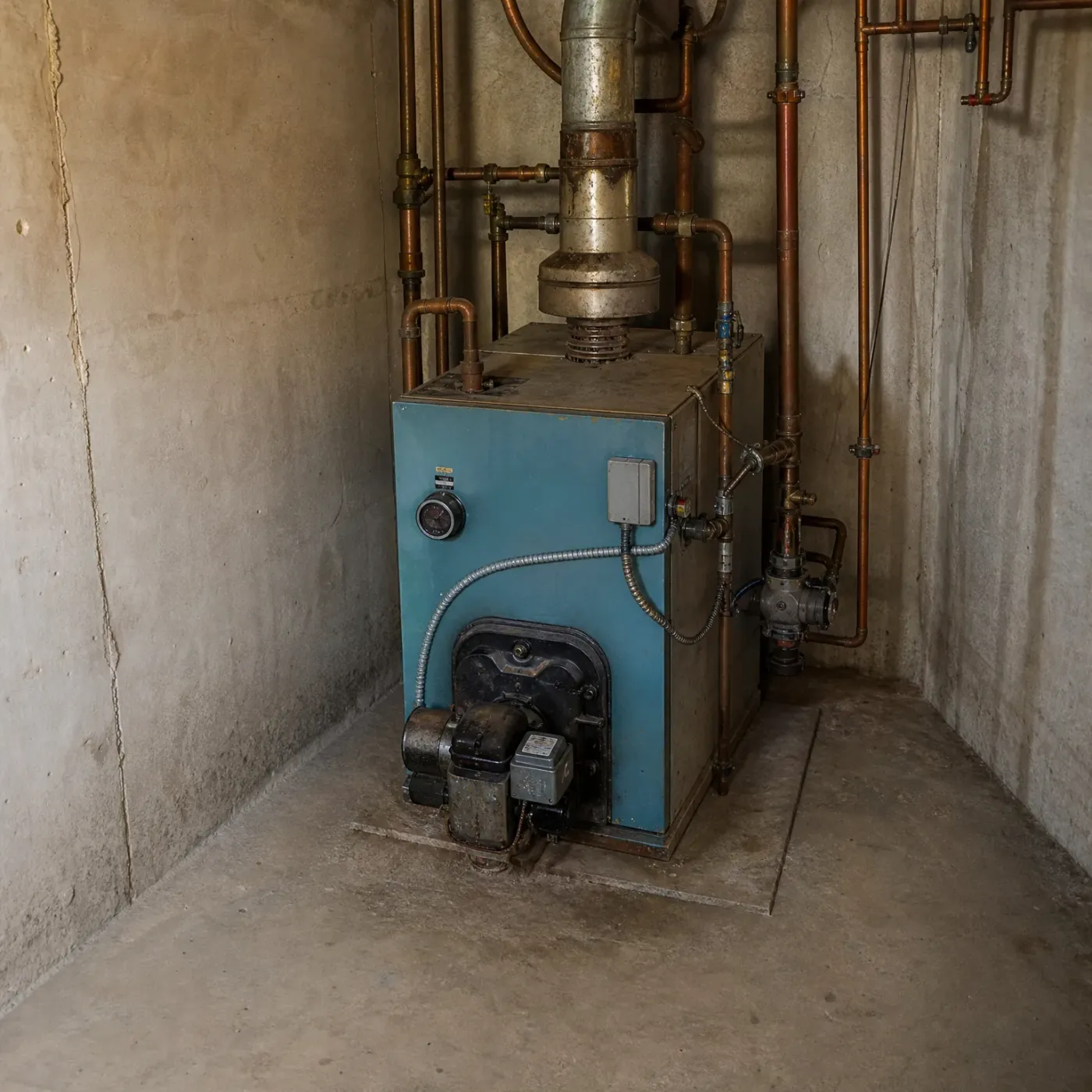
A blue oil-fired boiler with a burner unit and pressure gauge stands in a concrete basement corner, connected to copper pipes and a metal flue.
A boiler like this, older and oil-fired, puts more strain on the burner assembly and fuel pump, and that wear shows up as shutdowns.
A bearded man in a navy T-shirt sits on a light-colored couch indoors, smiling while looking down at a laptop screen in the foreground, with a framed picture and a potted plant blurred behind him.
A bearded man in a plaid flannel shirt stands indoors looking out a window at snow-covered conifers, with a ceramic mug on the wooden sill and wooden cabinets behind him.
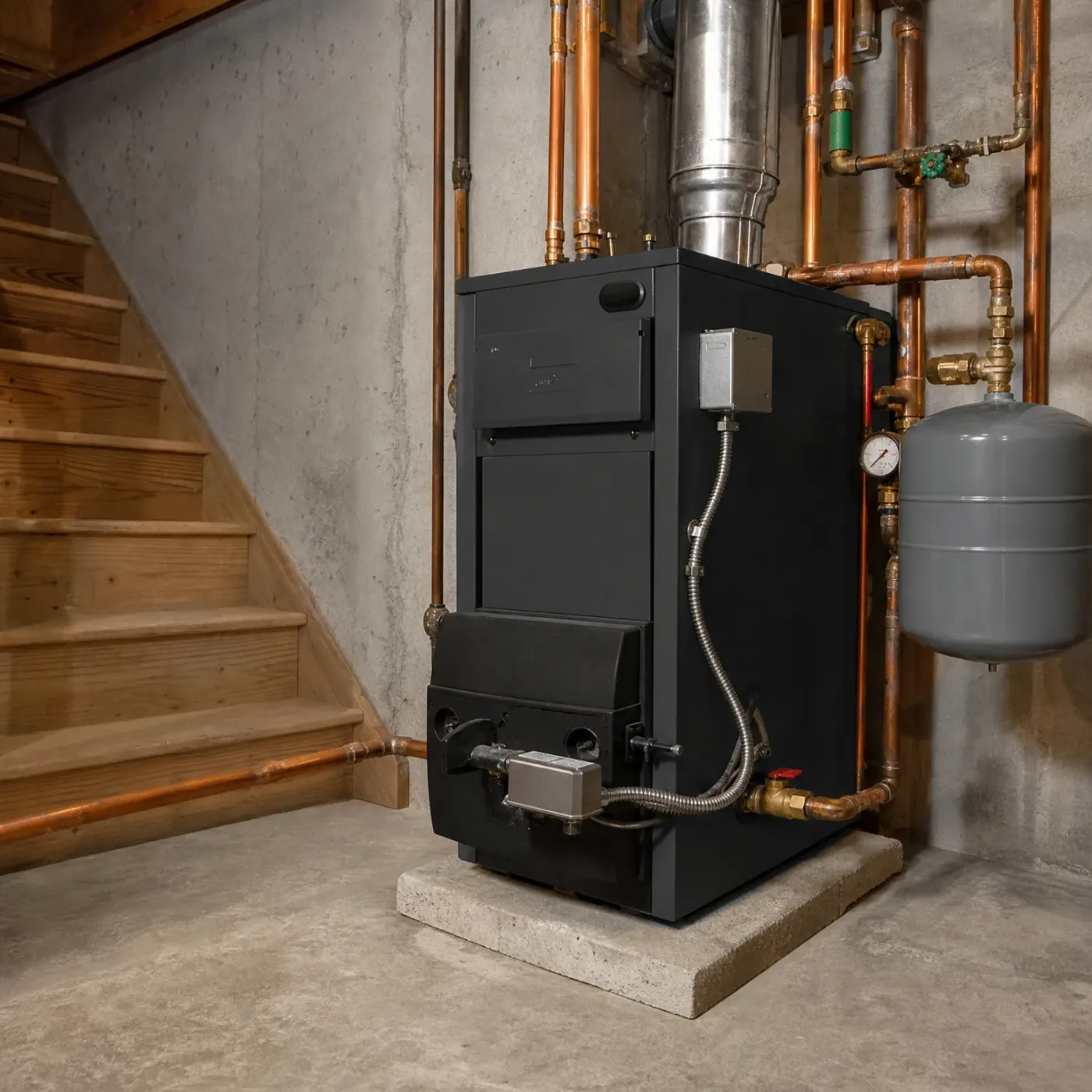
A black boiler on a concrete pad in a basement, connected to copper piping, a metal flue, and a gray expansion tank, beside a wooden staircase and concrete wall.

It's off your list after this

The pro who reaches out is licensed in Nebraska.

Get the boiler repair search off your mind today.

Send my request

No charge to send it. You decide if you hire them.

Winter nights average 17°F statewide

At 17°F overnight, your boiler runs long stretches without much of a break. A system that short-cycles doesn't get the chance to recover before it's asked to fire again, and each restart puts more load on the parts already under strain.

NOAA nClimDiv 1991-2020 county normals weighted by homes

Why the pressure switch matters

Most gas boilers won't fire without roughly 12 to 15 psi showing on the gauge. Drop below that and the pressure switch cuts the burner off before it tries to run dry or build heat in an empty system. That's the switch working as designed, not failing. Water pressure falls over time from a slow leak at a valve or fitting, or from air that's worked its way into the system and needs bleeding from the radiators. Refilling the loop yourself can mask the drop for a while, but if the pressure keeps falling back, something is letting water out somewhere, and the switch will keep doing its job every time it gets low.

What the flue sensor is protecting

A boiler also watches its own exhaust. If the flue isn't drawing properly, a sensor shuts the burner down rather than let combustion gases back up into the house. Snow packed against an exterior vent cap, a bird's nest, or a flue pipe that's come loose at a joint can all block that draft. In a Nebraska winter, a sidewall vent is especially exposed to drifting snow and ice buildup right where the exhaust needs to escape. Clearing the vent cap yourself is worth checking first. If the shutoffs continue once it's clear, the blockage is likely further up the flue, where it takes a contractor to find and fix it.

A blue cabinet boiler with a metal flue pipe and copper piping stands against a bare concrete wall in a basement with a concrete floor.
Before you get your boiler repair
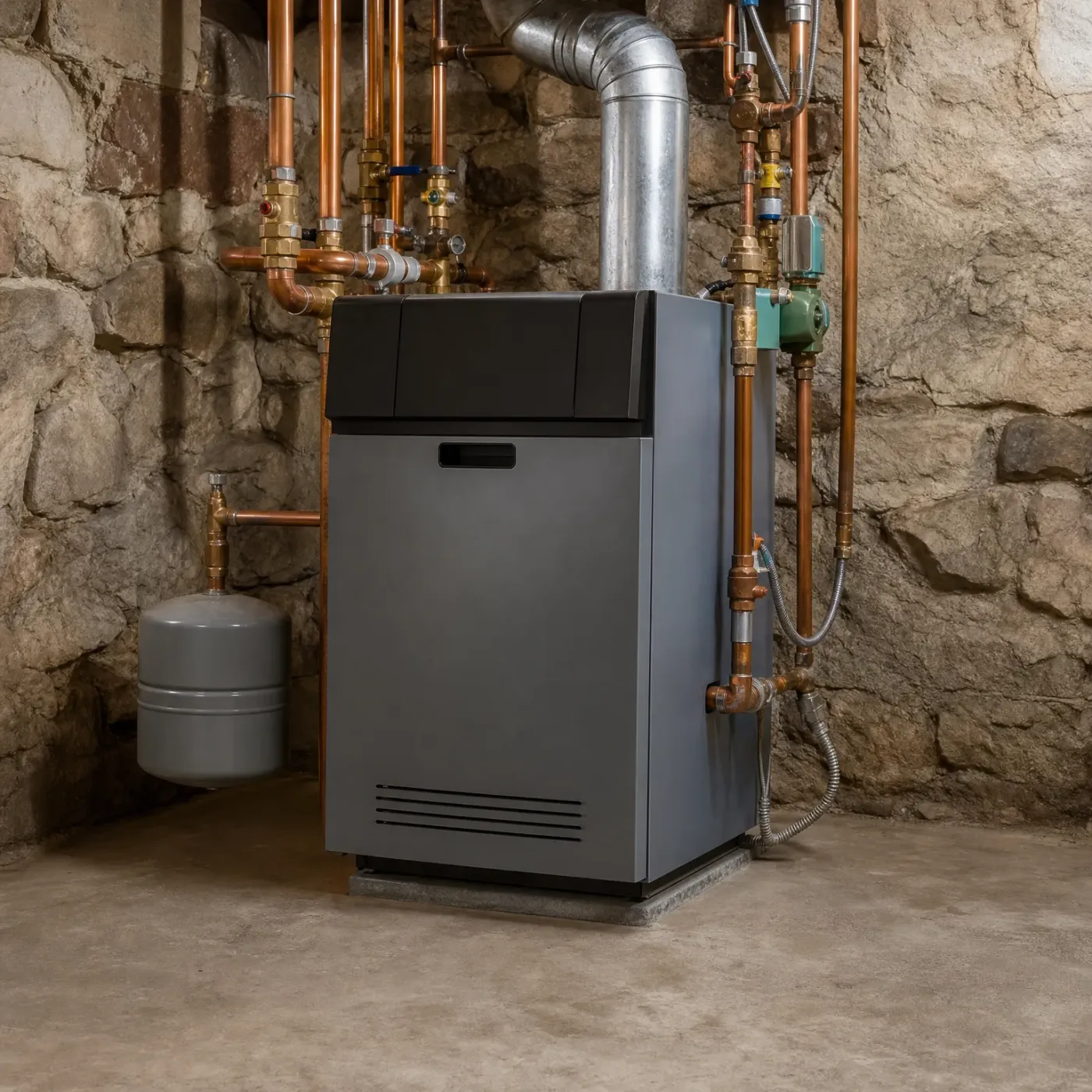
A gray residential boiler on a concrete pad in a basement with stone walls, connected to copper piping, brass valves, a circulator pump, an expansion tank, and a metal flue duct.
After you get your boiler repair

What this comes down to

  • A boiler that shuts off mid-cycle is almost always a pressure, airflow, or safety switch issue, not a mystery.
  • The gauge, the flue, and the way the burner cycles tell you most of what's wrong before anyone opens a panel.
  • Short cycling now means more wear on the pump and heat exchanger with every restart, not less.
  • A contractor who works on boilers through Nebraska winters has likely seen your exact lockout pattern before.
  • You'll hear back from one local, licensed contractor, not a string of calls from companies bidding for the job.
  • Catching this now, while it's a switch or a pressure drop, is cheaper than catching it after a hard freeze.

A boiler that keeps turning off is giving you information, not just trouble. The gauge tells you about pressure. The flue and the burner tell you about airflow. The pattern of the shutoffs, whether it's a quick trip or a slow fade, points toward a switch doing exactly what it was built to do. None of that requires guesswork once someone's looking at the actual numbers on your system.

What it does require is not waiting. Every restart during a cold snap puts load on a pump and a heat exchanger that are already working harder than they should. A switch tripping on low pressure is a cheap fix in November. The same low pressure left alone through a January freeze can mean a cracked section or a pump that's given out entirely.

The contractor who gets your request isn't guessing at Nebraska boilers from a manual. Winters here mean these systems run long and hard for months, and a contractor local to this area has worked through plenty of lockouts that look just like yours, on the same kind of equipment, in the same kind of cold. You're matched with one licensed contractor who takes the call, not a handful of companies competing for your number. That's one person showing up who already knows what a pressure drop or a flue blockage looks like in a house like yours, not a rotation of strangers starting from zero.

The shutoffs aren't random. Something on your system is asking for attention, and the sooner that gets looked at, the less it costs you in comfort and in wear.

A dark wood cabinet with a paneled door and a ceramic pot of green foliage on top stands in a beige-walled room with white baseboard, a window at left, hardwood floor, and a patterned area rug.
A dark wood glass-front cabinet holding folded towels, woven baskets and a ceramic vase stands in a bathroom corner beside a window, with a potted fern and stacked towels on top and a freestanding tub partly visible at left.
A woven basket holding a green cushion and a cream fringed knit throw sits on a wood floor in a room corner beside a window and a dark wooden cabinet.
Corner of a room with a dark wood cabinet topped by a round vase, a linen curtain at a window, white baseboard, oak plank flooring with sunlight patches, and a woven jute rug in the foreground.
A dark wood sideboard against a pale wall holds a shallow stone bowl and a round ceramic vase with leafy branches, with sunlight from a curtained window falling across the wall, wood floor and woven rug.

Hand off the search today

Only one pro gets your request, so you hear from one company.

Let a pro reach out

There's no charge for the request.