Tell us about the job
Takes about a minute. No obligation.

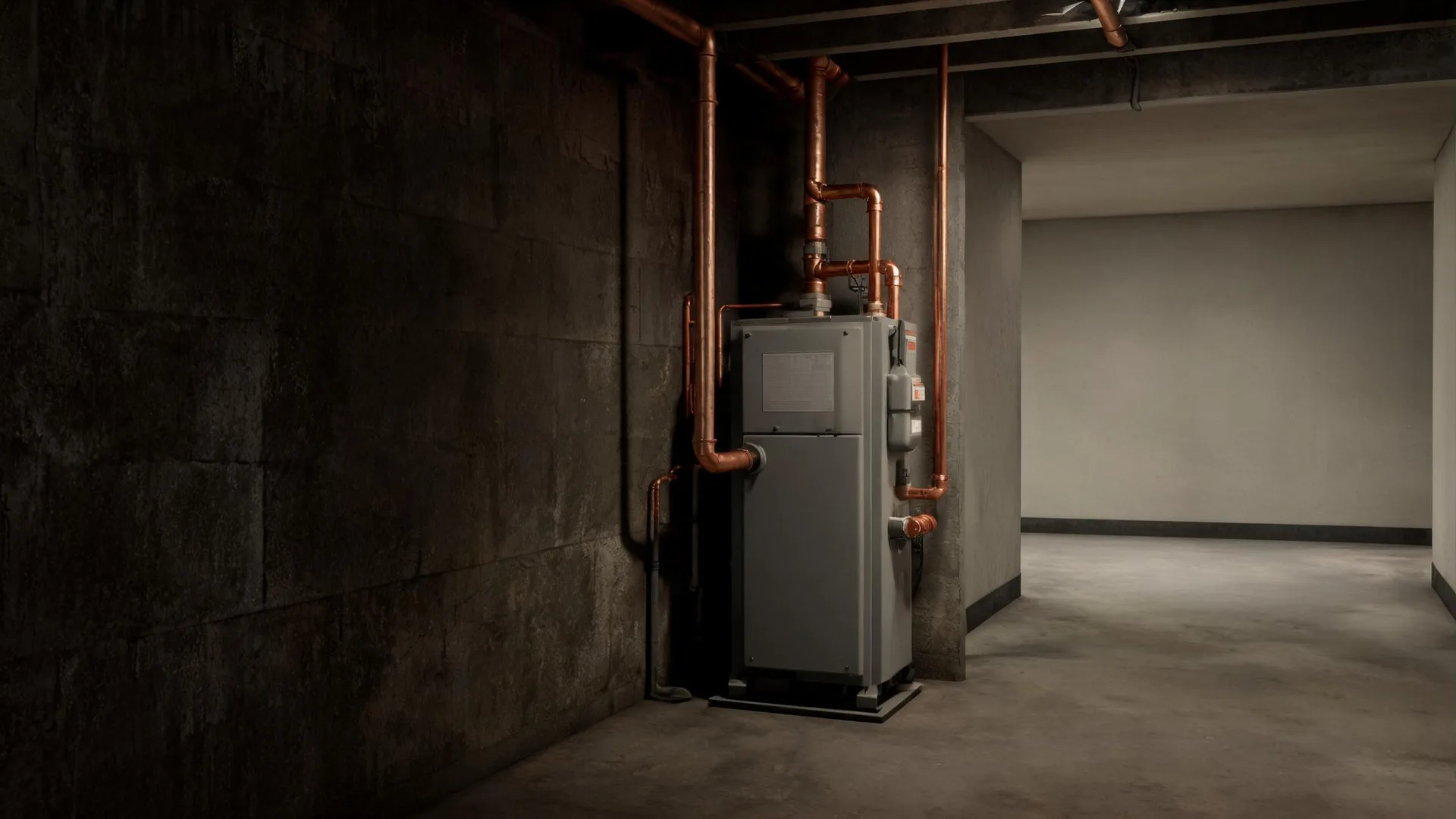
Boilers here are working hard through most of a very long calendar stretch, and the burner assembly and ignition system bear most of that. Homes in Grant County, NE run heat about nine months a year, from September through May. A contractor coming out to diagnose a repair is going to check the ignition components, the heat exchanger, and the burner first, because those are the parts that cycle with every call for heat and wear accordingly. A system that has been short-cycling or misfiring will show it in the igniter and the flame sensor long before it shows up anywhere else.
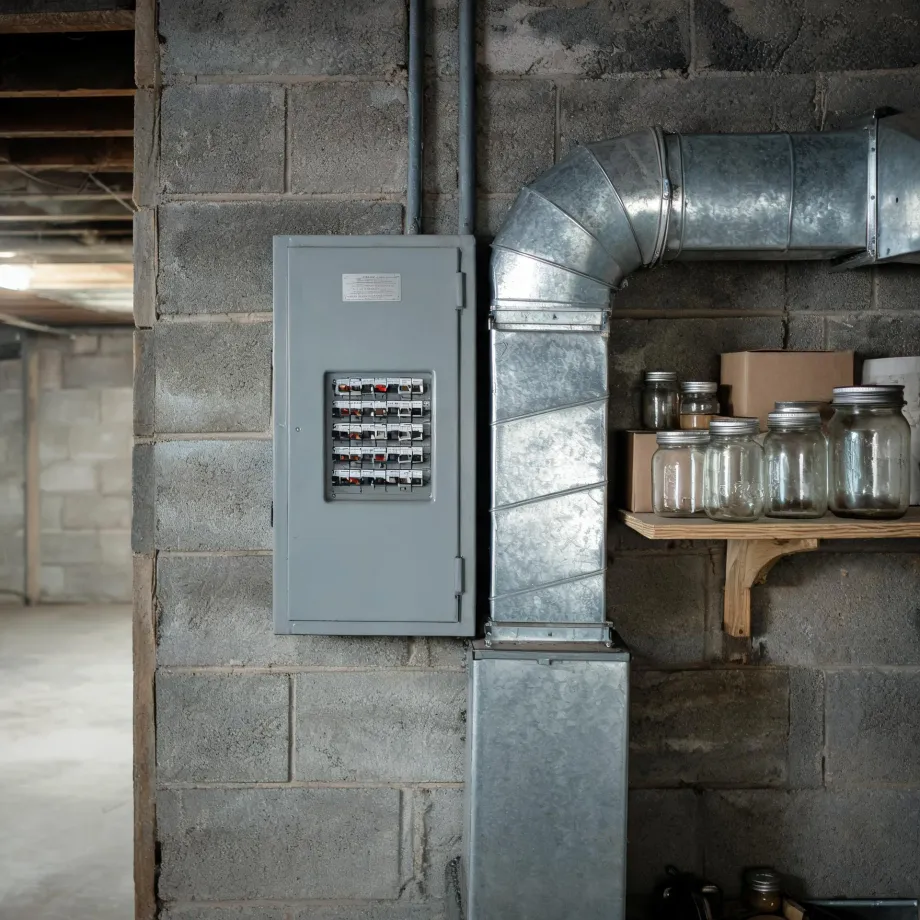
Boilers in housing this old sit inside a system of pipes, valves, and distribution hardware that has been patched, extended, and adapted over generations. Half the homes in Grant County, Nebraska were built in 1960 or earlier (2020-2024 ACS 5-year). That depth of age means a contractor opening a boiler for a repair finds out quickly whether the surrounding distribution system will hold the pressure a repaired unit puts back into it, or whether failed expansion tanks, seized zone valves, and corroded supply lines are the real repair scope. The equipment itself is often the simpler part of the bill.
The Parts of a Boiler a Contractor Checks First
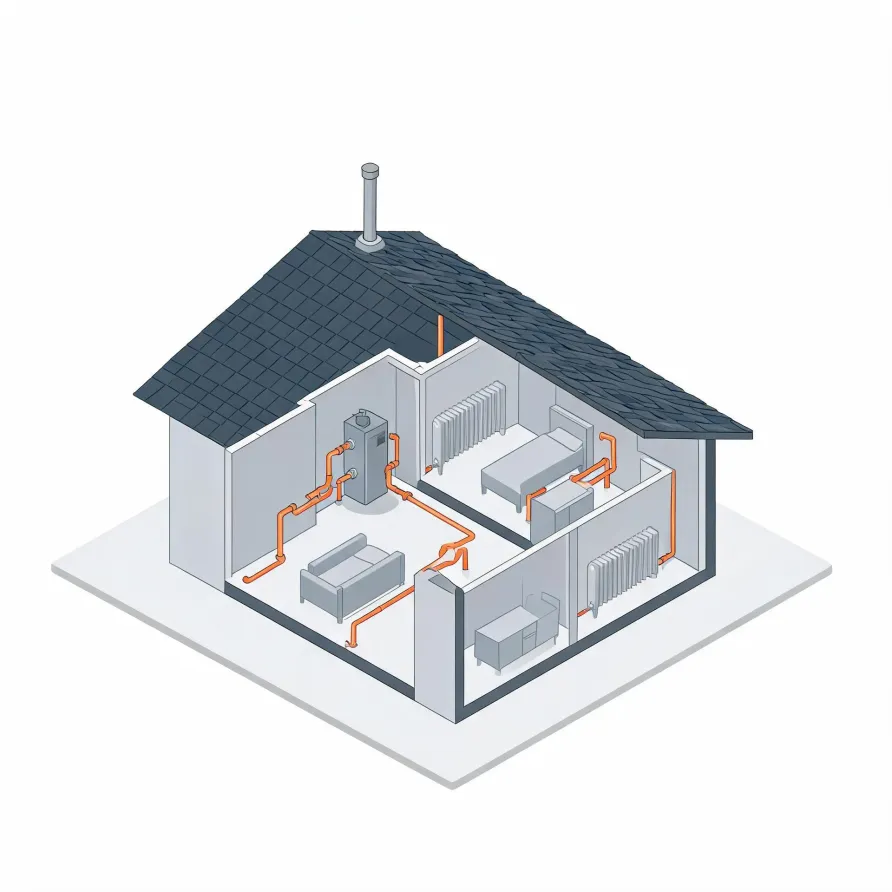
The boiler itself sits in the basement or a mechanical room and is the piece a contractor goes to first. It heats water and pushes it out to the rest of the house. When a boiler is short-cycling, leaking, or failing to reach temperature, the fault usually starts here, with the heat exchanger, burner, or pressure relief valve.
From the boiler, supply pipes carry hot water to radiators or radiant panels in each room, and return pipes bring cooled water back. The circulator pump moves water through that loop, and the expansion tank sits nearby to absorb pressure changes. A failing pump or a waterlogged expansion tank can make the whole system behave as though the boiler itself is the problem.
The drawing shows a typical layout, and a licensed contractor will determine which components and conditions apply to your specific home.
Find a contractor in Grant CountyGrant County by the Numbers
68 severe weather events were recorded in Grant County, Nebraska between 2015 and 2024.
NOAA National Centers for Environmental Information, Storm Events Database, bulk CSV export, events 2015-01-01 through 2024-12-31.Half the homes in Grant County, Nebraska were built in 1960 or earlier (2020-2024 ACS 5-year).
U.S. Census Bureau, 2020-2024 American Community Survey 5-Year EstimatesGrant County, Nebraska holds 407 housing units (2020-2024 ACS 5-year).
U.S. Census Bureau, 2020-2024 American Community Survey 5-Year EstimatesOwners occupy 70.8% of the occupied homes in Grant County, Nebraska (2020-2024 ACS 5-year).
U.S. Census Bureau, 2020-2024 American Community Survey 5-Year EstimatesCodes & Standards Governing Boiler Repair in Grant County, Nebraska1 sourced rules and standards
Licensing Rules for HVAC Repair in Grant County, Nebraska
Nebraska requires registration rather than a licence: a contractor must be registered with the Department of Labor before performing any construction work, though anyone earning less than five thousand dollars a year from construction services is not a contractor under the Act at all.
Severe Weather Events in Grant County, Nebraska
Extreme weather puts real strain on boiler systems, from pressure fluctuations during hard freezes to demand spikes when conditions shift fast. How much of that stress a boiler carries depends on what the local climate actually does, which is why the record below is part of the picture for Grant County repair work.
68 severe weather events, 2015–2024. Source: NOAA National Centers for Environmental Information, Storm Events Database.